Natural history in Shakespeare's time : being extracts illustrative of the subject as he knew it / Made by H. W. Seager, M. B., &c. Also pictures thereunto belonging.
- Seager, H. W. (Herbert West), 1848-
- Date:
- 1896
Licence: Public Domain Mark
Credit: Natural history in Shakespeare's time : being extracts illustrative of the subject as he knew it / Made by H. W. Seager, M. B., &c. Also pictures thereunto belonging. Source: Wellcome Collection.
Provider: This material has been provided by the Harvey Cushing/John Hay Whitney Medical Library at Yale University, through the Medical Heritage Library. The original may be consulted at the Harvey Cushing/John Hay Whitney Medical Library at Yale University.
310/376 (page 298)
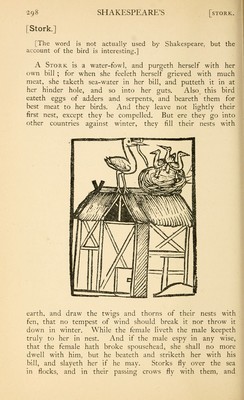
![[Stork.] 1 [The word is not actuall}^ used by Shakespeare, but the account of the bird is interesting.] A Stork is a water-fowl, and purgeth herself with her own bill ; for when she feeleth herself grieved with much meat, she taketh sea-water in her bill, and putteth it in at her hinder hole, and so into her guts. Also this bird eateth eggs of adders and serpents, and beareth them for best meat to her birds. And they leave not lightly their first nest, except they be compelled. But ere they go into other countries against winter, they fill their nests with earth, and draw the twigs and thorns of their nests with fen, that no tempest of wind should break it nor throw it down in winter. While the female liveth the male keepeth truly to her in nest. And if the male espy in any wise, that the female hath broke spousehead, she shall no more dwell with him, but he beateth and striketh her with his bill, and slayeth her if he may. Storks fly over the sea in flocks, and in their passing crows fly with them, and](https://iiif.wellcomecollection.org/image/b2100433x_0310.jp2/full/800%2C/0/default.jpg)