185 results filtered with: Wild flowers - Great Britain
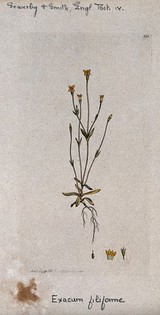
  • A plant (Exacum filiforme): entire flowering plant and floral segments. Coloured engraving after J. Sowerby, 1795.
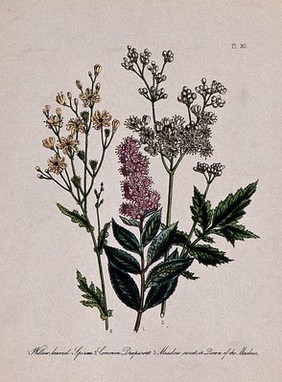
  • Three British wild flowers, including dropwort (Filipendula vulgaris) and meadowsweet (Filipendula ulmaria). Coloured lithograph, c. 1856, after H. Humphreys.
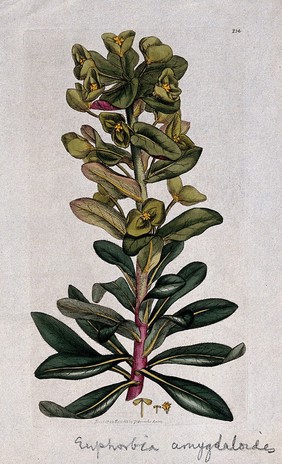
  • Wood spurge (Euphorbia amygdaloides): flowering stem and floral segments. Coloured engraving after J. Sowerby, 1795.
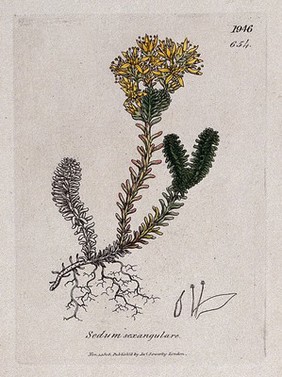
  • Stonecrop (Sedum sexangulare): flowering plant and floral segments. Coloured engraving after J. Sowerby, 1808.
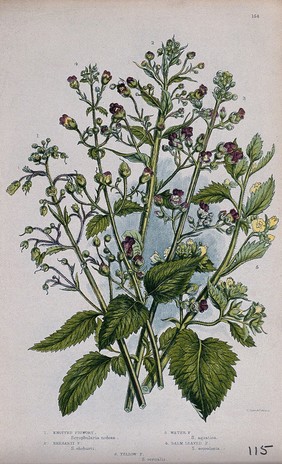
  • Five flowering plants, all types of figwort (Scrophularia species). Chromolithograph by W. Dickes & co., c. 1855.
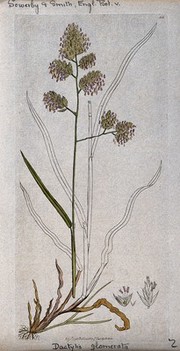
  • Cock's-foot grass (Dactylis glomerata): flowering stem, leaves, roots and floral segments. Coloured engraving after J. Sowerby, 1796.
  • Three flowering plants, including teasel or fuller's teasel (Dipsacus sativus). Chromolithograph by W. Dickes & co., c. 1855.
  • Five British wild flowers, three Corydalis species, and two similar fumitory species. Coloured lithograph, c. 1846, after H. Humphreys.
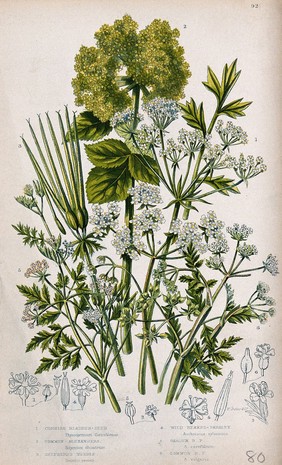
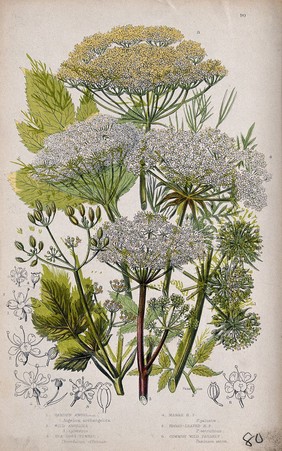
  • Six flowering plants, including bladderseed (Physospermum), chervil (Anthriscus cereifolium) and cow-parsley (Anthriscus sylvestris). Chromolithograph by W. Dickes & co., c. 1855.
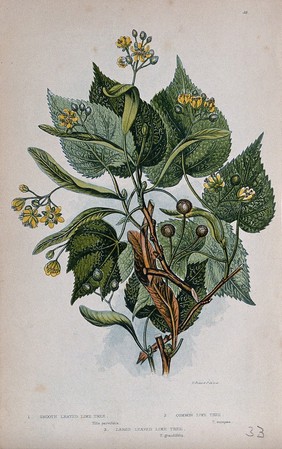
  • Three flowering branches, all from types of lime tree (Tilia species). Chromolithograph by W. Dickes & co., c. 1855.
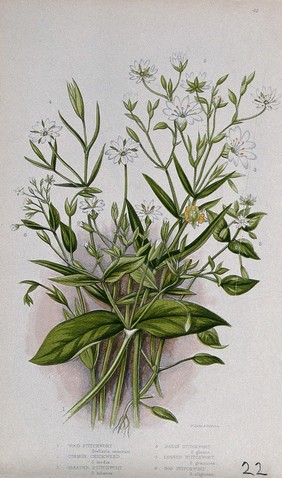
  • Six flowering plants, all types of chickweed, stitchwort or starwort (Stellaria species). Chromolithograph by W. Dickes & co., c. 1855.
  • London rocket (Sisymbrium irio): flowering stem, leaf and floral segments. Coloured engraving after J. Sowerby, 1806.
  • Eight British wild flowers, including wild carrot (Daucus carota), bur parsley (Caucalis) and hog's fennel (Peucedanum officinale). Coloured lithograph, c. 1856, after H. Humphreys.
  • Six flowering plants, including bedstraw (Galium tricorne), goosegrass (Galium aparine) and woodruff (Galium odoratum). Chromolithograph by W. Dickes & co., c. 1855.
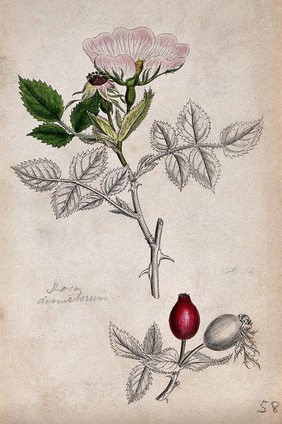
  • A wild rose (Rosa dumetorum): flowering and fruiting stems. Coloured engraving, c. 1829, after J. Sowerby.
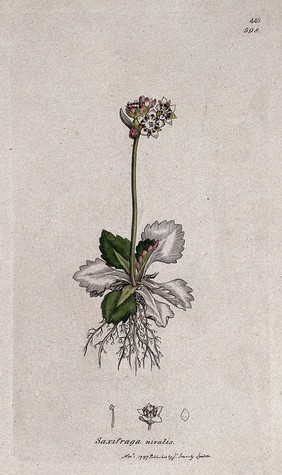
  • Saxifrage or rockfoil (Saxifraga nivalis): flowering plant and floral segments. Coloured engraving after J. Sowerby, 1797.
  • Small toadflax (Chaenorhinum minus): flowering plant and floral segments. Coloured engraving after J. Sowerby, 1809.
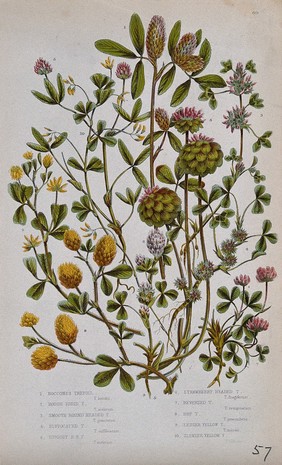
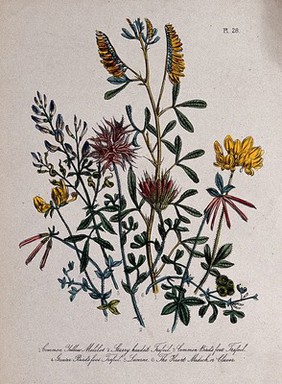
  • Ten flowering plants, all types of trefoil or clover (Trifolium species). Chromolithograph by W. Dickes & co., c. 1855.
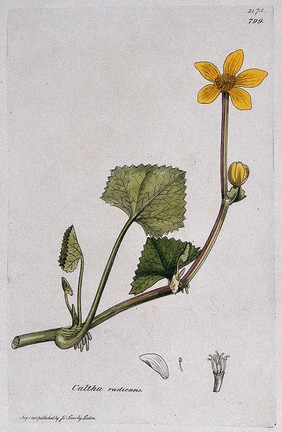
  • A plant (Caltha radicans) related to kingcups: flowering stem and floral segments. Coloured engraving after J. Sowerby, 1810.
  • A plant (Sisymbrium sophia) related to hedge mustard: flowering stem and floral segments. Coloured engraving after J. Sowerby, 1801.
  • Six flowering plants, including angelica (Angelica species) and hog's fennel (Peucedanum officinale). Chromolithograph by W. Dickes & co., c. 1855.
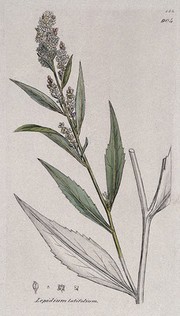
  • Dittander (Lepidium latifolium): flowering stem and floral segments. Coloured engraving after J. Sowerby, c. 1805.
  • Eight British wild flowers, including teasel (Dipsacus sativa), devil's bit scabious (Succisa pratensis) and sheep's bit scabious (Jasione montana). Coloured lithograph, c. 1856, after H. Humphreys.
  • Swine cress (Coronopus species): flowering stem and floral segments. Coloured engraving after J. Sowerby, 1806.
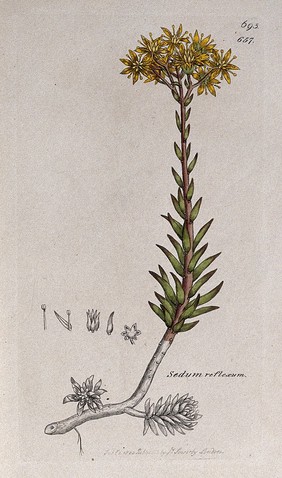
  • Stonecrop (Sedum reflexum): flowering plant and floral segments. Coloured engraving after J. Sowerby, 1800.
  • A pear tree (Pyrus domestica): flowering stem, fruit and floral segments. Coloured engraving after J. Sowerby, 1796.
  • Six British wild flowers, including three types of trefoil (Lotus species). Coloured lithograph, c. 1856, after H. Humphreys.
  • Four flowering plants, all types of dock (Rumex species). Chromolithograph by W. Dickes & co., c. 1855.
  • Creeping lady's-tresses (Goodyera repens): flowering stem, root and floral segments. Coloured engraving after J. Sowerby, 1795.
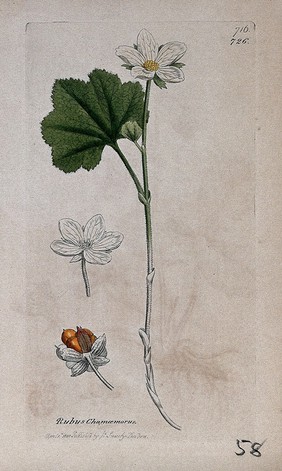
  • Cloudberry (Rubus chamaemorus): flowering stem, fruit and floral segments. Coloured engraving after J. Sowerby, 1800.