405 results filtered with: Green

- Digital Images
- Online
Mouse kidney
Kevin Mackenzie, University of Aberdeen
- Digital Images
- Online
Human heart (aortic valve) tissue displaying calcification
Sergio Bertazzo, Department of Materials, Imperial College London
- Digital Images
- Online
Human heart (aortic valve) tissue displaying calcification
Sergio Bertazzo, Department of Materials, Imperial College London
- Digital Images
- Online
Mouse embryo
Macroscopic Solutions
- Digital Images
- Online
Woodlouse, SEM
Anne Weston, Francis Crick Institute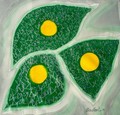
- Digital Images
- Online
Mitchell's equation II
Odra Noel
- Digital Images
- Online
Collagen fibres in human skin, LM
Kevin Mackenzie, University of Aberdeen
- Digital Images
- Online
Smyrnium olusatrum L. Apiaceae. Alexanders, Black Lovage, Horse Parsley. Distribution: W & S Europe, Mediterranean. Culpeper (1650) writes: ‘Hipposelinum. Alexanders or Alisanders, provoke urine, expel the afterbirth, provoke urine, help the strangury, expel the wind.’ Culpeper has taken this mainly from Dioscorides’ Materia Medica (circa 100 AD). The genus name is said to derive from Smyrna, a city which was founded by Alexander the Great (although there was one which pre-dated his Smyrna). on the Aegean coast of Anatolia. The species name comes from the Latin olus meaning a pot herb (cooking vegetable) and atrum meaning black, in reference to the seeds. It is described as tasting like a rather bitter, second-class celery. The English name may derive from Alexandria or Alexander the Great. It is rarely used in herbal medicine now. Photographed in the Medicinal Garden of the Royal College of Physicians, London.
Dr Henry Oakeley
- Digital Images
- Online
Human oral squamous cell carcinoma cell, SEM
Anne Weston, LRI, CRUK and John Marshall, Tumour Biology Lab
- Digital Images
- Online
Light wall moss leaf
Odra Noel
- Digital Images
- Online
Chloroplasts are found in the cells of plants that conduct photosynthesis. They absorb sunlight and use it along with water and carbon dioxide gas (CO2) to produce food for the plant.
Odra Noel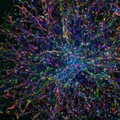
- Digital Images
- Online
Highly invasive human paediatric brain tumour derived cells
Valeria Molinari, Louise Howell, Maria Vinci, Katy Taylor and Chris Jones, Institute of Cancer Research
- Digital Images
- Online
Human heart (mitral valve) tissue displaying calcification
Sergio Bertazzo, Department of Materials, Imperial College London
- Digital Images
- Online
Bacterial microbiome mapping, bioartistic experiment
François-Joseph Lapointe, Université de Montréal
- Digital Images
- Online
Chlamydomonas is a type of green algae made up of unicellular flagellates. This type of algae is found in stagnant water, on damp soil, in freshwater and in seawater. It has sometimes also been found in snow. It is frenquently used as a model organism in molecular biology
Odra Noel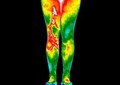
- Digital Images
- Online
Varicose Veins, Legs. Female. Illustrated with thermography
Thermal Vision Research, Wellcome Collection
- Digital Images
- Online
Cross section through mycoplasma mycoides cell, illustration
David S. Goodsell, The Scripps Research Institute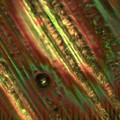
- Digital Images
- Online
Aluminium foil, LM
Olivia Engmann
- Digital Images
- Online
Dividing HeLa cells, LM
Kevin Mackenzie, University of Aberdeen
- Digital Images
- Online
Human brain cancer stem cells, SEM
Izzat Suffian, Pedro Costa, Stephen Pollard, David McCarthy & Khuloud T. Al-Jamal
- Digital Images
- Online
Melanocyte deficient in myosin 5a
Lauren Holden
- Digital Images
- Online
Magnetic nano-capsules, cancer imaging and therapy, cryoEM
Khuloud T. Al-Jamal, Jie Bai, Sara Bals, Hamed Heidari & Izzat Suffian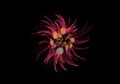
- Digital Images
- Online
Bacterial microbiome mapping, bioartistic experiment
François-Joseph Lapointe, Université de Montréal
- Digital Images
- Online
Buddleia (Buddleja davidii) leaf
Lauren Holden
- Digital Images
- Online
Doctor in scrubs making notes
Adrian Wressell, Heart of England NHS FT