670 results filtered with: Landscapes

- Digital Images
- Online
An up-country Chinese bridge, Lye Fow Kok, on the River Min, Fujian (Fukien) province, China.
John Thomson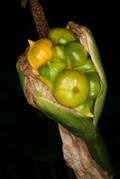
- Digital Images
- Online
Zantedeschia aethiopica (L)Spreng. Calla lily, Arum lily. Half hardy annual. Distribution: South Africa. The genus name commemorates Giovanni Zantedeschi (1773-1846) an Italian physician and botanist. Born in Molina he studied medicine in Verona and Padua. He corresponded with the German botanist, Kurt Sprengel, who named the genus Zantedeschia in his honour in 1826, separating it from Calla, where, as C. aethiopica, it had been previously described by Linnaeus. He had broad interests, including the effect of different parts of the spectrum of light on plant growth, reporting in 1843, that red, orange and yellow light are heliotropically inactive. The botanic museum in Molina is dedicated to his memory. Aethiopica, merely means 'African'. The leaves are used as a warm poultice for headaches in ‘muthi’ medicine. It has become an invasive weed in parts of Australia. It was introduced, as a greenhouse plant, to Europe in the mid-17th century, where the long lasting flowers are popular in flower arranging and for weddings and funerals – a curious combination (Oakeley, 2012). Photographed in the Medicinal Garden of the Royal College of Physicians, London.
Dr Henry Oakeley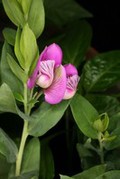
- Digital Images
- Online
Polygala myrtifolia 'Grandiflora'
Dr Henry Oakeley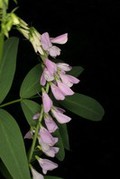
- Digital Images
- Online
Galega officinalis L. Fabaceae. Goat's Rue. Distribution: Central and Southern Europe, Asia Minor. Culpeper (1650) writes that it ‘... resists poison, kills worms, resists the falling sickness [epilepsy], resisteth the pestilence.’ Galega officinalis contains guanidine which reduces blood sugar by decreasing insulin resistance and inhibiting hepatic gluconeogenesis.. Metformin and Phenformin are drugs for type II diabetes that rely on this group of chemicals, known as biguanidines. Its name gala, meaning milk plus ega meaning 'to bring on', refers to its alleged property of increasing milk yield, and has been used in France to increase milk yield in cows. officinalis refers to its use in the offices of the monks, and is a common specific name for medicinal plants before 1600 and adopted by Linnaeus (1753). The fresh plant tastes of pea pods. Photographed in the Medicinal Garden of the Royal College of Physicians, London.
Dr Henry Oakeley- Archives and manuscripts
A landscape with a pool surrounded by dark rocks, trees and a cloudy sky in the background
Niles, Marion, active approximately 1966-1967Date: 13 January 1967Reference: 3006345iPart of: Papers of Edward Adamson (1911-1996)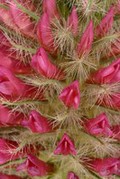
- Digital Images
- Online
Trifolium rubens L. Leguminosae. [Note the Family Leguminosae is preferred over Family Fabaceae as the former allows all the legumes to be in one Family and not three - one Family being the current consensus among botanists]. Red Feather Clover. Distribution: Europe. The white clover, Trifolium repens, is listed as a treatment for arthritis by Linnaeus (1782). This and Trifolium pratense, Red Clover, are the ones most used for pastures. All the clovers have root nodules which fix nitrogen from the air into the soil so have an important role in ensuring soil fertility. Trifolium rubens has the same nitrogen fixing ability, and is used as an ornamental garden plant where it still acts to improve fertility. Photographed in the Medicinal Garden of the Royal College of Physicians, London.
Dr Henry Oakeley- Archives and manuscripts
An orchard under a blue sky reflected in a large eye in red, orange, green and blue
Gurr, Graham, active approximately 1976-1984Date: 22 October 1982Reference: 2971508iPart of: Papers of Edward Adamson (1911-1996)- Archives and manuscripts
'Alone in the wilderness"
Bishop, Mary (Mary Cecil Hamilton), 1914-1990Date: November 1967Reference: 2884970iPart of: Papers of Edward Adamson (1911-1996)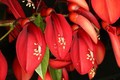
- Digital Images
- Online
Erythrina crista-galli L. Fabaceae. Cockspur coral tree. Distribution: South America. The national tree of Argentina, its flowers are pollinated by perching birds unlike many other species which are pollinated by humming birds. An extract from the bark is used as a powerful soporific, also as a gargle for sore throats and in the treatment of cuts, rheumatism and hepatitis, in Brazil (Mors, 1998). The seed contains the alkaloid beta-erythroidine. Analgesics, antimicrobial and anti inflammatory substances are being sought from the leaves. Curare-like action in rats has been reported from the seeds. Photographed in the Medicinal Garden of the Royal College of Physicians, London.
Dr Henry Oakeley- Archives and manuscripts
A river running through a valley
Pleasance, Anthony, active approximately 1966Date: 31 October 1966Reference: 3017240iPart of: Papers of Edward Adamson (1911-1996)
- Digital Images
- Online
Rosa damascena Mill. Rosaceae Distribution: Garden origin. A hybrid between R. gallica and R. moschata.. Photographed in the Medicinal Garden of the Royal College of Physicians, London.
Dr Henry Oakeley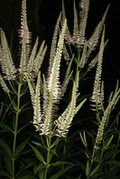
- Digital Images
- Online
Veronicastrum virginicum 'Pink Glow'
Dr Henry Oakeley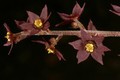
- Digital Images
- Online
Xanthorhiza simplicissima Marshall Ranunculaceae. Yellow root. Distribution: North America, where it was discovered by the plant collector and explorer William Bartram in 1773. Yellow-root. Austin (2004) reports that of the Native Americans, the Cherokee use the crushed plant to make a yellow dye
Dr Henry Oakeley
- Digital Images
- Online
Physocarpus opulifolius (L.)Maxim. Roasaceae Distribution: North America. Austin (2004) reported it was used for gynaecological problems by the Iroquois and Menomini
Dr Henry Oakeley- Books
Wondrous sore.
Alec FinlayDate: [2023]- Archives and manuscripts
A central yellow structure at the crossroads of a grey stone path with a woman inside wearing a garland of flowers
Marshall, Brenda, active approximately 1956-1958Date: 13 December 1956Reference: 3005082iPart of: Papers of Edward Adamson (1911-1996)- Archives and manuscripts
A causeway across a bay with the sun on the horizon
Francesca, active approximately 1973-1975Date: 27 April 1973Reference: 2935487iPart of: Papers of Edward Adamson (1911-1996)- Archives and manuscripts
"B Paishent, Heel Thiself"
Chandler, Robert, active approximately 1968Date: 11 October 1968Reference: PP/ADA/C/8/29/11Part of: Papers of Edward Adamson (1911-1996)- Archives and manuscripts
A figure snorkelling in a lake and another figure boating on the surface above them
Meredith, David Thomas, active approximately 1975-1989Date: 27 October 1975Reference: 3005806iPart of: Papers of Edward Adamson (1911-1996)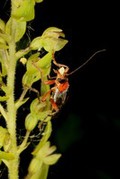
- Digital Images
- Online
Neottia ovata plus Cantharis rufipes beetle
Dr Henry Oakeley- Archives and manuscripts
Three faceless figures wearing long robes standing in a green field, with a grey square building behind
Lawrence, Joan, active approximately 1973Date: April 1973Reference: 2989702iPart of: Papers of Edward Adamson (1911-1996)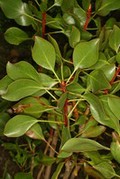
- Digital Images
- Online
Protea cyanoides L. Proteaceae King Protea Distribution
Dr Henry Oakeley
- Digital Images
- Online
Viburnum japonicum Spreng. Caprifoliaceae Evergreen Shrub. Distribution: Japan and Taiwan. No medicinal uses. The fruit is a 'famine food' eaten when all else fails. As other seeds/fruits of Viburnum species are listed as poisonous, and none are listed as 'edible', one can assume that the seeds/fruits of V. japonicum are also toxic. It does not appear vulnerable to pests or molluscs which may be due to irioid glycosides that are present in this genus produced as a defence against herbivores, fungi and bacteria. They have a bitter taste. Photographed in the Medicinal Garden of the Royal College of Physicians, London.
Dr Henry Oakeley
- Digital Images
- Online
Hylotelephium telephium syn. Sedum telephium 'Matrona'
Dr Henry Oakeley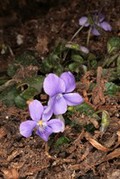
- Digital Images
- Online
Viola canina L. Violaceae Distribution: Europe. Culpeper (1650) writes 'Violets (to whit the blew ones, for I know little or no use of the white ones in physic) ... provoke sleep, loosen the belly, resist fevers, help inflammations, ... ease pains in the head, help the roughness of the windpipe, soreness in the throat, inflammations in the breast and sides, pleurisies, open stoppings of the liver and help the yellow jaundice'. 'Violet leaves, they are cool, ease pains in the head proceeding of heat, and frenzies, either inwardly taken or outwardly applied, heat of the stomach, or inflammation of the lungs.' It still has the same reputation in modern herbal medicine, and while its safety is not known, it is regarded as edible and flowers are used to garnish salads. Larger quantities are emetic – make one vomit. Not licensed for use in Traditional Herbal Medicines in the UK (UK Medicines and Healthcare Products Regulatory Agency (MHRA)). Photographed in the Medicinal Garden of the Royal College of Physicians, London.
Dr Henry Oakeley