613 results filtered with: Gardens

- Digital Images
- Online
Hypericum olympicum L. Clusiaceae. Mount Olympus St John's wort. Deciduous perennial herb. Distribution Greece, Asia minor. This is not the plant used for mood disturbances in herbal medicine which is Hypericum perforatum. However, all the 370 species of Hypericum are called 'St John's Wort' so a potential for confusion exists. It shares some of the chemicals thought to be active in Hypericum perforatum. Photographed in the Medicinal Garden of the Royal College of Physicians, London.
Dr Henry Oakeley
- Digital Images
- Online
Sambucus nigra f porphyrophylla 'Gerda'
Dr Henry Oakeley- Archives and manuscripts
A driveway and garden in front of a house, with mountains in the background
Lorraine, Mary, active approximately 1966-1967Date: 25 February 1967Reference: 3001756iPart of: Papers of Edward Adamson (1911-1996)
- Digital Images
- Online
Brugmansia suaveolens 'Pink Beauty'
Dr Henry Oakeley
- Pictures
- Online
Months of the year: April. Engraving after P. Stevens.
Pieter StevensReference: 46412i
- Digital Images
- Online
Geranium maderense Yeo Geraniaceae Tender evergreen biennial. Madeira cranesbill. Distribution: Madeira. Solely grown for its spectacular flowers. Photographed in the Medicinal Garden of the Royal College of Physicians, London.
Dr Henry Oakeley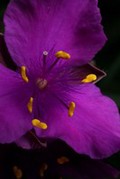
- Digital Images
- Online
Tradescantia 'Concorde Grape'
Dr Henry Oakeley
- Pictures
- Online
Botanic Garden, Oxford: panoramic view of the greenhouses with a small ornamental detail of the gates and plans. Line engraving by J. Skelton, 1820, after B. Green.
Green, Benjamin, 1739-1798.Date: 1 August 1820Reference: 21220i
- Digital Images
- Online
Geranium phaeum L. Geraniaceae Dusky cranesbill. Herbaceous perennial. Distribution: Europe. This seems to be the 'Dove's foote', Geranium alterum, of Lyte (1578). He says it is 'not good in Medicyne. Notwithstanding at this time, it is much used against all woundes, and ulcers being laid therunto.'. Parkinson (1640) classifies cranesbills somewhat differently, but says that 'all are found to be effectual both in inward and outward wounds, to stay bleedings, vomitings and fluxes, eyther the decoction of the herbe or the powder of the leaves and roots used as the cause demands.' No current medicinal use. Photographed in the Medicinal Garden of the Royal College of Physicians, London.
Dr Henry Oakeley
- Pictures
- Online
A border of plants from a Roman garden in the 1st century A.D., with the main plants labelled. Photograph.
Reference: 26632i
- Pictures
- Online
Types of orangery. Coloured engraving.
Reference: 497140i
- Digital Images
- Online
Dactylorhiza aff fuchsii Druce ex Soo Orchidaceae Common Spotted orchid. Distribution: Ireland to Mongolia. Roots look like a hand. Coles (1657) calls them Palma Christi sive [or] Satyrion (to distinguish it from Ricinus communis which he calls Palma Christi sive Ricinus. This plant is probably his Female Satyrion and another Dactylorhiza, probably one of the English Marsh orchids, is his Male Satyrion Royal, with purple flowers. In common with Orchis he writes 'The full and plump roots of the Satyrium or Orchis, whereof the Electuary Diasatyrium is made, are of mighty efficacy to provoke to venery, which they that have bulbous roots [meaning the testicle shaped roots of Orchis] do by Signature.'. Terrestrial orchids continue, to be harvested by the millions annually in the Middle East for the production of Salep, including Salep ice cream, because of their mythological aphrodisiacal property. Photographed in the Medicinal Garden of the Royal College of Physicians, London.
Dr Henry Oakeley
- Digital Images
- Online
Rhododendron yakushuminum 'Grumpy'
Dr Henry Oakeley
- Digital Images
- Online
Sempervivum tectorum L. Crassulaceae Houseleek, Senegreene Distribution: Europe. Sempervivum means 'live forever', tectorum means 'roof', and was apparently grown on house roofs to protect against lightning. Lyte (1578 distinguishes Stonecrops (Sedum) from Sengreene (Sempervivum) for he advises the latter, alone or mixed with barley meal, applied topically to burns, scalds, St Anthony's fire [erysipelas] , ulcers and sores, will cure them and sore eyes. Apropos of stonecrops (Sedum), he describes the redness and blistering that the sap has on bare skin, and how it is good for poisons for if taken with vinegar by mouth it causes vomiting, but only safe to do so in strong people. He seems fairly confused as to which is which. Not approved by the European Medicines Agency for Traditional Herbal Medicinal use. Photographed in the Medicinal Garden of the Royal College of Physicians, London.
Dr Henry Oakeley
- Digital Images
- Online
Phalaenopsis, Orchidaceae
- Digital Images
- Online
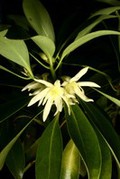
Illicium anisatum L. Illiciaceae Japanese Star Anise. Distribution Japan. This was also called Illicium religiosum and the fruits are toxic. Effects of taking Illicium anisatum tea include epilepsy, vomiting, shakiness and rapid eye movements (US Food and Drug Administration report, 2003). Lindley (1838) and Bentley (1861) thought that I. anisatum was used in cooking, but they were describing the uses of I. verum which is used as a spice in Asia. Illicium anisatum syn. religiosum is 'used to make incense in Japanese and Chinese temples and was called Skimi by Kaempfer. This derives from the Japanese word 'shi-kimi'. The seed pods of both species contain shikimic acid (the name being derived from the Japanese) from which Tamiflu, the antiviral drug was synthesised. Photographed in the Medicinal Garden of the Royal College of Physicians, London.
Dr Henry Oakeley
- Digital Images
- Online
Scadoxus multiflorus Raf. Amaryllidaceae. Blood Flower, Poison root, Fireball Lily. Distribution: Sub-Saharan Africa. The genus name is a concatenation of the Greek words, Sciadion meaning a parasol or umbel, and doxa meaning 'glorious'
Dr Henry Oakeley
- Pictures
- Online
Singapore: a person with dogs in the Botanical Gardens. Watercolour by J. Taylor, 1879.
Taylor, J. E. (John Edmund), active 1860-1885Date: 1879Reference: 31739iPart of: Sketches in the Malay archipelago. Album of watercolours and photographs made and collected by J.E. Taylor.
- Pictures
- Online
A border of trees, palms and herbaceous plants from a Roman garden in the 1st century A.D. Coloured photograph.
Date: 1891Reference: 26629i
- Digital Images
- Online
Acer palmatum 'Bloodgood'
Dr Henry Oakeley- Pictures
Botanic Gardens, Oxford: showing the fountain and greenhouses, with a glimpse of Magdalen College behind. Line engraving by J. Le Keux, 1836, after F. Mackenzie.
Frederick MackenzieDate: 1 March 1836Reference: 21218i
- Pictures
- Online
A young couple sit talking in a garden. Engraving by C. Heath, 1830, after T. Stothard.
Thomas StothardDate: [1830]Reference: 28043i
- Digital Images
- Online
Tropaeolum cv
Dr Henry Oakeley
- Pictures
- Online
The German Hospital, Dalston, London: seen from the garden. Coloured lithograph by P. Gauci, 1846.
Gauci, Paul, active 1834-1863.Date: 1 January 1846Reference: 34987i
- Digital Images
- Online
Punica granatum L. Lythraceae Pomegranate, granatum malum, balustines. Distribution: E. Mediterranean to Himalayas. The Pomegranate is in the centre of the Arms of the Royal College of Physicians, perhaps for its use in cooling, and therefore for fevers. However it was the sour pomegranate that would have been used as Dioscorides says the sweet ones are unfit for use in agues. Culpeper (1650) makes no mention of the fruit, but says of the flowers ‘... they stop fluxes and the Terms in women.’ In the Complete Herbal and English Physician (1826) says the fruit ‘... has the same general qualities as other acid fruits.’ Of the flowers he says (among other properties) that ‘A strong infusion of these cures ulcers in the mouth and throat, and fastens loose teeth.’ Gerard (1633) says that the cravings of pregnant women can be abolished with the juice, and perhaps it was scurvy which was being treated effectively when he reports that the juice was very effective against splitting of blood and for loose teeth. The dwarf form of this species, Punica granatum var. nana with fruits no more than 3cm across. Pomegranate bark can only be sold by registered pharmacies in the UK and used to be used as a vermifuge, with the secondary use that the tincture made from it doubled as a permanent ink. In South Africa the fruit rind is used for diarrhoea and stomach ache, and the bark as a vermifuge, but undesirable side effects make this dangerous. It is reported to be effective against fevers, as a diuretic, to lower blood sugar and to be both antibacterial and antiviral (van Wyk, 2000). Photographed in the Medicinal Garden of the Royal College of Physicians, London.
Dr Henry Oakeley