850 results filtered with: Poisons
- Books
Treatises on poisons, hemorrhoids, cohabitation : Maimonides' medical writings / translated and annotated by Fred Rosner.
Moshe ben MaimonDate: 1984
- Digital Images
- Online
Protea cyanoides L. Proteaceae King Protea Distribution
Dr Henry Oakeley- Books
Origins of resistance to toxic agents : proceedings of the symposium held in Washington, D. C., March 25-27, 1954 / editors M.G. Sevag, Roger D. Reid, Orr E. Reynolds.
Date: 1955- Books
Venefici : dalle Quaestiones medico legales di Paolo Zacchia / [introduzione e traduzione di] Giovanni Pierini.
Paolo ZacchiaDate: [2001], ©2001
- Digital Images
- Online
Viburnum japonicum Spreng. Caprifoliaceae Evergreen Shrub. Distribution: Japan and Taiwan. No medicinal uses. The fruit is a 'famine food' eaten when all else fails. As other seeds/fruits of Viburnum species are listed as poisonous, and none are listed as 'edible', one can assume that the seeds/fruits of V. japonicum are also toxic. It does not appear vulnerable to pests or molluscs which may be due to irioid glycosides that are present in this genus produced as a defence against herbivores, fungi and bacteria. They have a bitter taste. Photographed in the Medicinal Garden of the Royal College of Physicians, London.
Dr Henry Oakeley
- Digital Images
- Online
Hylotelephium telephium syn. Sedum telephium 'Matrona'
Dr Henry Oakeley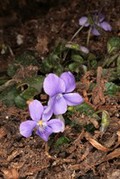
- Digital Images
- Online
Viola canina L. Violaceae Distribution: Europe. Culpeper (1650) writes 'Violets (to whit the blew ones, for I know little or no use of the white ones in physic) ... provoke sleep, loosen the belly, resist fevers, help inflammations, ... ease pains in the head, help the roughness of the windpipe, soreness in the throat, inflammations in the breast and sides, pleurisies, open stoppings of the liver and help the yellow jaundice'. 'Violet leaves, they are cool, ease pains in the head proceeding of heat, and frenzies, either inwardly taken or outwardly applied, heat of the stomach, or inflammation of the lungs.' It still has the same reputation in modern herbal medicine, and while its safety is not known, it is regarded as edible and flowers are used to garnish salads. Larger quantities are emetic – make one vomit. Not licensed for use in Traditional Herbal Medicines in the UK (UK Medicines and Healthcare Products Regulatory Agency (MHRA)). Photographed in the Medicinal Garden of the Royal College of Physicians, London.
Dr Henry Oakeley
- Digital Images
- Online
Paeonia officinalis L. Paeoniaceae, European Peony, Distribution: Europe. The peony commemorates Paeon, physician to the Gods of ancient Greece (Homer’s Iliad v. 401 and 899, circa 800 BC). Paeon, came to be associated as being Apollo, Greek god of healing, poetry, the sun and much else, and father of Aesculapius/Asclepias. Theophrastus (circa 300 BC), repeated by Pliny, wrote that if a woodpecker saw one collecting peony seed during the day, it would peck out one’s eyes, and (like mandrake) the roots had to be pulled up at night by tying them to the tail of a dog, and one’s ‘fundament might fall out’ [anal prolapse] if one cut the roots with a knife. Theophrastus commented ‘all this, however, I take to be so much fiction, most frivolously invented to puff up their supposed marvellous properties’. Dioscorides (70 AD, tr. Beck, 2003) wrote that 15 of its black seeds, drunk with wine, were good for nightmares, uterine suffocation and uterine pains. Officinalis indicates it was used in the offices, ie the clinics, of the monks in the medieval era. The roots, hung round the neck, were regarded as a cure for epilepsy for nearly two thousand years, and while Galen would have used P. officinalis, Parkinson (1640) recommends the male peony (P. mascula) for this. He also recommends drinking a decoction of the roots. Elizabeth Blackwell’s A Curious Herbal (1737), published by the College of Physicians, explains that it was used to cure febrile fits in children, associated with teething. Although she does not mention it, these stop whatever one does. Parkinson also reports that the seeds are used for snake bite, uterine bleeding, people who have lost the power of speech, nightmares and melancholy. Photographed in the Medicinal Garden of the Royal College of Physicians, London.
Dr Henry Oakeley
- Digital Images
- Online
Hypericum olympicum L. Clusiaceae. Mount Olympus St John's wort. Deciduous perennial herb. Distribution Greece, Asia minor. This is not the plant used for mood disturbances in herbal medicine which is Hypericum perforatum. However, all the 370 species of Hypericum are called 'St John's Wort' so a potential for confusion exists. It shares some of the chemicals thought to be active in Hypericum perforatum. Photographed in the Medicinal Garden of the Royal College of Physicians, London.
Dr Henry Oakeley
- Digital Images
- Online
Sambucus nigra f porphyrophylla 'Gerda'
Dr Henry Oakeley- Books
- Online
De venenis, or, A discourse of poysons : their names, natures, & vertues : with their several symptomes, prognosticks, and antidotes / by W.R., M.D.
Ramesey, William, 1627-1675 or 1676. De venenisDate: 1663
- Digital Images
- Online
Brugmansia suaveolens 'Pink Beauty'
Dr Henry Oakeley
- Books
- Online
An inaugural essay on the action of poisons / by Henry William Ducachet.
Ducachet, Henry William, 1796-1865Date: 1817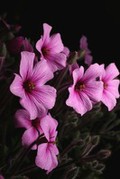
- Digital Images
- Online
Geranium maderense Yeo Geraniaceae Tender evergreen biennial. Madeira cranesbill. Distribution: Madeira. Solely grown for its spectacular flowers. Photographed in the Medicinal Garden of the Royal College of Physicians, London.
Dr Henry Oakeley- Books
King of poisons : a history of arsenic / John Parascandola.
John ParascandolaDate: [2012], ©2012
- Books
- Online
Poisons - remedies : a manual for reference / issued by the Mutual life insurance company of New York.
Date: 1903
- Books
- Online
Dissertation sur les effets d'un poison de Java, appelé Upas tieuté, et sur la noix vomique, la fève de St.-Ignace, le Strychnos potatorum, et la pomme de Vontac, qui sont du même genre de plantes que l'Upas tieuté ... / par Alire Raffeneau-Delile.
Alire Raffeneau DelileDate: 1809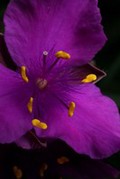
- Digital Images
- Online
Tradescantia 'Concorde Grape'
Dr Henry Oakeley
- Digital Images
- Online
Datura stramonium (Thornapple). Also called Jimsonweed
Sue Snell- Books
Sur quelques idées modernes dans le "Traité de poisons" de : Maimonide (1135-1204) / J. Pérel.
Pérel, J.Date: 1996
- Digital Images
- Online
Geranium phaeum L. Geraniaceae Dusky cranesbill. Herbaceous perennial. Distribution: Europe. This seems to be the 'Dove's foote', Geranium alterum, of Lyte (1578). He says it is 'not good in Medicyne. Notwithstanding at this time, it is much used against all woundes, and ulcers being laid therunto.'. Parkinson (1640) classifies cranesbills somewhat differently, but says that 'all are found to be effectual both in inward and outward wounds, to stay bleedings, vomitings and fluxes, eyther the decoction of the herbe or the powder of the leaves and roots used as the cause demands.' No current medicinal use. Photographed in the Medicinal Garden of the Royal College of Physicians, London.
Dr Henry Oakeley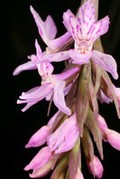
- Digital Images
- Online
Dactylorhiza aff fuchsii Druce ex Soo Orchidaceae Common Spotted orchid. Distribution: Ireland to Mongolia. Roots look like a hand. Coles (1657) calls them Palma Christi sive [or] Satyrion (to distinguish it from Ricinus communis which he calls Palma Christi sive Ricinus. This plant is probably his Female Satyrion and another Dactylorhiza, probably one of the English Marsh orchids, is his Male Satyrion Royal, with purple flowers. In common with Orchis he writes 'The full and plump roots of the Satyrium or Orchis, whereof the Electuary Diasatyrium is made, are of mighty efficacy to provoke to venery, which they that have bulbous roots [meaning the testicle shaped roots of Orchis] do by Signature.'. Terrestrial orchids continue, to be harvested by the millions annually in the Middle East for the production of Salep, including Salep ice cream, because of their mythological aphrodisiacal property. Photographed in the Medicinal Garden of the Royal College of Physicians, London.
Dr Henry Oakeley
- Digital Images
- Online
Rhododendron yakushuminum 'Grumpy'
Dr Henry Oakeley
- Books
- Online
On poisons in relation to medical jurisprudence and medicine / by Alfred Swaine Taylor.
Date: 1875
- Pictures
- Online
A skull and cross bones representing a warning about the dangers of handling toxic substances in Ethiopia. Colour lithograph for the World Health Organisation, 2000.
Date: 2000Reference: 752627i