613 results filtered with: Gardens
- Books
Hortvs Palatinvs a Friderico rege Boemiae, Electore Palatino Heidelbergae exstrvctvs / Salomone de Caus architecto.
Salomon de CausDate: 1620
- Digital Images
- Online
Centaurea hypoleuca 'John Coutts'
Dr Henry Oakeley
- Digital Images
- Online
Teucrium scorodonia 'Crispum Marginatum' L. Lamiaceae Distribution: Europe Teucrium is named after king Teucer (who lived in the era between 1400 and 1000 BC) the first King of Troy. Dioscorides named a medicinal herb after Teucer, and Linnaeus consolidated this in 1753. Probably the Scordium or Water Germander. It was given very similar properties. Photographed in the Medicinal Garden of the Royal College of Physicians, London.
Dr Henry Oakeley
- Digital Images
- Online
Ricinus communis L. Euphorbiaceae Castor oil plant. Palma Christi. Distribution: Mediterranean, E Africa, India. The seeds themselves are pretty, brown, bean-like usually with gold filigree markings on them, and the interior of the seed is the source of castor oil. The outer coat of the seed is the source of the poison ricin, famous (infamous) for the umbrella murder of Georgi Markov on Waterloo Bridge in 1978. The KGB are alleged to have killed Georgi Markov, a dissident Bulgarian journalist, with a pellet containing 0.28mgm of ricin fired into his leg using a specially adapted air gun in an umbrella. While his symptoms were those of ricin poisoning, no ricin was ever found in the pellet that was extracted from his leg. Two seeds, chewed and ingested are said to be fatal, but most people vomit and get rid of the toxin. Ducks are resistant to ricin, and need to ingest more than 80 to be fatal! In Peru the leaves are used as a tea for stomach ache, although they contain small amounts of ricin. It is called Palma Christi in early herbals because of the five pointed leaves, which schematically represent a hand. It is a monotypic genus in the spurge family. Photographed in the Medicinal Garden of the Royal College of Physicians, London.
Dr Henry Oakeley
- Digital Images
- Online
Myrtus communis L. Myrtaceae Myrtle Distribution: Europe. Dioscorides (Beck, 2005) recommends the fruit for treating haemoptysis (‘spitting blood’) and cystitis, and, if boiled, he said it made a fine wine. In various forms it was used as a hair dye, for sore eyes, anal and uterine prolapse, dandruff and shingles, all sorts of inflammations, scorpion bites and even sweaty armpits. Our plant has white berries, but he regarded those with black berries (they become black later in the season) as being more effective. Lyte (1576) adds that the juice of the berries kept the hair black and stopped it falling out, and prevented intoxication. He notes that it only flowered in hot summers in England, but it is reliable in flower now, either due to global warming or selection of suitable clones. According to Lyte, it is named after Merlyne, a fair maiden of Athens in ancient Greece, who judged the athletic games. Slain by a disgruntled competitor, the goddess Minerva brought her back as the myrtle tree in perpetual memory. The myrtle tree is also an ancient Jewish symbol for peace and justice. Myrtle wine is still made in Tuscany and now even in China. Photographed in the Medicinal Garden of the Royal College of Physicians, London.
Dr Henry Oakeley
- Pictures
- Online
Charterhouse Schools, Godalming, Surrey. Etching by J.C. Armytage, after, J. Carr.
Carr, Johnson, 1743-1765.Reference: 17863i
- Digital Images
- Online
Rohdea japonica Roth Convallariaceae Distribution: Japan. It is a monotypic genus known as omoto in Japan, meaning ‘evergreen’. It is regarded as a symbol of long life and good fortune
Dr Henry Oakeley
- Digital Images
- Online
Thunbergia alata Sims Acanthaceae. Black-eyed Susan. Tender, perennial herbaceous climbing plant. Distribution: East Africa. Named for Carl Peter (Pehr or Per) Thunberg (1743-1828), doctor, botanist, student of Linnaeus who collected plants in Japan, Sri Lanka and South Africa. He published Flora Japonica (1784)
Dr Henry Oakeley
- Digital Images
- Online
Rubus spectabilis 'Olympic Double'
Dr Henry Oakeley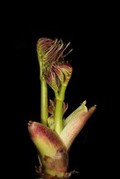
- Digital Images
- Online
Aralia spinosa L. Araliaceae. Devil's walking stick, Prickly ash, Hercules' club. Tree. Distribution: Eastern North America. Contact with sap causes skin irritation, raw berries mildly toxic to humans, causing diarrhoea and vomiting. Eaten by bears. Used medicinally by Native Americans for a variety of conditions. Photographed in the Medicinal Garden of the Royal College of Physicians, London.
Dr Henry Oakeley
- Digital Images
- Online
Eranthis hyemalis Salisb. Ranunculaceae Winter Aconite Distribution: Europe. The reason it was called Winter aconite and linked to Aconitum napellus as being just as poisonous is because plants were classified according to leaf shape in the 16th century. L'Obel's Stirpium adversaria nova (1571) and Plantarum seu stirpium historia (1576) (with a full page illustration on page 384 showing Eranthis and Aconitum together) along with the knowledge that related plants have similar medical properties caused the belief that Eranthis are as poisonous as Aconitum. They are both in Ranunculaceae and while Eranthis (like all Ranunculaceae)is toxic if eaten, it does not contain the same chemicals as Aconitum. Caesalpino (Ekphrasis, 1616) pointed out the error in classifying according to leaf shape and recommended flower shape. It contains pharmacologically interesting chemicals such as khellin, also present in Ammi visnaga. This is a vasodilator but quite toxic, but can be converted into khellin analogues such as sodium cromoglicate – used as a prophylaxis against asthma attacks – and amiodarone which has anti-arrhythmia actions so is used for atrial fibrillation and other arrhythmias. It is endangered and protected in the wild (Croatia) because of over-collecting for horticulture. Photographed in the Medicinal Garden of the Royal College of Physicians, London.
Dr Henry Oakeley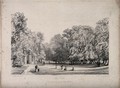
- Pictures
- Online
The Walks, Oxford. Etching by W.B. Cooke, 1838, after J.M. Ince.
Joseph Murray InceDate: 1 August 1838Reference: 21032i
- Digital Images
- Online
Senecio pulcher Hook.&Arn. Asteraceae Distribution: South America. It has not attracted attention as a medicinal or toxic plant but members of the genus Senecio contain pyrrolizidine alkaloids that are toxic to the liver and may cause liver cancer. A traditional Chinese medicine (TCM) product, Qianbai Biyan Pian, contains Senecio scandens which contains the unsaturated pyrrolizidine alkaloids, senecionine and seneciphylline. This is now a banned drug. (Safety of Herbal Medicinal Products, July 2002, Medicines Control Agency). Photographed in the Medicinal Garden of the Royal College of Physicians, London.
Dr Henry Oakeley
- Digital Images
- Online
Cynara cardunculus L. Asteraceae. Cardoon, Globe Artichoke, Artechokes, Scolymos cinara, Cynara, Cinara. Distribution: Southern Europe and North Africa. Lyte (1576) writes that Dodoens (1552) could find no medical use for them and Galen (c.200 AD) said they were indigestible unless cooked. However he relates that other authors recommend that if the flower heads are soaked in strong wine, they 'provoke urine and stir up lust in the body.' More prosaically, the roots boiled in wine and drunk it cause the urine to be 'stinking' and so cures smelly armpits. He adds that it strengthens the stomach so causing women to conceive Male children. He goes on to say that the young shoots boiled in broth also stir up lust in men and women, and more besides. Lyte (1576) was translating, I think with elaborations, from the chapter on Scolymos cinara, Artichaut, in Dodoen's Croydeboeck (1552) as L'Ecluse's French translation (1575) does not mention these latter uses, but Dodoen's own Latin translation, the Pemptades(1583), and Gerard's (1633) both do so. It is useful in understanding the history of these translations to realise that Gerard uses, almost verbatim, the translation of the 'smelly armpit' paragraph from Lyte. Photographed in the Medicinal Garden of the Royal College of Physicians, London.
Dr Henry Oakeley
- Ephemera
- Online
[Leaflet about gardens open to the public to raise funds for the Powys Branch of the British Red Cross Society in 1992].
Date: [1992?]
- Pictures
- Online
Birds of the garden shown in their natural surroundings. Coloured lithograph by P. Trap.
Reference: 43132i
- Digital Images
- Online
Dianella tasmanica Hook.f. Phormiaceae Tasman flax lily. Distribution: Australia. A pretty plant, but also a source of fine fibre. The leaves are used for making baskets and the berries as a dye source. No medicinal use found, but the fruit is an irritant
Dr Henry Oakeley
- Digital Images
- Online
Hydrangea quercifolia W.Bartram Hydrangeaceae. Oak-leaved hydrangea. Distribution: South-eastern United States. Beta-dichroine a quinazolinone also called febrifugine from the leaves of hydrangeas is 64-100 times more potent than quinine as an antimalarial in animals, but extremely toxic. A synthesised tolyl derivative, methaqualone (2-methyl-3-o-tolyl-4(3H)-quinazolinone), was found to be a mild hypnotic, and marketed in the sleeping tablet, Mandrax. Widely abused and quickly banned by most countries. Illegal manufacture continues and in South Africa methaqualone is the commonest drug of abuse, mixed with cannabis and smoked. Photographed in the Medicinal Garden of the Royal College of Physicians, London.
Dr Henry Oakeley
- Digital Images
- Online
Arctium lappa L. Asteraceae. Greater Burdock. Distribution: Europe to India and Japan. Dioscorides (Beck, 2003) writes: '... helps those who spit blood and who suffer from abscesses ... plastered on it stems the pains around the joints that stem from twistings. The Leaves are applied beneficially on old ulcers.' Culpeper (1650) writes: ‘Burdanae, etc. Of Bur, Clot-Bur or Burdock, ... helps such as spit blood and matter, bruised and mixed salt and applied to the place, helpeth the bitings of mad dogs. It expels wind, easeth pains of the teeth, strengthens the back, helps the running of the reins, and the whites in women, being taken inwardly.’ The roots contain inulin, which is made into a non-digestible sweetener for diabetics. It has a multitude of uses in herbal medicine, in particular it is a component of a compound called ‘essiac’ that has been widely used as a treatment of cancers in the USA, but which is of no proven benefit. The young roots can be eaten raw or cooked. The seeds are hairy and care should be taken when harvesting them as inhaled they are reported as ‘toxic’. The root is licensed for use in Traditional Herbal Medicines in the UK (UK Medicines and Healthcare Products Regulatory Agency (MHRA)). Photographed in the Medicinal Garden of the Royal College of Physicians, London.
Dr Henry Oakeley
- Pictures
- Online
An ornate formal garden with people talking, and gardeners working. Etching by E. Hedouin, 1856.
Hedouin, E.Reference: 497110i- Pictures
Gardening: methods of grafting on tree branches. Engraving by H. Mutlow.
Reference: 496872i
- Digital Images
- Online
Tanacetum cinerariifolium Sch.Blp. Asteraceae Dalmation chrysanthemum, Pyrethrum, Pellitory, Tansy. Distribution: Balkans. Source of the insecticides called pyrethrins. The Physicians of Myddfai in the 13th century used it for toothache. Gerard called it Pyrethrum officinare, Pellitorie of Spain but mentions no insecticidal use, mostly for 'palsies', agues, epilepsy, headaches, to induce salivation, and applied to the skin, to induce sweating. He advised surgeons to use it to make a cream against the Morbum Neopolitanum [syphilis]. However he also describes Tanacetum or Tansy quite separately.. Quincy (1718) gave the same uses
Dr Henry Oakeley
- Digital Images
- Online
Rosa 'Ispahan'
Dr Henry Oakeley- Pictures
A girl stands in a garden by the gate. Colour wood engraving by E. Evans after Kate Greenaway.
Kate GreenawayReference: 33219i
- Pictures
- Online
Carcassonne, France: a garden with a life size representation of the Passion and Crucifixion of Christ: two views. Coloured lithograph after Gamelin fils.
Gamelin, fils.Date: 1820-1829Reference: 569587i