244 results filtered with: Pink

- Digital Images
- Online
Rosa 'Charles de Mills'
Dr Henry Oakeley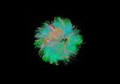
- Digital Images
- Online
Bacterial microbiome mapping, bioartistic experiment
François-Joseph Lapointe, Université de Montréal
- Digital Images
- Online
Kidney stone, SEM
Kevin Mackenzie, University of Aberdeen
- Digital Images
- Online
Valeriana pyrenaica L. Valerianaceae Distribution: Pyrenees. It has no medical use. Photographed in the Medicinal Garden of the Royal College of Physicians, London.
Dr Henry Oakeley
- Digital Images
- Online
Raynaud's Phenomenon
Thermal Vision Research.
- Digital Images
- Online
Breast cancer cell, SEM
Anne Weston, Francis Crick Institute
- Digital Images
- Online
NK T-cell lymphoma is a highly aggressive cancer of a specific type of immune cell called lymphoid cells, and is associated with the Epstein Barr virus (glandular fever). In later stages of the disease, the lymphoma can spread to the lymph nodes, as in this case.
William R. Geddie
- Digital Images
- Online
Bacterial microbiome mapping, bioartistic experiment
François-Joseph Lapointe, Université de Montréal
- Digital Images
- Online
Dermatofibroma, LM
Kevin Mackenzie, University of Aberdeen
- Digital Images
- Online
GABAergic and Glutamatergic neurons in the zebrafish brain
Kate Turner, Dr Steve Wilson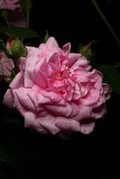
- Digital Images
- Online
Rosa 'Ispahan'
Dr Henry Oakeley
- Digital Images
- Online
Bottom surface of a human tongue
Macroscopic Solutions.
- Digital Images
- Online
Heuchera 'Silver Scrolls'
Dr Henry Oakeley
- Digital Images
- Online
Borago officinalis (Borage, Star flower)
Dr Henry Oakeley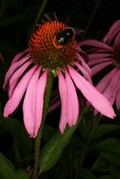
- Digital Images
- Online
Echinacea purpurea (L.) Moench Asteraceae. Coneflower. Distribution: North America. Austin (2004) records that the roots were chewed, or used as a tincture for coughs by the Choctaw. It was combined with Rhus typhina to treat venereal disease by the Delaware. Very little record of this being used by Native Americans, who used E. angustifolia very widely - Regarded as a panacea and magical herb. This and E. pallida were used to treat snakebite, spider bite, cancer, toothache, burns, sores, wounds, flu and colds. E. purpurea in modern times has been used as an ‘immunostimulant’, but is known to cause a fall in white cell count, and to be purely a placebo. Licensed for use as a Traditional Herbal Medicine, which does not require proof of efficacy, in the UK. Photographed in the Medicinal Garden of the Royal College of Physicians, London.
Dr Henry Oakeley
- Digital Images
- Online
Eucomis comosa 'Sparkling Burgundy'
Dr Henry Oakeley
- Digital Images
- Online
Leptospermum scoparium 'Red Damask'
Dr Henry Oakeley
- Digital Images
- Online
Cartilage, trabecular bone and bone marrow in a mouse femur
Kevin Mackenzie, University of Aberdeen
- Digital Images
- Online
HeLa cell, immortal human epithelial cancer cell line, SEM
Anne Weston, Francis Crick Institute
- Digital Images
- Online
Single neurone in the midbrain of an adult zebrafish, LM
Dr Mónica Folgueira
- Digital Images
- Online
Osteoclast breaking down dentine, TEM
Kevin Mackenzie, University of Aberdeen
- Digital Images
- Online
Microvasculature of the African Grey Parrot
Scott Birch, Scott Echols
- Digital Images
- Online
Healthy brain, composite of tractography and MRI
Gabriel González-Escamilla
- Digital Images
- Online
HeLa cell, immortal human epithelial cancer cell line, SEM
Anne Weston, Francis Crick Institute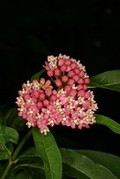
- Digital Images
- Online
Viburnum japonicum Spreng. Caprifoliaceae Distribution: Evergreen Shrub. Distribution: Japan and Taiwan. No medicinal uses. The fruit is a 'famine food' eaten when all else fails. As other seeds/fruits of Viburnum species are listed as poisonous, and none are listed as 'edible', one can assume that the seeds/fruits of V. japonicum are also toxic. It does not appear vulnerable to pests or molluscs which may be due to irioid glycosides that are present in this genus produced as a defence against herbivores, fungi and bacteria. They have a bitter taste. Photographed in the Medicinal Garden of the Royal College of Physicians, London.
Dr Henry Oakeley