850 results filtered with: Poisons
- Digital Images
- Online
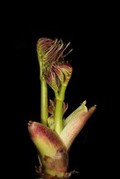
Aralia spinosa L. Araliaceae. Devil's walking stick, Prickly ash, Hercules' club. Tree. Distribution: Eastern North America. Contact with sap causes skin irritation, raw berries mildly toxic to humans, causing diarrhoea and vomiting. Eaten by bears. Used medicinally by Native Americans for a variety of conditions. Photographed in the Medicinal Garden of the Royal College of Physicians, London.
Dr Henry Oakeley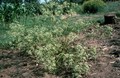
- Digital Images
- Online
Apium graveolens (Wild celery)
Rowan McOnegal- Books
The body toxic : how the hazardous chemistry of everyday things threatens our health and well-being / Nena Baker.
Baker, Nena, 1959-Date: 2008- Books
Laboratory manual for the detection of poisons and powerful drugs / by Dr. Wilhelm Autenrieth ; authorized translation by William H. Warren ; with 60 illustrations.
Wilhelm AutenriethDate: 1928
- Digital Images
- Online
Eranthis hyemalis Salisb. Ranunculaceae Winter Aconite Distribution: Europe. The reason it was called Winter aconite and linked to Aconitum napellus as being just as poisonous is because plants were classified according to leaf shape in the 16th century. L'Obel's Stirpium adversaria nova (1571) and Plantarum seu stirpium historia (1576) (with a full page illustration on page 384 showing Eranthis and Aconitum together) along with the knowledge that related plants have similar medical properties caused the belief that Eranthis are as poisonous as Aconitum. They are both in Ranunculaceae and while Eranthis (like all Ranunculaceae)is toxic if eaten, it does not contain the same chemicals as Aconitum. Caesalpino (Ekphrasis, 1616) pointed out the error in classifying according to leaf shape and recommended flower shape. It contains pharmacologically interesting chemicals such as khellin, also present in Ammi visnaga. This is a vasodilator but quite toxic, but can be converted into khellin analogues such as sodium cromoglicate – used as a prophylaxis against asthma attacks – and amiodarone which has anti-arrhythmia actions so is used for atrial fibrillation and other arrhythmias. It is endangered and protected in the wild (Croatia) because of over-collecting for horticulture. Photographed in the Medicinal Garden of the Royal College of Physicians, London.
Dr Henry Oakeley
- Digital Images
- Online
Senecio pulcher Hook.&Arn. Asteraceae Distribution: South America. It has not attracted attention as a medicinal or toxic plant but members of the genus Senecio contain pyrrolizidine alkaloids that are toxic to the liver and may cause liver cancer. A traditional Chinese medicine (TCM) product, Qianbai Biyan Pian, contains Senecio scandens which contains the unsaturated pyrrolizidine alkaloids, senecionine and seneciphylline. This is now a banned drug. (Safety of Herbal Medicinal Products, July 2002, Medicines Control Agency). Photographed in the Medicinal Garden of the Royal College of Physicians, London.
Dr Henry Oakeley
- Digital Images
- Online
Cynara cardunculus L. Asteraceae. Cardoon, Globe Artichoke, Artechokes, Scolymos cinara, Cynara, Cinara. Distribution: Southern Europe and North Africa. Lyte (1576) writes that Dodoens (1552) could find no medical use for them and Galen (c.200 AD) said they were indigestible unless cooked. However he relates that other authors recommend that if the flower heads are soaked in strong wine, they 'provoke urine and stir up lust in the body.' More prosaically, the roots boiled in wine and drunk it cause the urine to be 'stinking' and so cures smelly armpits. He adds that it strengthens the stomach so causing women to conceive Male children. He goes on to say that the young shoots boiled in broth also stir up lust in men and women, and more besides. Lyte (1576) was translating, I think with elaborations, from the chapter on Scolymos cinara, Artichaut, in Dodoen's Croydeboeck (1552) as L'Ecluse's French translation (1575) does not mention these latter uses, but Dodoen's own Latin translation, the Pemptades(1583), and Gerard's (1633) both do so. It is useful in understanding the history of these translations to realise that Gerard uses, almost verbatim, the translation of the 'smelly armpit' paragraph from Lyte. Photographed in the Medicinal Garden of the Royal College of Physicians, London.
Dr Henry Oakeley- Books
Safety in the chemical laboratory / H.A.J. Pieters ; with the collaboration of J.W. Creyghton.
Pieters, Honoré Alphonse JosephDate: 1951
- Books
- Online
A treatise on mineral, vegetable, and animal poisions, considered as to their relations with physiology, pathology, and medical jurisprudence / by M.P. Orfila ; translated from the French by John Waller.
Date: 1817
- Digital Images
- Online
Dianella tasmanica Hook.f. Phormiaceae Tasman flax lily. Distribution: Australia. A pretty plant, but also a source of fine fibre. The leaves are used for making baskets and the berries as a dye source. No medicinal use found, but the fruit is an irritant
Dr Henry Oakeley
- Digital Images
- Online
Hydrangea quercifolia W.Bartram Hydrangeaceae. Oak-leaved hydrangea. Distribution: South-eastern United States. Beta-dichroine a quinazolinone also called febrifugine from the leaves of hydrangeas is 64-100 times more potent than quinine as an antimalarial in animals, but extremely toxic. A synthesised tolyl derivative, methaqualone (2-methyl-3-o-tolyl-4(3H)-quinazolinone), was found to be a mild hypnotic, and marketed in the sleeping tablet, Mandrax. Widely abused and quickly banned by most countries. Illegal manufacture continues and in South Africa methaqualone is the commonest drug of abuse, mixed with cannabis and smoked. Photographed in the Medicinal Garden of the Royal College of Physicians, London.
Dr Henry Oakeley
- Digital Images
- Online
Arctium lappa L. Asteraceae. Greater Burdock. Distribution: Europe to India and Japan. Dioscorides (Beck, 2003) writes: '... helps those who spit blood and who suffer from abscesses ... plastered on it stems the pains around the joints that stem from twistings. The Leaves are applied beneficially on old ulcers.' Culpeper (1650) writes: ‘Burdanae, etc. Of Bur, Clot-Bur or Burdock, ... helps such as spit blood and matter, bruised and mixed salt and applied to the place, helpeth the bitings of mad dogs. It expels wind, easeth pains of the teeth, strengthens the back, helps the running of the reins, and the whites in women, being taken inwardly.’ The roots contain inulin, which is made into a non-digestible sweetener for diabetics. It has a multitude of uses in herbal medicine, in particular it is a component of a compound called ‘essiac’ that has been widely used as a treatment of cancers in the USA, but which is of no proven benefit. The young roots can be eaten raw or cooked. The seeds are hairy and care should be taken when harvesting them as inhaled they are reported as ‘toxic’. The root is licensed for use in Traditional Herbal Medicines in the UK (UK Medicines and Healthcare Products Regulatory Agency (MHRA)). Photographed in the Medicinal Garden of the Royal College of Physicians, London.
Dr Henry Oakeley
- Books
- Online
Giftgeschichte des Thier-, Pflanzen- und Mineralreichs, nebst den Gegengiften und der medizinischen Anwendung der Gifte / von Paul Kolbáni.
Paul KolbániDate: 1798
- Books
- Online
Moyens de remédier aux poisons végétaux : a ceux qui sont produits par les substances métalliques, et au venin des animaux / par B.G. Sage.
Sage, Balthazar Georges, 1740-1824.Date: 1811- Books
Etude médico-légale et clinique sur l'empoisonnement / par Ambroise Tardieu ... avec la collaboration de Z. Roussin ... pour la partie de l'expertise médico-légale relative à la recherche chimique des poisons.
Auguste Ambroise TardieuDate: 1867
- Books
- Online
Lectures on the adulteration of food and culinary poisons, the detection of poisons in general, and of adulterations in sundry chemical preparations, &c. used in medicine and the arts, with the means of discovering them : and rules for determining the purity of substances : delivered in the United States Military Academy / by James Cutbush.
James CutbushDate: 1823- Archives and manuscripts
Addison's disease; suprarenal insufficiency; melanodermias and pseudomelanodermias; chlorasma uterinum; vitiligo; leucodermia; and pseudoleucodermias (and some cases of scleroderma--see below); albinism and partial albinism; melanosis, melanoma, melanotic sarcoma or cancer; black and white moles; blue naevus; anaemic and pigment and achromic naevi
Date: 1899-1946Reference: PP/FPW/B.5/1Part of: Parkes Weber, Frederick (1863-1962)
- Digital Images
- Online
Tanacetum cinerariifolium Sch.Blp. Asteraceae Dalmation chrysanthemum, Pyrethrum, Pellitory, Tansy. Distribution: Balkans. Source of the insecticides called pyrethrins. The Physicians of Myddfai in the 13th century used it for toothache. Gerard called it Pyrethrum officinare, Pellitorie of Spain but mentions no insecticidal use, mostly for 'palsies', agues, epilepsy, headaches, to induce salivation, and applied to the skin, to induce sweating. He advised surgeons to use it to make a cream against the Morbum Neopolitanum [syphilis]. However he also describes Tanacetum or Tansy quite separately.. Quincy (1718) gave the same uses
Dr Henry Oakeley
- Digital Images
- Online
Datura stramonium (Thornapple) Also called Jimsonweed
Sue Snell
- Digital Images
- Online
Rosa 'Ispahan'
Dr Henry Oakeley- Ephemera
Poison.
Date: [between 1900 and 1949]
- Digital Images
- Online
Trillium sessile L. Trilliaceae Distribution: North America. Various Trilliums were used by Native Americans to stop haematuria, haematemesis, menorrhagia, and to heal ulcers (Milspaugh, 1974). Roots were eaten to treat stiff muscles, and tea from the plant drunk and powdered plant put on joints for rheumatism by the Iroquois (Lewis & Elvin-Lewis, 2003). Photographed in the Medicinal Garden of the Royal College of Physicians, London.
Dr Henry Oakeley
- Digital Images
- Online
Tricyrtis 'Togen' with hoverfly
Dr Henry Oakeley
- Books
- Online
Diseases of metabolism and of the blood : animal parasites, toxicology / edited by Richard C. Cabot.
Date: 1906
- Digital Images
- Online
Lavatera olbia 'Pink Frills'
Dr Henry Oakeley