851 results filtered with: Poisons
- Books
De peste. De venenis / [Antonio Guainerio].
Antonio GuaineriDate: c. 1487]
- Digital Images
- Online
Melilotus officinalis (Common melilot)
Rowan McOnegal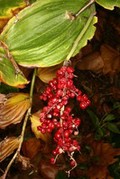
- Digital Images
- Online
Smilacina racemosa Desf. syn. Maianthemum racemosum (L.)Link Convallariaceae. False Spikenard, False Solomon's Seal, Scurvy berries, Treacle berries. Herbaceous perennial. Distribution: North America. Austin (2004) reports on Native American traditional usage: Cold infusion of the roots for sore eyes (Cherokee)
Dr Henry Oakeley
- Books
- Online
Les empoisonneurs : étude historique psychologique et médico-légale / [Ernest Dupré].
Dupré, Ernest, 1862-1918?Date: 1909
- Digital Images
- Online
Chaenomeles x superba 'Issai White'
Dr Henry Oakeley
- Books
- Online
The Bane and the antidote; or, poisoning and its suppression.
Wilson, Walter.Date: 1856
- Digital Images
- Online
Physalis alkekengi L. Rosaceae Chinese lantern, Winter Cherry, Bladder Cherry. Distribution: C & S Europe, W. Asia to Japan. Culpeper, in his English Physitian of 1652 writes: Winter Cherry ... are of great use in physic ...’ and recommends them for almost all kidney and urinary problems. In particular he seems to advocate the use of green berries in beer, for preventing kidney stones lodging in the ureters. It is called ‘aikakengi’ in the College’s Pharmacopoeia Londinensis of 1618. Belonging to the family Solanaceae, all its parts are poisonous except the ripe fruit. The green fruit and the rest of the plant contain atropinic compounds and will produce a dry mouth, rapid heart beat, hallucinations, coma and death if enough is taken. As the atropine is only present in the unripe fruit eating one will make the mouth go dry (and it has the most unpleasant taste), but it will also relax the smooth muscle in the wall of the ureter which helps passage of ureteric stones. Culpeper’s observations on its usefulness are supported by more modern observations. When ripe, the orange fruit inside its skeletal outer ‘lantern’ is edible, free of atropine, and delicious. Photographed in the Medicinal Garden of the Royal College of Physicians, London.
Dr Henry Oakeley
- Digital Images
- Online
Pulmonaria officinalis L. Boraginaceae Distribution: Europe. Pulmonaria or Lungwort are names for a lichen and a perennial plant in the Boraginaceae. This is the latter. Lyte (1578) has a woodcut of our plant and also calls it Sage of Jerusalem and says it is of 'no particular use in physicke, but is much used in meates and salads with eggs, as is also Cowslippes and Primroses, whereunto in temperature it is much alike.' He lists and describes the lichen separately. Culpeper (1650) said he found many sorts of lunguewort in perusing Authors ' Pulmonari, arborea and Symphytum maculosum [and the latter is our plant, the others the lichen] and that they 'helpe infirmities of the lungues, as hoarseness, coughs, wheezing, shortnesse of breath etc.' Coles (1657) who espouses the Doctrine of Signatures in a way unrivalled by any other English author, might have been expected to confirm the concept that the mottled leaves looked like the cut surface of a lung which indicates their purpose, but he only mentions the lungwort which is a lichen. However, Porta's beautiful book on the Doctrine, Phytognomica (1588), is clear that the plant called Pulmonaria with hairy leaves like a bugloss, spotted white with purple flowers, commonly called 'cynoglossa' [with a woodcut which could be Pulmonaria officinalis] indicate its use for ulcerated lungs, spitting blood, shortness of breath and asthma equally with the lichen with the same name. Lobel & Pena (1570) call it 'PULMONARIA, masculosa folia Borrago. floribus Primula veris, purpureis [PULMONARIA spotted, Borage-leaved, flowers like Primula veris - Cowslips - purple]' and say that women mix the leaves with a little broth and make it into an omelette for lung disorders and to strengthen the heart.. Lobel (1576) calls it Maculosa Pulmonaria and describes a white flowered form with a good woodcut. Gerard (1633) uses the same woodcut as Lobel and calls it Pulmonatia foliis Echii, Buglosse Cowslips with red flowers, and a woodcut of a narrow leaved plant as Pulmonaria masculosa, Spotted Cowslips of Jerusalem with red, blue and purple flowers and says 'the leaves are used among pot-herbes. The roots are aso thought to be good against the infirmities of ulcers of the lungs...'. Quincy (1718) writes: '... it has a glutinous juice ... and heals ulcers and erosions. It is commended in coughs and spitting of blood but is little used either in the Shop or Prescriptions'. Not used in modern medicine. It is in the family Boraginaceae whose species are often rich in pyrrolizidine alkaloids that cause liver toxicity and liver cancers, but levels in Pulmonaria officinalis may not be significant. Photographed in the Medicinal Garden of the Royal College of Physicians, London.
Dr Henry Oakeley
- Digital Images
- Online
Matthiola incana (L.)W.T.Aiton Brassicaceae Distribution: The genus name commemorates Pietro Andrea Mattioli (1500/1–77), physician and botanist, whose name is Latinised to Matthiolus.. Incana means hoary or grey, referring to the colour of the leaves. Mattioli's commentaries on the Materia Medica of Dioscorides were hugely popular. Matthiola incana was first described by Linnaeus as Cheiranthus incanus, being changed to Matthiola by William Aiton, at Kew, in 1812. It is in the cabbage family. Commercial seed packets contain a mixture of single and double forms. The latter are sterile, but selective breeding has increased the proportion of double forms from the seed of single forms to as much as 80%. ‘Ten week stocks’ are popular garden annuals, flowering in the year of sowing, whereas ‘Brompton stocks’ (another variety of M. incana) are biennials, flowering the following year. Gerard (1633), called them Stocke Gillofloure or Leucoium, and notes the white and purple forms, singles and doubles. About their medicinal value he writes ‘not used in Physicke except among certain Empiricks and Quacksalvers, about love and lust matters, which for modestie I omit’. The thought of a member of the cabbage family being an aphrodisiac might encourage the gullible to take more seriously the government’s plea to eat five portions of vegetable/fruit per day. Photographed in the Medicinal Garden of the Royal College of Physicians, London.
Dr Henry Oakeley
- Digital Images
- Online
Cytisus scoparius (L.) Link Fabaceae. Common broom, Genista. Distribution: Western and central Europe. Culpeper (1650) writes: 'Genista. Broom: … clense and open the stomach, break the stone in the reins [kidneys] and bladder, help the green sickness [anaemia]. Let such as are troubled with heart qualms or faintings, forbear it, for it weakens the heart and spirit vital' and in respect of the flowers he writes: 'Broome-flowers, purge water, and are good in dropsies [now regarded as heart failure with fluid retention].' Photographed in the Medicinal Garden of the Royal College of Physicians, London.
Dr Henry Oakeley
- Digital Images
- Online
Perovskia atriplicifolia 'Blue Spire'
Dr Henry Oakeley- Books
Les poisons dans l'antiquité égyptienne / [Louis Baslez].
Baslez, Louis.Date: 1932- Books
Lehrbuch der praktischen Toxikologie : für praktische Ärzte und Studirende mit Berücksichtigung der gerichtsärztlichen Seite des Faches / bearbeitet von Ferd. Aug. Falck.
Falck, Ferd. Aug.Date: 1880
- Books
- Online
Micro-chemistry of poisons : including their physiological, pathological, and legal relations adapted to the use of the medical jurist, physician, and general chemist / by Theodore G. Wormley.
Theodore George WormleyDate: l869
- Digital Images
- Online
Ajuga reptans 'Pink Elf'
Dr Henry Oakeley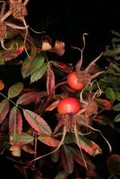
- Digital Images
- Online
Rosa nitida Willd. Rosaceae. Shining rose. Distribution: North-eastern North America. Nitida is Latin for shining, referring to the shiny leaves. The seed heads contain vitamin C. Photographed in the Medicinal Garden of the Royal College of Physicians, London.
Dr Henry Oakeley
- Digital Images
- Online
Prunus mume Siebold & Zucc. Rosaceae Chinese Plum, Japanese Apricot. Distribution: Eastern Asia. The fruit is used to flavour alcohol and used as a digestive to improve appetite. Photographed in the Medicinal Garden of the Royal College of Physicians, London.
Dr Henry Oakeley
- Books
- Online
ude mico-lale et clinique sur l'empoisonnement / par Ambroise Tardieu, avec la collaboration de Z. Roussin, pour la partie de l'expertise mico-lale relative la recherche chimique des poisons.
Auguste Ambroise TardieuDate: 1867- Books
Poisons, their effects and detection : a manual for the use of analytical chemists and experts with an introductory essay on the growth of modern toxicology / by Alexander Wynter Blyth.
Alexander Wynter BlythDate: [1885], ©1885
- Digital Images
- Online
Catharanthus roseus (L.)G.Don Apocynaceae. Madagascar Periwinkle Distribution: Madagascar. It is the source of vincristine and vinblastine, which impair cell multiplication by interfering with microtubule assembly, causing metaphase arrest and are effective medications for leukaemias, lymphomas and some solid tumours. The mortality from childhood leukaemia fell from 100% to 30% once it was introduced - not a drug that could ethically be tested by double-blind trials. These chemicals were initially discovered by investigators in 1958 who were looking for cures for diabetes so tested this plant which was being used in the West Indies to reduce blood sugar levels. There are 70 different alkaloids present in this plant, and some - catharanthine, leurosine sulphate, lochnerine, tetrahydroalstonine, vindoline and vindolinine - lower blood sugar levels. However, the toxicity of this plant is such that this is not a plant to try at home for diabetic management. The vincristine content of the plant is 0.0003%, so two kilograms of leaf are required to produce sufficient vincristine for a single course of treatment for a child (6gm). Fortunately it is a vigorous weed and easy to grow in the tropics. Artificial synthesis has now been achieved. Photographed in the Medicinal Garden of the Royal College of Physicians, London.
Dr Henry Oakeley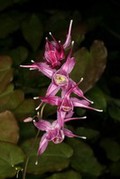
- Digital Images
- Online
Epimedium grandiflorum 'Lilafee'
Dr Henry Oakeley
- Ephemera
- Online
Astley's prepared wheat : to poison mice, sparrows, and all sorts of small vermin, without danger to animals of a larger growth... / J. Astley.
Astley, J.Date: [1850?]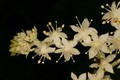
- Digital Images
- Online
Rodgersia aesculifolia Batalin Saxifraginaceae Chestnut-leaved Rodgersia. Herbaceous perennial. Distribution: Northern China. Named for Rear Admiral John Rodgers (1812-1882), American naval officer who commanded the Pacific expedition 1852-1856 when the genus was first discovered. Used as a Traditional Chinese Medicine for rheumatism, bronchitis, dysentery, asthma, and gastritis. Photographed in the Medicinal Garden of the Royal College of Physicians, London.
Dr Henry Oakeley
- Books
- Online
Leçons sur les effets des substances toxiques et medicamenteuses / par M. Claude Bernard.
Claude BernardDate: 1857
- Digital Images
- Online
Sempervivum tectorum L. Crassulaceae Houseleek, Senegreene Distribution: Europe. Sempervivum means 'live forever', tectorum means 'roof', and was apparently grown on house roofs to protect against lightning. Lyte (1578 distinguishes Stonecrops (Sedum) from Sengreene (Sempervivum) for he advises the Sempervivum, alone or mixed with barley meal, applied topically to burns, scalds, St Anthony's fire [erysipelas], ulcers and sores, will cure them and sore eyes. Apropos of stonecrops (Sedum), he describes the redness and blistering that the sap has on bare skin, and how it is good for poisons for if taken with vinegar by mouth it causes vomiting, but only safe to do so in strong people. He seems fairly confused as to which is which. Not approved by the European Medicines Agency for Traditional Herbal Medicinal use. Photographed in the Medicinal Garden of the Royal College of Physicians, London.
Dr Henry Oakeley