75 results filtered with: Himalayas

- Digital Images
- Online
Nepal; wooden suspension bridge over a canyon
Carole Reeves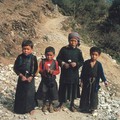
- Digital Images
- Online
Nepal, Sherpa children of the Khumbu, 1986
Carole Reeves
- Digital Images
- Online
Nepal; agriculture and subsistence in the Khumbu, 1986. Area as N0022565. Farmland on the lower slopes of the Himalayas (altitude 2900 metres). Sherpas are Buddhists and their houses are surrounded with prayer sticks flying cloth flags. A sherpa group with yaks travel along
Carole Reeves
- Digital Images
- Online
Nepal; yak transport in the Khumbu, 1986. Sherpas drive a pair of heavily laden yaks along a narrow path on the long climb from Lukla (altitude 2827 metres) to Namche Bazar (3446 metres), the main town in the Khumbu region. The yak is the beast of burden in the Khumbu as well as providing wool, milk, cheese and butter. Yak butter is burned in votive lamps and drunk in tea. The animals command a high price and are carefully nurtured by their owners.
Carole Reeves
- Books
- Online
Joseph Dalton Hookers "Himalayan journals" : Tagebuch auf einer Reise in Bengalen, dem Himalaya in Sikkim und Nepal, dem Khasiagebirge, etc.
Joseph Dalton HookerDate: [between 1880 and 1889?]- Books
The forests of upper India and their inhabitants / by Thomas W. Webber.
Webber, Thomas W.Date: 1902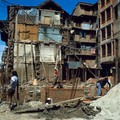
- Digital Images
- Online
Nepal; tenements, old and new, Kathmandu, 1986. Builders erecting new apartments on the site of an old tenement block. Once erected, the residents of the existing four-storey tenement block will have their daylight extinguished. A woman picks her way across the building site from her home to the street.
Carole Reeves
- Digital Images
- Online
Nepal; deforestation in the Khumbu, 1986. Stacked firewood outside a Sherpa house at Phakding (altitude 3200 metres). Also shown are carrying baskets (bottom right) and prayer flags attached to thin sticks stuck into the ground. In common with many smallholdings, the ground floor of the house is reserved for animals while the family lives upstairs. By the early 1980s, it was estimated that massive deforestation was contributing to the loss of 240 million cubic metres of topsoil in Nepal each year. Sherpas rely on wood for fuel but lack of chimneys in most homes contribute to the coughs and bronchial congestion common to most. Poor hygiene is prevalent because precious wood must be destroyed to create hot water.
Carole Reeves
- Digital Images
- Online
Nepal; Kathmandu Valley, Bhaktapur, 1986
Carole Reeves
- Digital Images
- Online
Nepal; Sherpa porters in the Khumbu, 1986. Well-dressed Sherpa porters prepare for a trekking expedition organised for a party of western vacationists. They will guide, bring up the rear, cook and strike camp. Such expeditions pay cash wages far in excess of anything Sherpas could hope to earn elsewhere and such income is invested in loans, cattle, land, tradeable articles and jewellery. Until the influx of mountaineering expeditions following Hillary's Everest climb (1953), western medicine was unknown in the Khumbu. Distribution of mainly analgesic and antibiotic drugs has led to misuse.
Carole Reeves
- Digital Images
- Online
Nepal; fruit seller in Kathmandu, 1986
Carole Reeves
- Digital Images
- Online
Nepal; town life in the Khumbu, 1986
Carole Reeves- Books
Right over the mountain : travels with a Tibetan medicine man / Gill Marais.
Marais, GillDate: 1991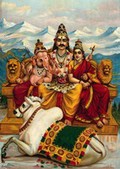
- Pictures
- Online
Shiva, Parvati and Ganesha enthroned on Mount Kailas with Nandi the bull. Chromolithograph by R. Varma.
Raja Ravi VarmaReference: 26685i
- Digital Images
- Online
Nepal; agriculture in the Khumbu, 1986. Growing potatoes at Phortse (altitude 4000 metres). At this altitude, in breathtaking but inhospitable terrain, potatoes are the principle crop of the Sherpas. Phortse is one of the highest permanent village settlements on the journey to Sagarmatha (Mount Everest).
Carole Reeves
- Digital Images
- Online
Nepal; Sherpa children at a water pipe, 1986
Carole Reeves- Books
A guide to source materials in the India Office Library and Records for the history of Tibet, Sikkim and Bhutan 1765-1950 / Amar Kaur Jasbir Singh.
Singh, Amar Kaur JasbirDate: 1988
- Books
- Online
Illustrations of the botany and other branches of the natural history of the Himalayan mountains, and of the Flora of Cashmere / By J. Forbes Royle.
John Forbes RoyleDate: 1839
- Digital Images
- Online
Nepal; shops, Kathmandu, 1986
Carole Reeves- Books
Medicinal plants of Nepal Himalaya / by N.P. Manandhar.
Manandhar, N. P.Date: 1980
- Digital Images
- Online
Nepal; Sherpa traders of the Khumbu, 1986
Carole Reeves
- Digital Images
- Online
Nepal; Kathmandu Valley, children of Bhaktapur, 1986. Three children stand in Durbar Square. The little boy has genu valgum (knock knees). In the mid-1980s, nearly half of all Nepalese children died before reaching the age of 5, and life expectancy at birth was 51 years for men and 50 years for women. Conditions associated with poor hygiene and sanitation, including gastrointestinal disorders, diarrhoea, and parasitic infestation, were common.
Carole Reeves
- Digital Images
- Online
Nepal; child eating rice, Terai, 1986
Carole Reeves
- Books
- Online
Western Himalaya and Tibet : a narrative of a journey through the mountains of northern India, during the years 1847-8 / by Thomas Thomson.
Thomas ThomsonDate: 1852
- Digital Images
- Online
Nepal; village well, Rapti Valley, Terai, 1986
Carole Reeves