23 results filtered with: Horns

- Pictures
- Online
Three papaya trees (Carica papaya) with lizards, dodos and a man hunting in an exotic, tropical landscape. Etching, c. 1671.
Date: [1671]Reference: 24654i
- Pictures
- Online
A hairy goat with long curved horns. Engraving.
Reference: 39846i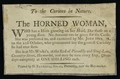
- Ephemera
- Online
To the curious in nature : the Horned Woman : who has a horn growing on her head, like those in a young ram.
Date: [between 1750 and 1793?]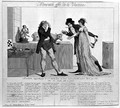
- Pictures
A vaccinated man grows horns in front of a couple with a lancet. Coloured etching, c. 1800.
Date: [C. 1800]Reference: 16164i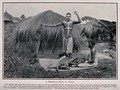
- Pictures
- Online
A medicine or shaman adorned with white paint, standing above a sick man trying to drive away the disease. Halftone.
Reference: 21329i
- Pictures
- Online
A man is selling horns from his basket, as emblems of cuckoldry: husbands reply that they will not buy any because they already have plenty. Engraving by Frs. Hubert after Le Nain (?).
Date: [1850]Reference: 29926i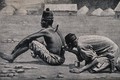
- Pictures
- Online
An African medicine man or shaman applying the technique of cupping to a patient (using animal horns), which involves drawing blood to the surface of the body. Halftone.
Reference: 21338i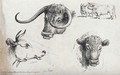
- Pictures
- Online
Three cows' heads, including one long horn and a short horn, and a small scale bull and cow. Etching, ca 1801.
Date: 1 Nov 1801Reference: 40026i
- Pictures
- Online
Twenty two ancient drinking vessels from an exhibition. Wood-engraving, c. 1873, after J. T. Balcomb.
Balcomb, J. T.Date: 25 October 1873Reference: 25734i
- Pictures
- Online
A 14th century silver drinking horn with explanatory text. Wood-engraving, late 19th century.
Reference: 25733i
- Pictures
- Online
A silver drinking horn dating from the 14th century. Engraving by J. & H. S. Storer, 1821.
Date: 1 June 1821Reference: 25732i
- Pictures
- Online
The head of a rhinoceros with overgrown horn thought to be a unicorn. Coloured lithograph by (J.H.?) Clark after Campbell.
Campbell.Date: 1822Reference: 39933i
- Pictures
- Online
An African medicine man or shaman applying the technique of cupping to a patient (using animal horns), which involves drawing blood to the surface of the body. Watercolour.
Reference: 21381i
- Pictures
- Online
An African medicine man cupping and bleeding two patients. Wood engraving by Dalziel after J. Leech.
John LeechReference: 21359i- Pictures
The head of a rhinoceros with overgrown horn thought to be a unicorn. Coloured aquatint by (J.H.?) Clark, ca 1822, after Campbell.
Campbell.Date: 1822Reference: 39881i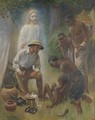
- Pictures
- Online
The healer.
Harold CoppingDate: [1916]Reference: 535948i
- Pictures
- Online
A Gazaland medicine man or shaman, equatorial Africa. Halftone after Dudley Kidd.
Dudley Arthur KiddDate: 1900-1909Reference: 21318i
- Books
- Online
The growth and shedding of the antlers of the deer : the histological phenomena and their relation to the growth of bone / by William Macewen, F.R.S.
William MacewenDate: 1920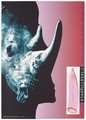
- Pictures
- Online
A rhinoceros with a phallic-like horn and an elongated condom with the message in French: "What distinguishes humans from animals is (it is said) intelligence"; a statement about AIDS. Colour silk screen print after A. Le Quernec, 1993.
Alain le QuernecDate: [19]93Reference: 672792i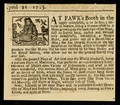
- Ephemera
- Online
At Fawk's booth in the upper Moorfields, is to be seen a miracle of nature, being a woman that has a horn growing on the back part of her head, full 10 inches long ...
Date: 1725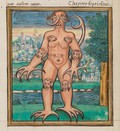
- Digital Images
- Online
Histoires Prodigieuses; the Monster of Cracow

- Pictures
- Online
A ram, possibly of the blue or Burrhel sheep, with long curved horns. Lithograph by J Wolf.
Joseph WolfReference: 39848i
- Pictures
- Online
John Cottington, a chimney-sweep, in elaborate costume walking the street with smoking pipe and horn in hand, with descriptive verse. Line block, 18--, after engraving, c. 1620.
Date: [between 1800 and 1899]Reference: 26800i