670 results filtered with: Landscapes
- Digital Images
- Online
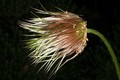
Pulsatilla vulgaris Mill. Ranunculaceae. Pasque flower. Distribution: Europe. Lindley (1838) and Woodville (1790) knew this as Anemone pulsatilla, the common name being Pasque (Easter) Flower. At the end of the 18th century it was recommended for blindness, cataracts, syphilis, strokes and much more, treatments which, as was clear to physicians at the time, were valueless. Gerard (1633) writes: ‘They serve only for the adorning of gardens and garlands, being floures of great beauty’. It is in the buttercup family, Ranunculaceae, all members of which are poisonous. It was recommended, by mouth, for ‘obstinate case of taenia’ (tapeworms). One hopes it was more toxic to the worm than the patient. Flowers with a central disc and radiating florets were regarded as being good for eye complaints under the Doctrine of Signatures. Porta (1588) writes (translated): ‘Argemone [Papaver argemone], and anemone, have flowers of this shape, from this they cure ulcers and cloudiness of the cornea’. There were occupational diseases even before there were words like pneumoconiosis, and Lindley writes that ‘the powder of the root causes itching of the eyes, colic and vomiting, if in pulverising it the operator do not avoid the fine dust which is driven up.’ Photographed in the Medicinal Garden of the Royal College of Physicians, London.
Dr Henry Oakeley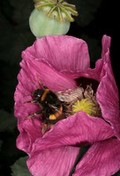
- Digital Images
- Online
Papaver somniferum L. Papaveraceae Opium Poppy Distribution: Asia minor, but has been dated to 5000BC in Spanish caves. Now grows almost everywhere. The oldest medicine in continuous use, described in the Ebers' papyrus (1550 BC), called Meconium, Laudanum, Paregoric and syrup of poppies. Culpeper (1650) on Meconium '...the juyce of English Poppies boyled till it be thick' and 'I am of the opinion that Opium is nothing else but the juyce of poppies growing in hotter countries, for such Opium as Authors talk of comes from Utopia.[he means an imaginary land, I suspect]’]. He cautions 'Syrups of Poppies provoke sleep, but in that I desire they may be used with a great deal of caution and wariness...' and warns in particular about giving syrup of poppies to children to get them to sleep. The alkaloids in the sap include: Morphine 12% - affects ?-opioid receptors in the brain and causes happiness, sleepiness, pain relief, suppresses cough and causes constipation. Codeine 3% – mild opiate actions – converted to morphine in the body. Papaverine, relaxes smooth muscle spasm in arteries of heart and brain, and also for intestinal spasm, migraine and erectile dysfunction. Not analgesic. Thebaine mildly analgesic, stimulatory, is made into oxycodone and oxymorphone which are analgesics, and naloxone for treatment of opiate overdose – ?-opioid receptor competitive antagonist – it displaces morphine from ?-opioid receptors, and constipation caused by opiates. Protopine – analgesic, antihistamine so relieves pain of inflammation. Noscapine – anti-tussive (anti-cough). In 2006 the world production of opium was 6,610 metric tons, in 1906 it was over 30,000 tons when 25% of Chinese males were regular users. The Opium wars of the end of the 19th century were caused by Britain selling huge quantities of Opium to China to restore the balance of payments deficit. Laudanum: 10mg of morphine (as opium) per ml. Paregoric: camphorated opium tincture. 0.4mg morphine per ml. Gee’s Linctus: up to 60 mg in a bottle. J Collis Browne’s chlorodyne: cannabis, morphine, alcohol etc. Kaolin and Morph. - up to 60 mg in a bottle. Dover’s Powders – contained Ipecacuana and morphine. Heroin is made from morphine, but converted back into morphine in the body (Oakeley, 2012). One gram of poppy seeds contains 0.250mgm of morphine, and while one poppy seed bagel will make a urine test positive for morphine for a week, one would need 30-40 bagels to have any discernible effect. Photographed in the Medicinal Garden of the Royal College of Physicians, London.
Dr Henry Oakeley
- Digital Images
- Online
Watsonia pillansii L.Bolus Iridaceae Bugle lily, Distribution: South Africa. Named for Sir William Watson (1715-1787), British botanist and physician, sometime censor at the Royal College of Physicians, London. No medicinal uses. Photographed in the Medicinal Garden of the Royal College of Physicians, London.
Dr Henry Oakeley
- Digital Images
- Online
Scutellaria baicalensis Georgi Lamiaceae. Baikal skullcap. Distribution: China. There are several hundred species of Scutellaria, also known as skull caps, so correct identification is important - in particular from Scutellaria lateriflora an American species known as Blue skullcap. The latter is used as an abortifacient and to expel placenta by the Cherokee and for cleaning the throat by the Iroquois (Austin, 2004). Much vaunted as a treatment for rabies with unlikely statistics (1,400 cases cured by one doctor alone). Also as ‘antispasmodic, nervine, [for] chorea, convulsions, tetanus, tremors, delirium tremens, [and as a] diaphoretic and diuretic'. Toxicity symptoms include mental confusion, stupor, headache, vertigo, photophobia, dilated pupils, difficulty in micturition, bradycardia, tremulousness and languor, followed by wakefulness and restlessness (Milspaugh, 1974). Hutchens (1991) reported that it reduces sexual desire and was used for almost every nervous illness. Scutellaria baicalensis contains baicalin, baicalein and wogonin (European Medicines Agency, September 2010). It is used in Traditional Chinese Medicine for treating inflammation, cancer, bacterial and viral infections of the lungs and gut and is one of the '50 Chinese herbs' in the lists of some authors. Scutellaria lateriflora (combined with Verbena officinalis, Passiflora incarnata and the seed of Avena sativa (oats) is licensed for use in Britain as a herbal medicine for temporary relief of mild symptoms of stress such as mild anxiety and to aid sleep, based upon traditional use only. Scutellaria baicalensis is not licensed for use in the UK (UK Medicines and Healthcare Products Regulatory Agency (MHRA)). Photographed in the Medicinal Garden of the Royal College of Physicians, London.
Dr Henry Oakeley- Archives and manuscripts
Reflections on a pond with rushes
Coates, Robert, active approximately 1966Date: 23 November 1966Reference: 2921354iPart of: Papers of Edward Adamson (1911-1996)- Archives and manuscripts
People using a toboggan and ice-skating in the background
Fraser, David, active approximately 1978-1979Date: 23 February 1978Reference: 2935740iPart of: Papers of Edward Adamson (1911-1996)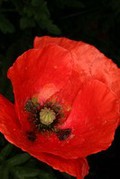
- Digital Images
- Online
Papaver rhoeas L. Papaveraceae Corn Poppy, Flanders Poppy. Distribution: Temperate Old World. Dioscorides (Gunther, 1959) recommended five or six seed heads in wine to get a good night's sleep the leaves and seeds applied as a poultice to heal inflammation, and the decoction sprinkled on was soporiferous. Culpeper (1650) ' ... Syrup of Red, or Erratick Poppies: by many called Corn-Roses. ... Some are of the opinion that these Poppies are the coldest of all other - believe them that list [wishes to]: I know no danger in this syrup, so it be taken in moderation and bread immoderately taken hurts
Dr Henry Oakeley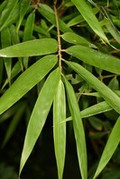
- Digital Images
- Online
Fargesia rufa T.P.Yi Poaceae. Farges bamboo. Distribution: China. Named, in 1985, after Paul Guillaume Farges (1844-1912), a French missionary and plant collector, who went in 1867 with the Missions Étrangères to north-east Szechuan. He botanised extensively and amassed 4,000 herbarium specimens which he sent back o France. He discovered and sent back seeds of the handkerchief tree, Davidia involucrata, one of which germinated after 18 months. Eighty plants have been named after him. (Cox, 1945
Dr Henry Oakeley
- Digital Images
- Online
Sanguinaria canadensis (Bloodroot, Pucoon or Indian paint)
Dr Henry Oakeley
- Digital Images
- Online
Paeonia suffruticosa 'Chang Zhi Hong'
Dr Henry Oakeley- Archives and manuscripts
Red and black house and three trees in a field with horizontal stripes in black, red and blue in the background
Parks, Margaret, active approximately 1966-1967Date: 30 September 1966Reference: PP/ADA/C/8/116/7Part of: Papers of Edward Adamson (1911-1996)- Archives and manuscripts
Countryside landscape with river and stone wall
Rowlands, Gwyneth, 1915-2009Date: c.1960s-1970sReference: PP/ADA/C/8/134/43Part of: Papers of Edward Adamson (1911-1996)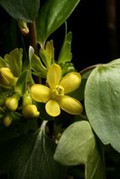
- Digital Images
- Online
Ribes odoratum H.L.Wendl Grossulariaceae Buffalo currant. Distribution: North America. Fruits edible. Presumably a source of vitamin C but no medicinal use. No reports of medicinal usage by Native Americans found. Photographed in the Medicinal Garden of the Royal College of Physicians, London.
Dr Henry Oakeley- Archives and manuscripts
A road, lined with pale blue houses, leading to an orange mountainside with houses built into it
Gurr, Graham, active approximately 1976-1984Date: 31 August 1983Reference: 2971544iPart of: Papers of Edward Adamson (1911-1996)
- Digital Images
- Online
Camassia leichtlinii (Baker)S.Watson Hyacinthaceae. Great Camas, Quamash. The species was named for Maximillian Leichtlin (1831-1910 of Baden , Germany, bulb enthusiast who corresponded with J.G. Baker at Kew. Bulbous herb. Distribution: North America. The bulbs of Camassia species were eaten by the Native Americans, the Nez Perce, after cooking by steaming for a day - which suggests they may be poisonous raw. They gave them to the American explorers, Meriwether Lewis and William Clerk, on their expedition (1804-1806) when they ran out of food. The bulbs of the similar looking 'Death camus', Toxicoscordion venenosum have been fatal when ingested by mistake (RBG Kew on-line). Steroidal saponins, which are precursors in the manufacture of steroids and cytotoxic activity has been detected in the sap of the bulbs. Photographed in the Medicinal Garden of the Royal College of Physicians, London.
Dr Henry Oakeley- Archives and manuscripts
A landscape including three red mountains
Lawrence, Stephen A., active approximately 1966Date: 13 October 1966Reference: 2992691iPart of: Papers of Edward Adamson (1911-1996)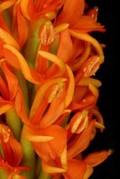
- Digital Images
- Online
Onychium japonicum 'Dali'
Dr Henry Oakeley- Archives and manuscripts
A woman seated with crossed arms among mountains in the desert with a purple sky
Bishop, Mary (Mary Cecil Hamilton), 1914-1990Date: February 1968Reference: 2884950iPart of: Papers of Edward Adamson (1911-1996)
- Digital Images
- Online
Echinacea purpurea (L.) Moench Asteraceae. Coneflower. Distribution: North America. Austin (2004) records that the roots were chewed, or used as a tincture for coughs by the Choctaw. Combined with Rhus typhina to treat venereal disease by the Delaware. Very little record of this being used by Native Americans, who used E. angustifolia very widely - Regarded as a panacea and magical herb. This and E. pallida were used to treat snakebite, spider bite, cancer, toothache, burns, sores, wounds, flu and colds. E. purpurea in modern times has been used as an ‘immunostimulant’, but is known to cause a fall in white cell count, and to be purely a placebo. Licensed for use as a Traditional Herbal Medicine, which does not require proof of efficacy, in the UK. Photographed in the Medicinal Garden of the Royal College of Physicians, London.
Dr Henry Oakeley- Archives and manuscripts
Mountains and human figures in a stream of water
Rossiter, Peter, active approximately 1986Date: 3 June 1986Reference: 3025675iPart of: Papers of Edward Adamson (1911-1996)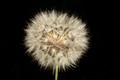
- Digital Images
- Online
Tragopogon pratensis L. Asteraceae Goats beard, Salsify, Jack-go-to-bed-at-noon. Distribution: Europe and North America. This is the Tragopogion luteum or Yellow Goats-beard of Gerard (1633) who recommended them boiled until tender and then buttered as being more delicious than carrots and parsnips and very nutritious for those sick from a long lingering disease. Boiled in wine they were a cure for a 'stitch' in the side. In the USA children collect the milky sap onto a piece of glass and, when dry, chew it as bubble-gum. The name 'Jack-go-to-bed-at-noon' referes to the flowers which close at noon and the spherical radiation of seed plumules which then appear. Salsify is now applied as a name for T. porrifolius and Scorzonera hispanica. Photographed in the Medicinal Garden of the Royal College of Physicians, London.
Dr Henry Oakeley- Archives and manuscripts
Yellow and green fields with a house and brown trees
Attwood, Frank, active approximately 1967Date: 14 November 1967Reference: 2846748iPart of: Papers of Edward Adamson (1911-1996)- Archives and manuscripts
"Hamish on Sunday"
Lorraine, Mary, active approximately 1966-1967Date: 25 May 1967Reference: 3001159iPart of: Papers of Edward Adamson (1911-1996)- Archives and manuscripts
A plant and a standing rock in a desert
Buckman, Bernard, active approximately 1968Date: 1 August 1968Reference: 2917570iPart of: Papers of Edward Adamson (1911-1996)
- Digital Images
- Online
Stone camels along the approach to Yung-lo's tomb.
John Thomson