Over the centuries, gout acquired the reputation of a medical condition associated with overindulgence and privilege. Aisha Mazhar shares some examples from the rich cultural history of gout and asks how this reputation for excess may have trivialised the personal experiences of this acutely painful condition.
(Mis)representations of gout
Words by Aisha Mazhar
- In pictures
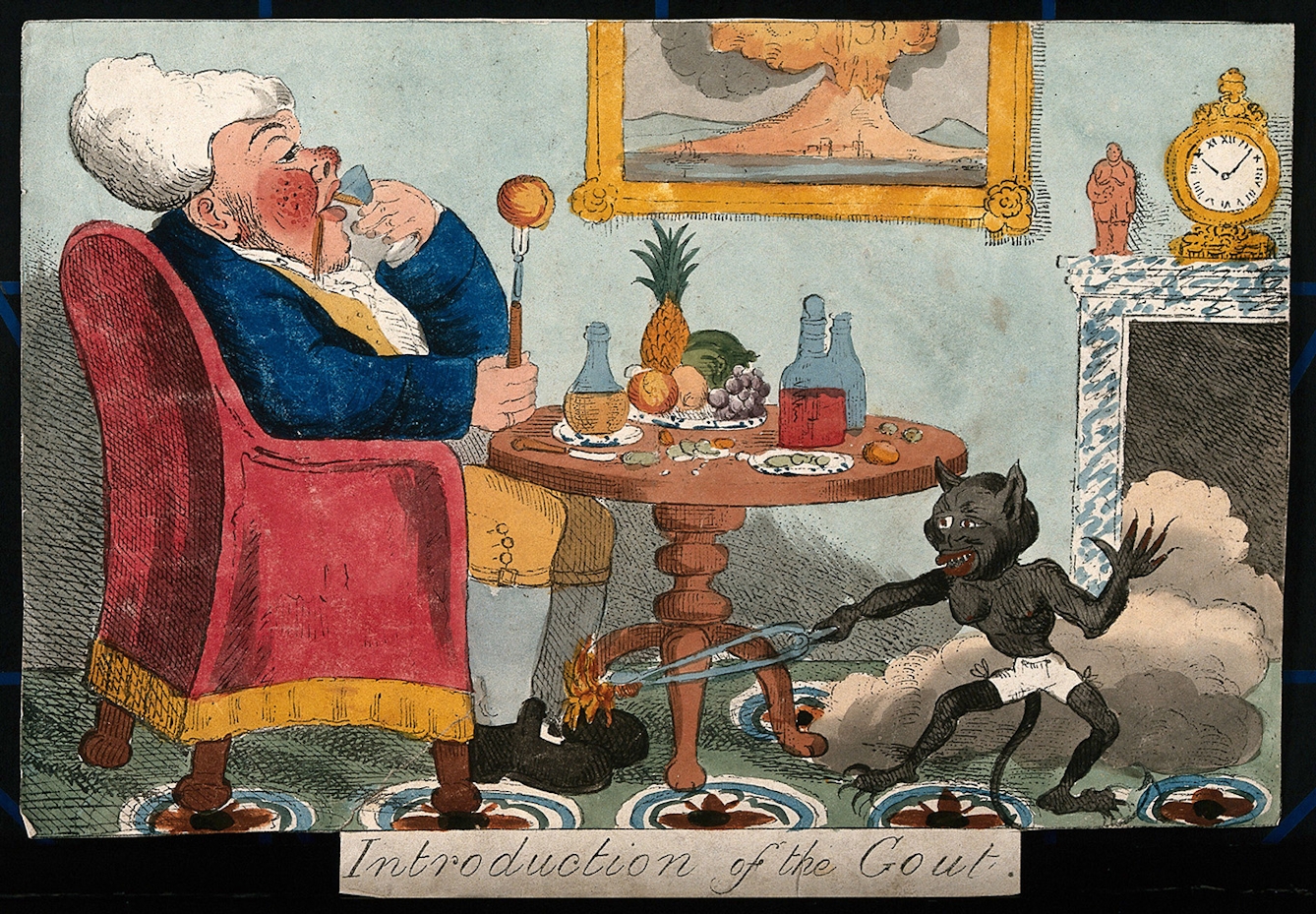
1 of 9
Gout is an ancient disease, known as the “king of diseases and the disease of kings” because of the acute pain it causes and its associations with wealth and the nobility. The imagery associated with gout sufferers often includes lavish feasts and an endless supply of alcohol. In terms of contemporary medical science, gout is a form of arthritis – the result of high levels of uric acid crystals that form in and around the joints. It affects around 1.6 million people in the UK. Yet the centuries-old stigma of gout as the result of self-inflicted overindulgence persists.
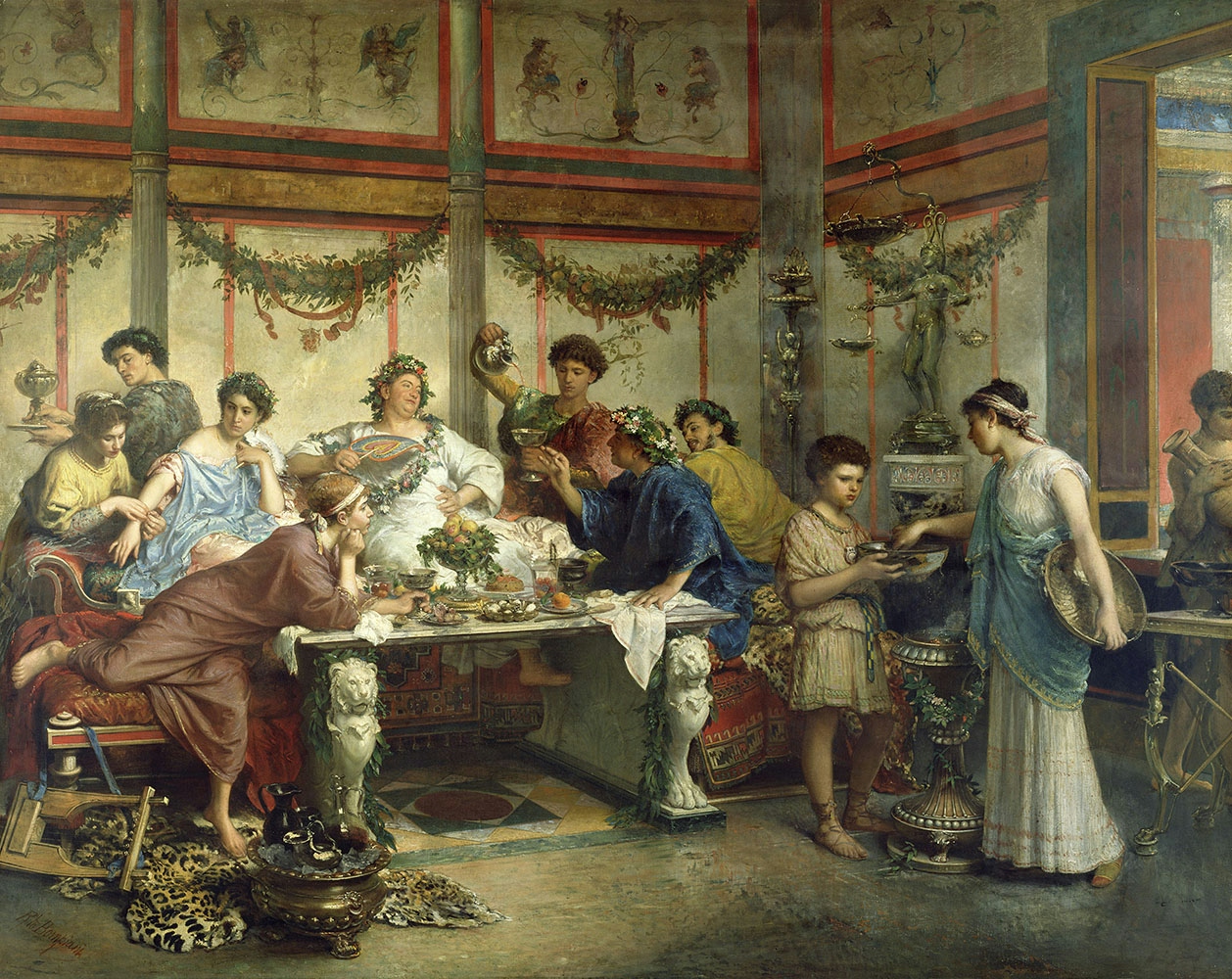
2 of 9
Gout is one of the oldest diseases recorded by humanity and can be traced to ancient Egypt, where it was known as podagra, an affliction of the big toe. The ancient Greek healer Hippocrates referred to it as “the unwalkable disease”, because the inflamed joint in the big toe made it difficult to walk. The term ‘gout’ is derived from the Latin ‘gutta’, meaning ‘a drop’, referring to the theory in humoral medicine that gout is caused by impurities from the blood dropping into the joint. The characterisation of gout as a disease of excess goes back to the ancient Greeks and Romans, who were known for their lavish feasting. Hippocrates called it the “arthritis of the rich” and the ancient Roman physician Galen associated it with debauchery and drunkenness.
3 of 9
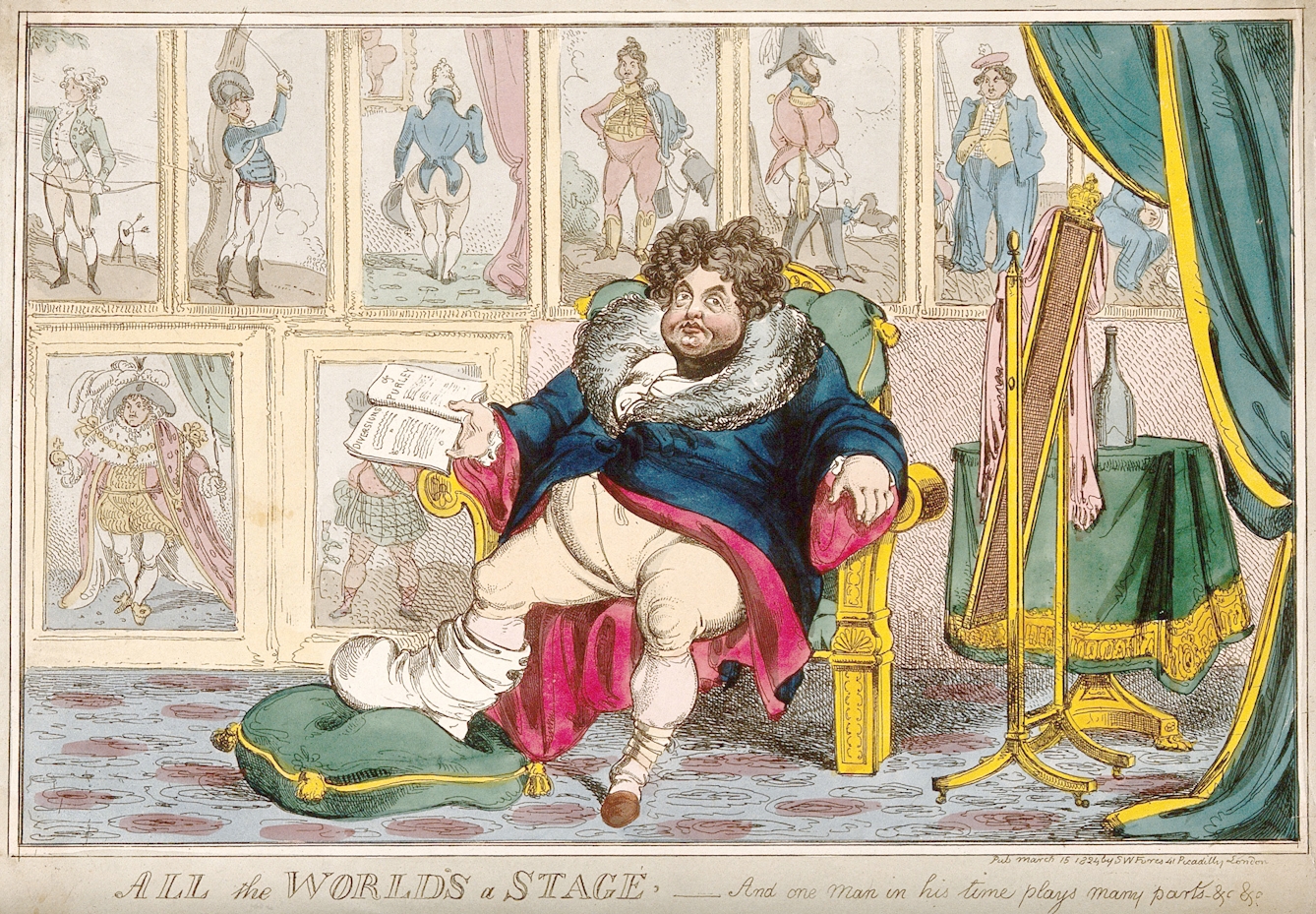
While the ancients acknowledged a hereditary component to gout, its reputation as a condition primarily borne from excess had taken hold. This was not helped by its association with European royalty over the centuries. The English King Henry VIII was famously plagued by gout, and King Louis XIV of France, known for his excessive drinking and sumptuous banquets, was also a sufferer. This caricature of the 18th-century King George IV, posing in front of portraits of himself in many luxurious outfits with his bandaged, gouty leg prominently displayed, mocks his extravagant and costly lifestyle. Gout was often used as a signifier of moral corruption as well as gluttony in 18th- and 19th-century caricatures.
4 of 9
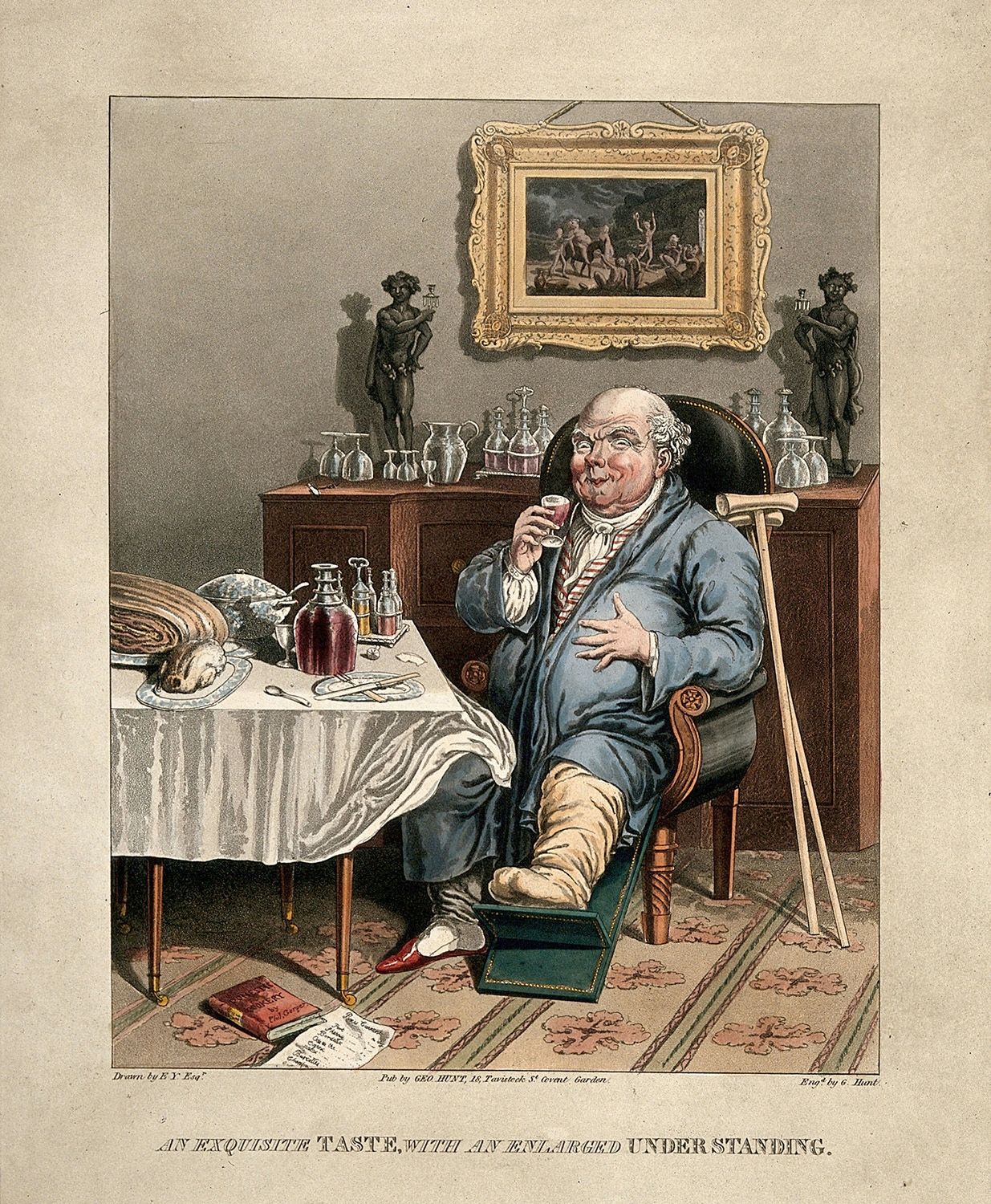
Because of its associations with the nobility, gout began to be regarded as a symbol of status. This was exemplified by a popular 17th-century fable called ‘The gout and the spider’ in which the spider settled in a poor man’s house where its webs were not constantly swept away by servants, and gout found it’s natural home in a nobleman’s house where “he was entertained with a soft cushion, with down pillows” and “he did like it so well, that ever since he takes up his lodging with rich men.” Because gout was found in royal families and known to have a hereditary dimension, contracting it might also hint at nobility in the sufferer.
5 of 9
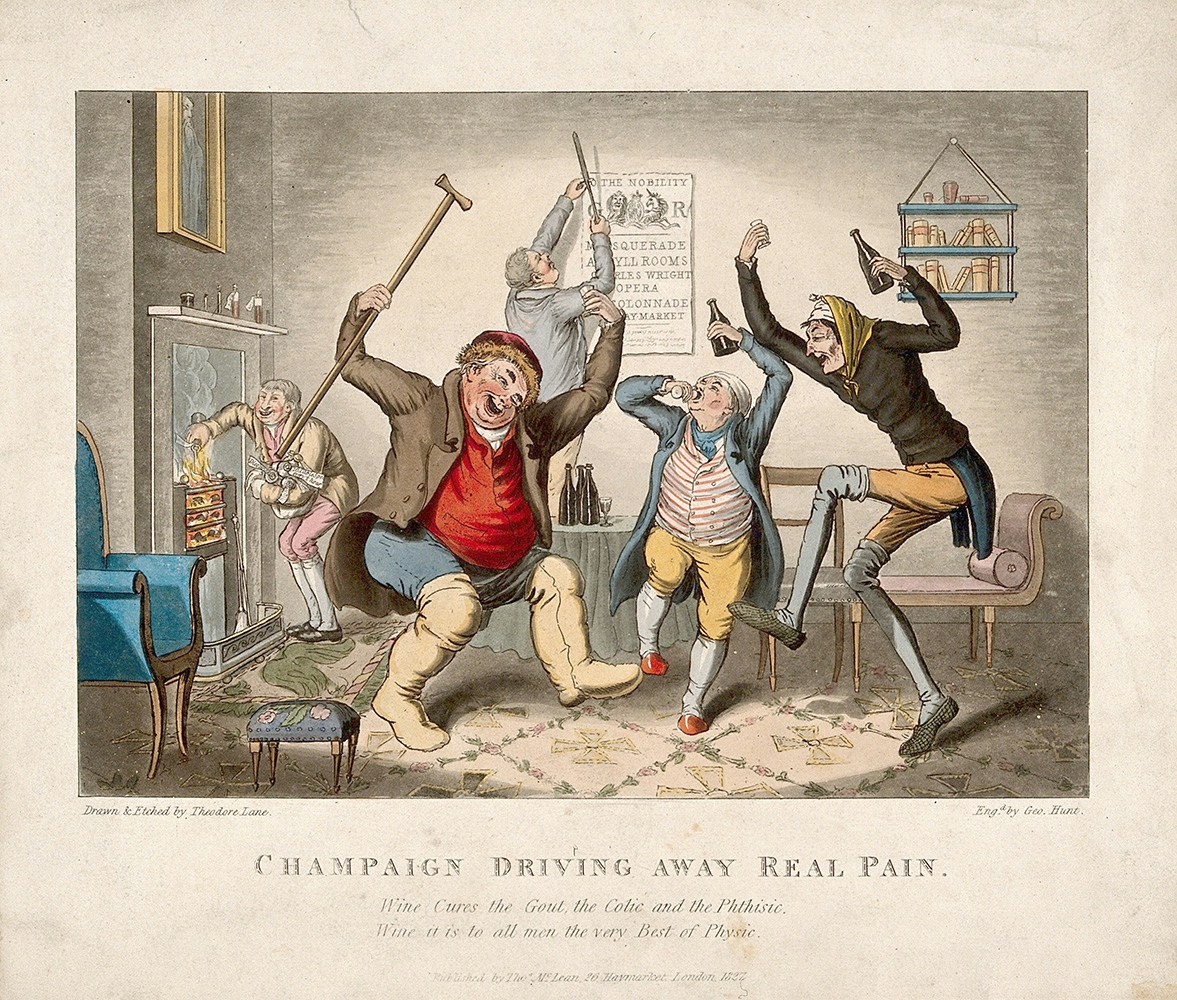
An old medical theory that having one disease might prevent you from getting certain others suggested that gout might be the lesser evil. Having gout might even be desirable if it could act like a talisman or vaccine and protect you from a worse illness. In this caricature, patients with gout and other complaints drink champagne while, in the background, a man pours bottles of medication into the fire, jokingly suggesting that a champagne lifestyle is a better treatment than medicine.
6 of 9
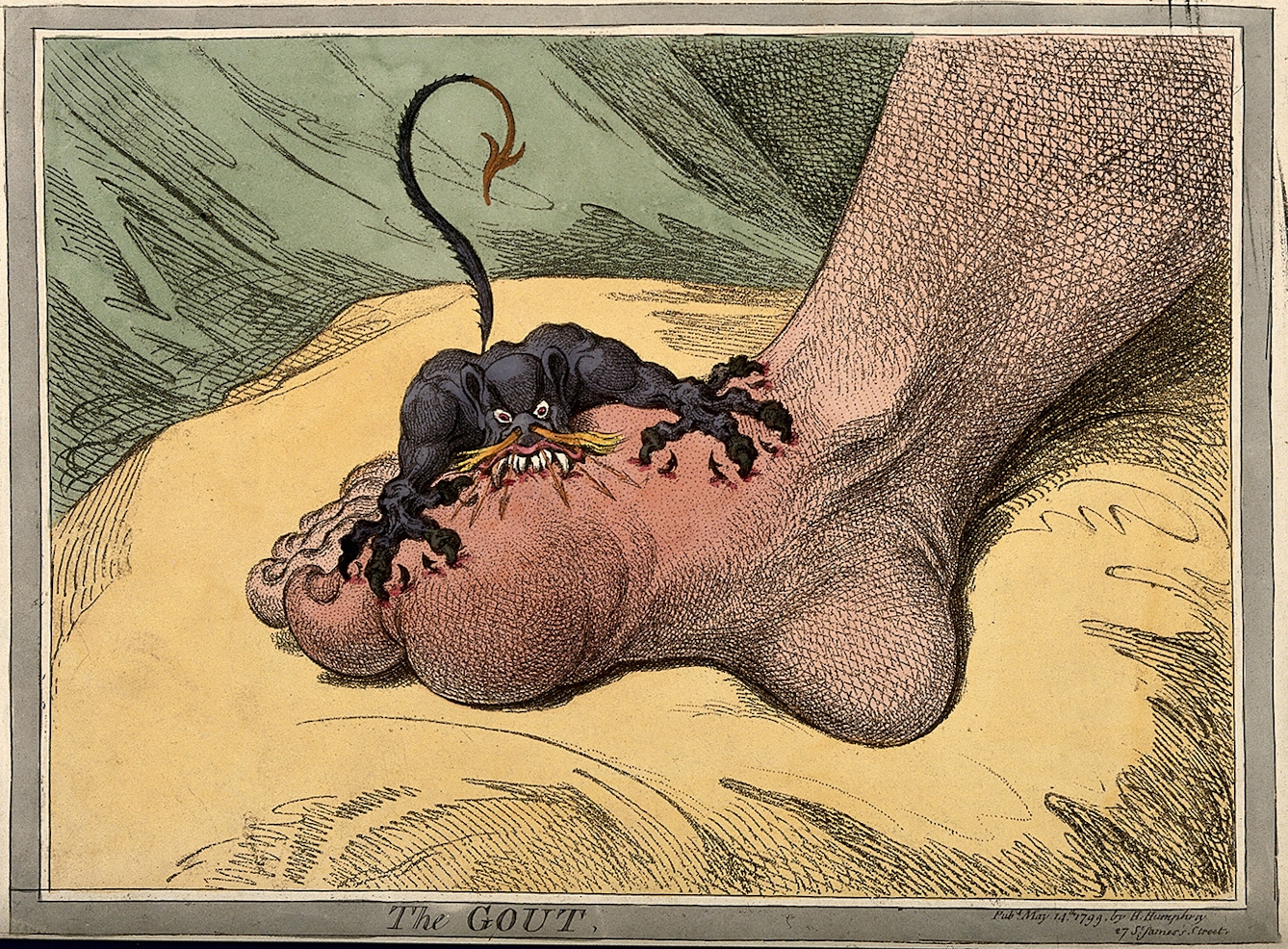
Comic representations of gout usually mask the fact that it is a very painful condition. The main symptom is inflammation and sudden and intense attacks of joint pain, often in the big toe, but it can also affect joints in other toes, ankles or knees. Without proper management and support it can be life limiting. The celebrated 18th-century English physician Thomas Sydenham suffered from gout and wrote a detailed description of an attack of gout(view in catalogue), noting that attacks often happened at night and that “this pain is like that of dislocated bones, with the sense…of water almost cold, poured upon the membranes of the parts…” and “the part affected has such a quick and exquisite pain that it is not able to bear the cloths upon it.”
7 of 9
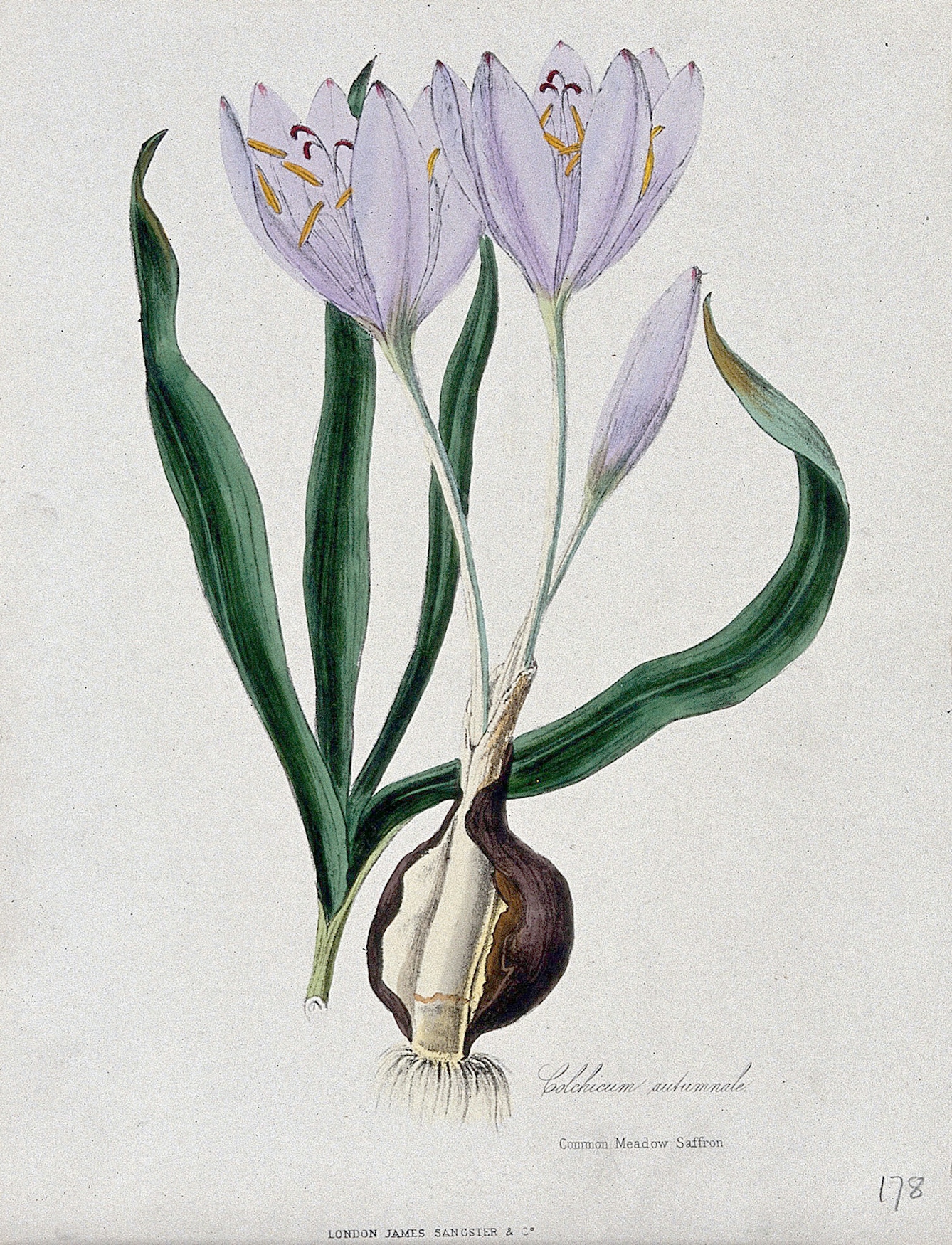
Many traditional and folk treatments for gout have been tried throughout its long history, from bloodletting to various herbal and chemical dressings and treatments. One herbal treatment, derived from the autumn crocus flower (illustrated above), has been used since ancient times as a purgative and an anti-inflammatory treatment for gout. It is mentioned in medieval Islamic texts and in later European pharmacopoeias. The active ingredient in the plant, colchicine, was identified by French chemists in 1820, and modern formulations of the drug are still a common treatment for gout today.
8 of 9
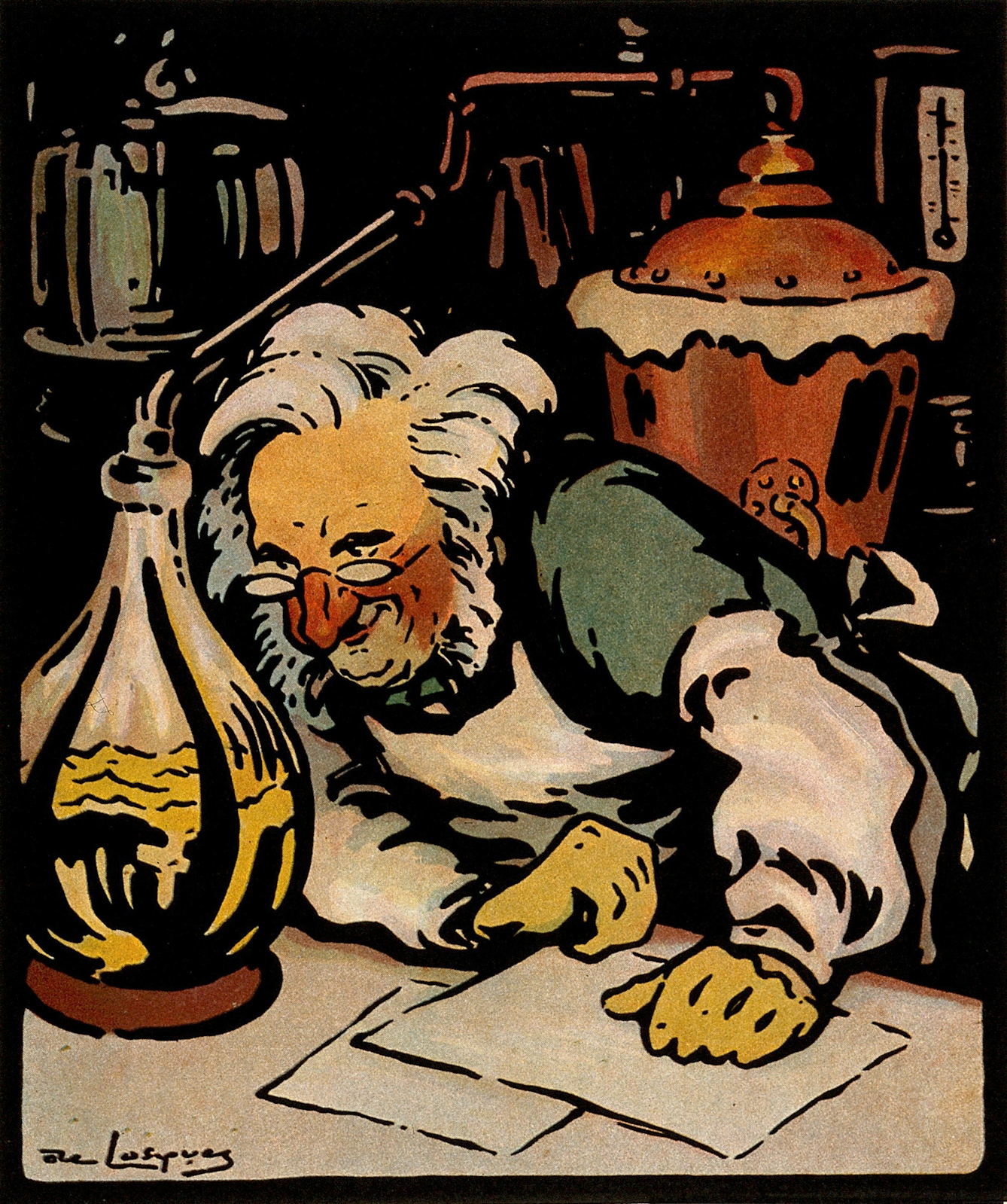
Uric acid was discovered at the very end of the 18th century by the Swedish chemist Carl Scheele. The 19th century saw continuing investigations into the role of uric acid in the body until Alfred Baring Garrod, shown here, demonstrated high levels of uric acid in gout sufferers and published his seminal findings in ‘The Nature and Treatment of Gout and Rheumatic Gout’(view in catalogue) in 1859. As a result, the 20th century saw the development of more targeted treatments, including pharmaceuticals such as allopurinol (also known as Zyloric), used to lower uric acid levels and prevent the crystals that cause gout from forming in joints.
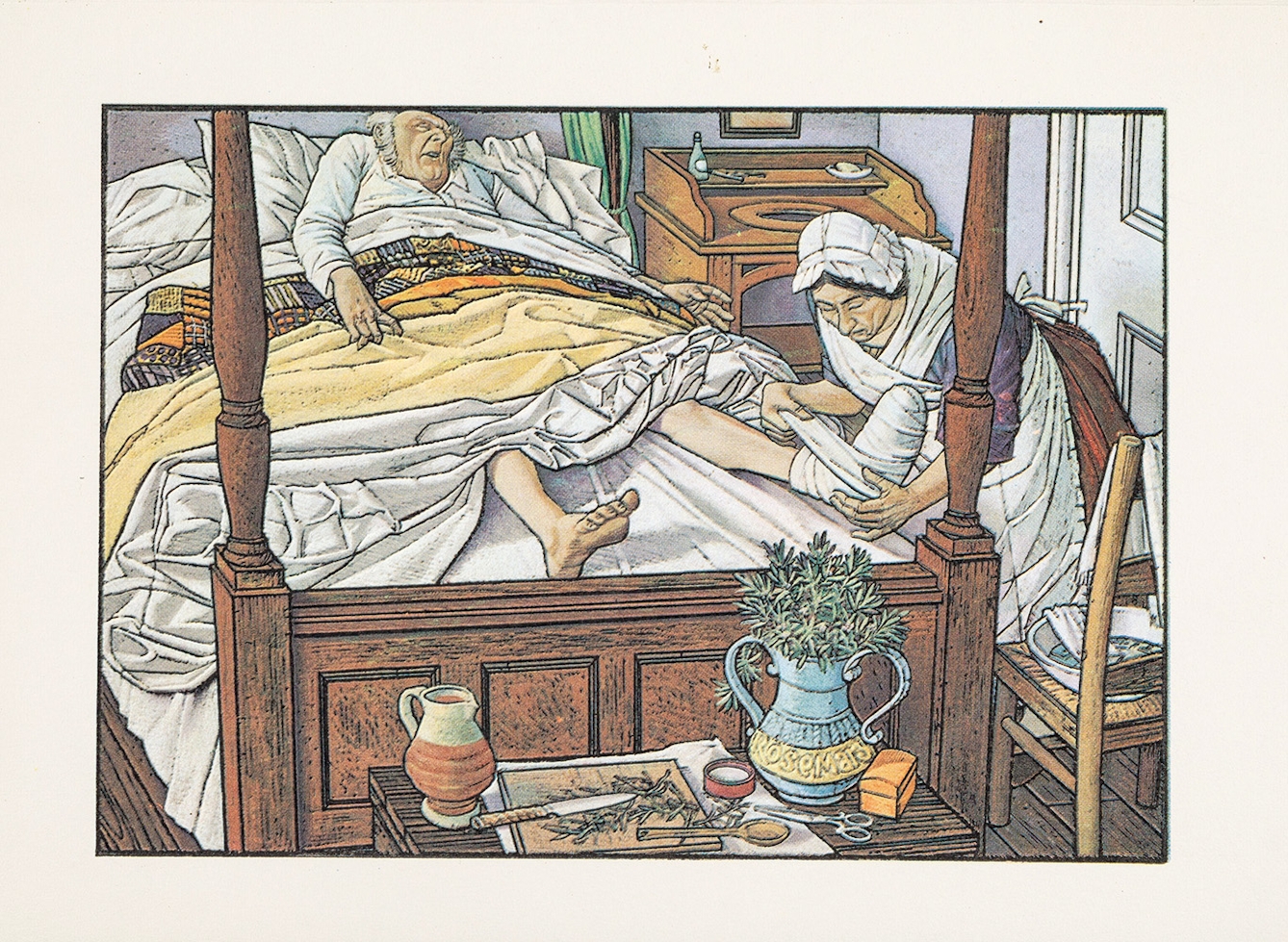
9 of 9
This advertisement for Zyloric from 1968 is one of a series showing traditional folk remedies for gout – in this case, bandages soaked in rosemary leaves wrapped around the inflammation. Another example showed the application of a “raw lean beef steak”(view in catalogue) to an inflamed hand. Presumably the intention was to contrast these remedies with the convenience and effectiveness of modern preventatives and treatments for gout, such as Zyloric.
Today, gout is the most common form of inflammatory arthritis. As well as lifestyle, a complex set of factors can influence the onset of gout, including genetics, other conditions you might have, and what medications you’re taking. Yet a survey of gout sufferers found that its historical legacy could still elicit negative reactions. Gout sufferers may be less likely to seek support for this painful and debilitating condition if they expect an unsympathetic response or jokes about “too much of a good thing”. Awareness of the long and complex history of gout and its treatment may provide a corrective to some of these preconceptions.
About the contributors

Aisha Mazhar
Author
Aisha is a former graduate trainee at Wellcome. She has worked in science and health policy and is currently working for Arthritis UK.


Lalita Kaplish
(she/her)
Commissioning editor
Lalita is a digital content editor at Wellcome Collection with particular interests in the histories of science and medicine and discovering hidden stories in our collections.