British Sign Language (BSL) has evolved over centuries, shaped by experiences of exclusion and opportunity. Deaf photographer Stephen Iliffe has collaborated with eight people from today’s multi-cultural deaf community. Their stories and portraits celebrate both the expressive power and the quieter, more personal nuance of BSL.

Clockwise from top left: Gavin Lilley, Raymond Antrobus, Peter Brown, Rose Ayling-Ellis, Sarah Adedeji, Chisato Minamimura, Nadia Nadarajah and Signkid. © Stephen Iliffe for Wellcome Collection.
As a photographer, I’m fascinated by the challenge of turning the physicality of a language as agile and fluid as British Sign Language (BSL) into a frozen moment in time. A moment where the viewer can linger and gaze.
How could I use one visual language, photography, to capture the essence of another visual language, BSL?
I invited eight deaf friends into the portrait studio, not to pose but to just be their natural selves and tell their stories. Through this process, I came to appreciate their individual styles of BSL. Whether a comedian or poet, a historian or actress, I sought to show how their upbringings and relationships, personalities and experiences were reflected in their postures, handshapes and movements.
A common theme running through all their experiences was that, at one time or another, they’d had to respond to questions and comments based on stereotypes and misconceptions about deaf people and sign language.
“Is sign language universal?”
“Is it like pantomime?”
“If babies sign, they won’t learn to talk?”
“Can you lipread me?”
“I’m sad deaf people can’t enjoy music.”
“Your signs are so cute!”
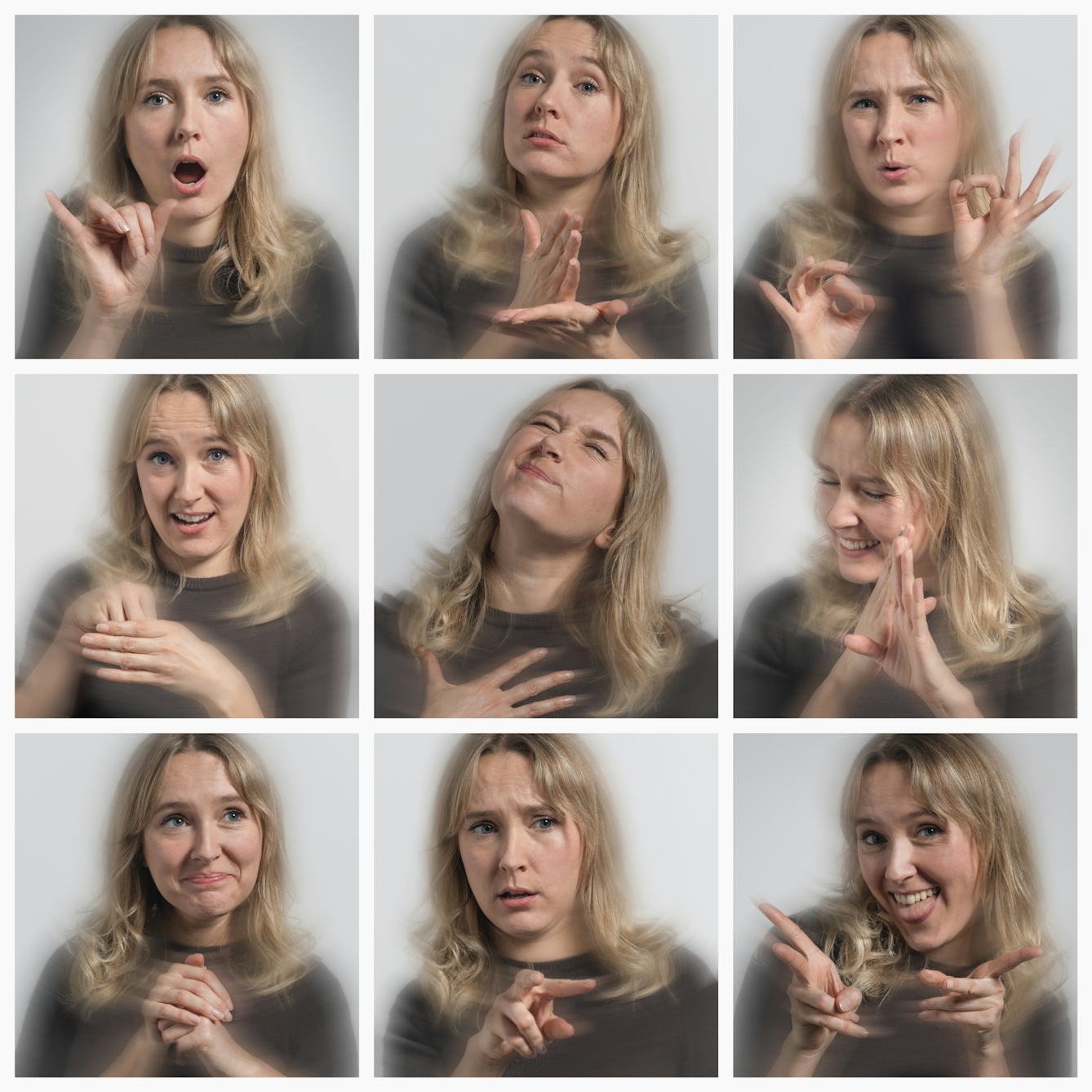
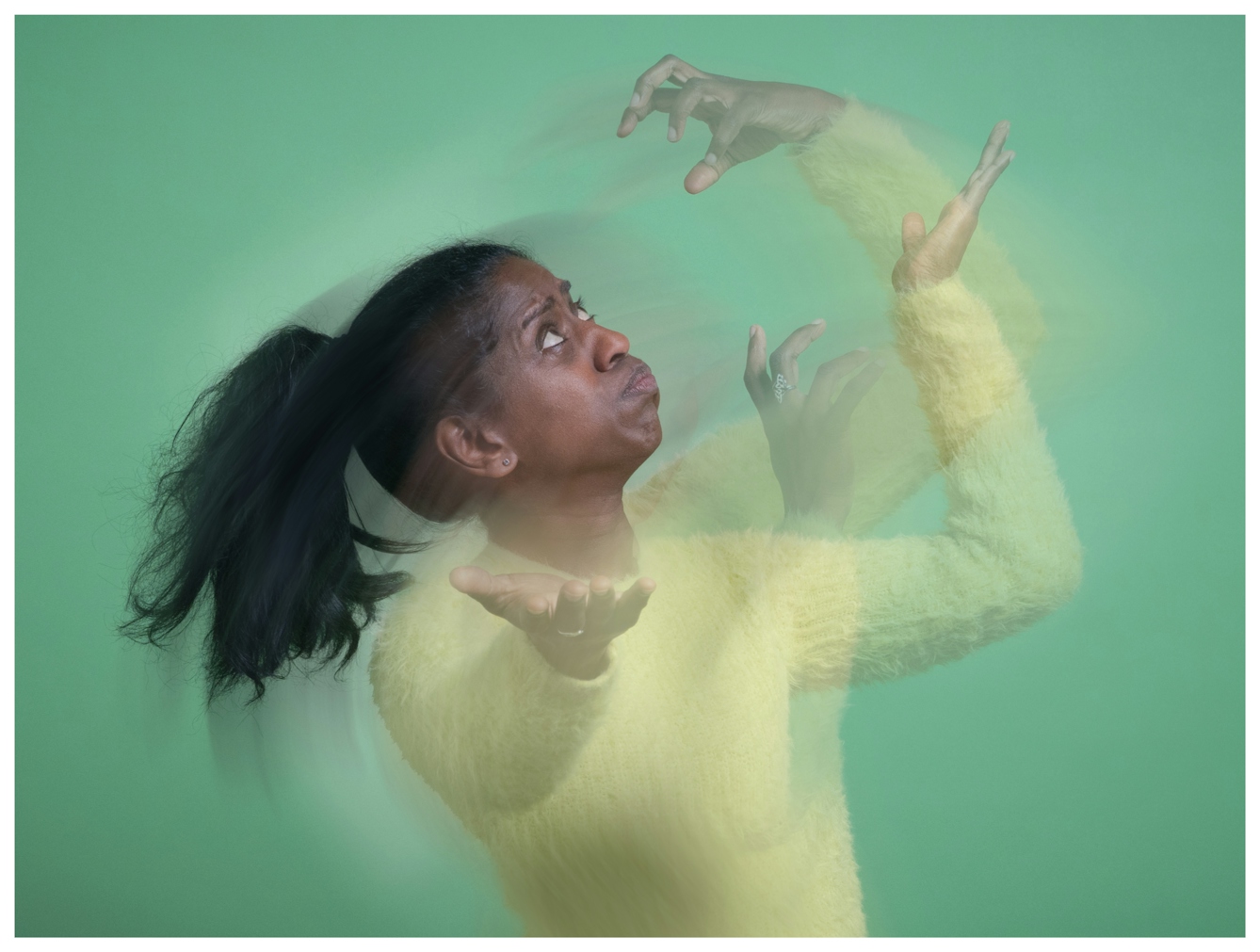
Rose Ayling-Ellis. © Stephen Iliffe for Wellcome Collection.
Rose Ayling-Ellis
“People often assume BSL is just using the hands,” says Rose Ayling-Ellis. “But facial expressions play a vital role too. As with intonation in spoken languages, they add to the meaning and emphasis, emotions and nuance.”
Ask any member of the UK public to name a deaf personality and the most likely answer would be Rose Ayling-Ellis. After she won BBC’s ‘Strictly Come Dancing’ in December 2021, analysis showed that the number of Google searches for ‘learn sign language’ had increased by 300% in the period since November 2020.
“I know I’m biased but I believe sign is the world’s most beautiful and expressive language!” laughs Rose. “People assume that communication means listening and speaking, but BSL shows it is much more than just words.”
And yet for many deaf children, the path to learning BSL is rarely a straightforward one.
“When I was diagnosed as deaf at 18 months, my parents were told if I learned to sign first, I would never learn to speak. I wasn’t taught BSL at school, I learnt it at home from my Mum and used it with some of my classmates. Lipreading is such hard work. It’s frustrating and tiring, and only three words out of every ten have a clear lip-shape meaning that I miss out on so much information.
“It was only as a teenager, when I got involved with film and theatre projects, that I was supported to truly own my deaf identity and express myself in sign language.
“That’s why I now write children’s picture books with BSL signs, so it becomes part of their early years reading habits. I’m also supporting the campaign for free BSL lessons for parents of deaf children. It’s crazy that they often have to wait years to learn it and can then have to pay hundreds or thousands of pounds.
“Being on ‘Strictly’ has created huge public interest in BSL. But sign isn’t new – it’s been around for centuries. It just hasn’t had the same recognition as other languages – like Welsh or Gaelic.”
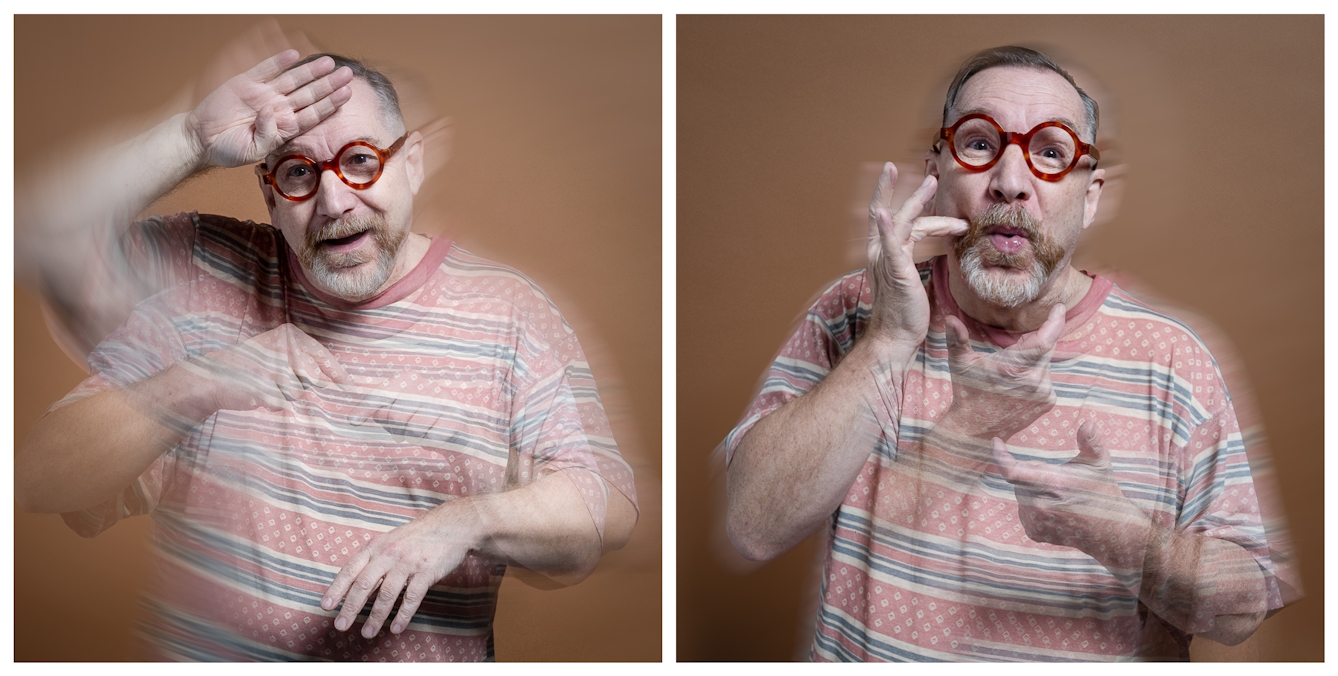
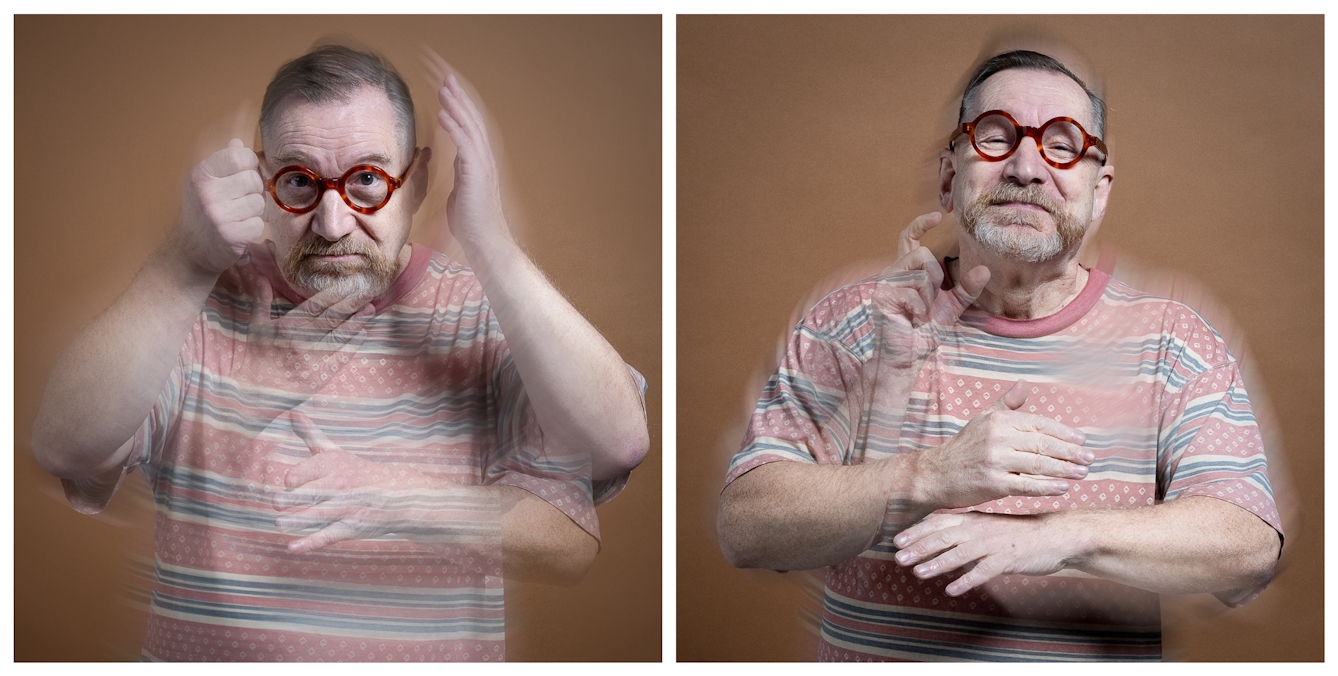
Peter Brown. © Stephen Iliffe for Wellcome Collection.
Peter Brown
“My hands aren’t just for sign language,” says Peter R. Brown. “I use them to dig the past too.
“As a deaf historian, I believe passionately that to know the present and future, we must first understand our past. The history of signs takes us from gestures used by the ancient Romans right through to the 21st century.”
For over 30 years, Peter has been poring through census data, school rolls, newspaper libraries, obscure books and journals. And then he joins the dots.
“For me, 1792 was the year that kick-started the emergence of the modern BSL we see today. This was when six working-class deaf children began lessons at Britain’s first free school for the deaf, the Asylum House in Bermondsey, south London.
“Their story gives me goosebumps. The headteacher, Joseph Watson, not only taught signs but he was also prepared to incorporate his deaf pupils’ own spontaneously generated signs. So, the sign vocabulary they used grew much more rapidly. Over time, this sign dialect became the foundation for London becoming the largest of several smaller deaf communities, including Manchester and Doncaster, which then had their own local sign dialects.
“By the late 1880s, the London signs gradually became more widespread thanks to the spread of the railways, bicycles and cars that made it easier for the missioners or welfare officers working with deaf people to move around the different cities.
“Yet it wasn’t until the 1980s that linguists using video technology were able to record and analyse BSL. This confirmed what others had long suspected, that BSL is a true language – with its own vocabulary, grammar and syntax. The equal of any spoken language.”
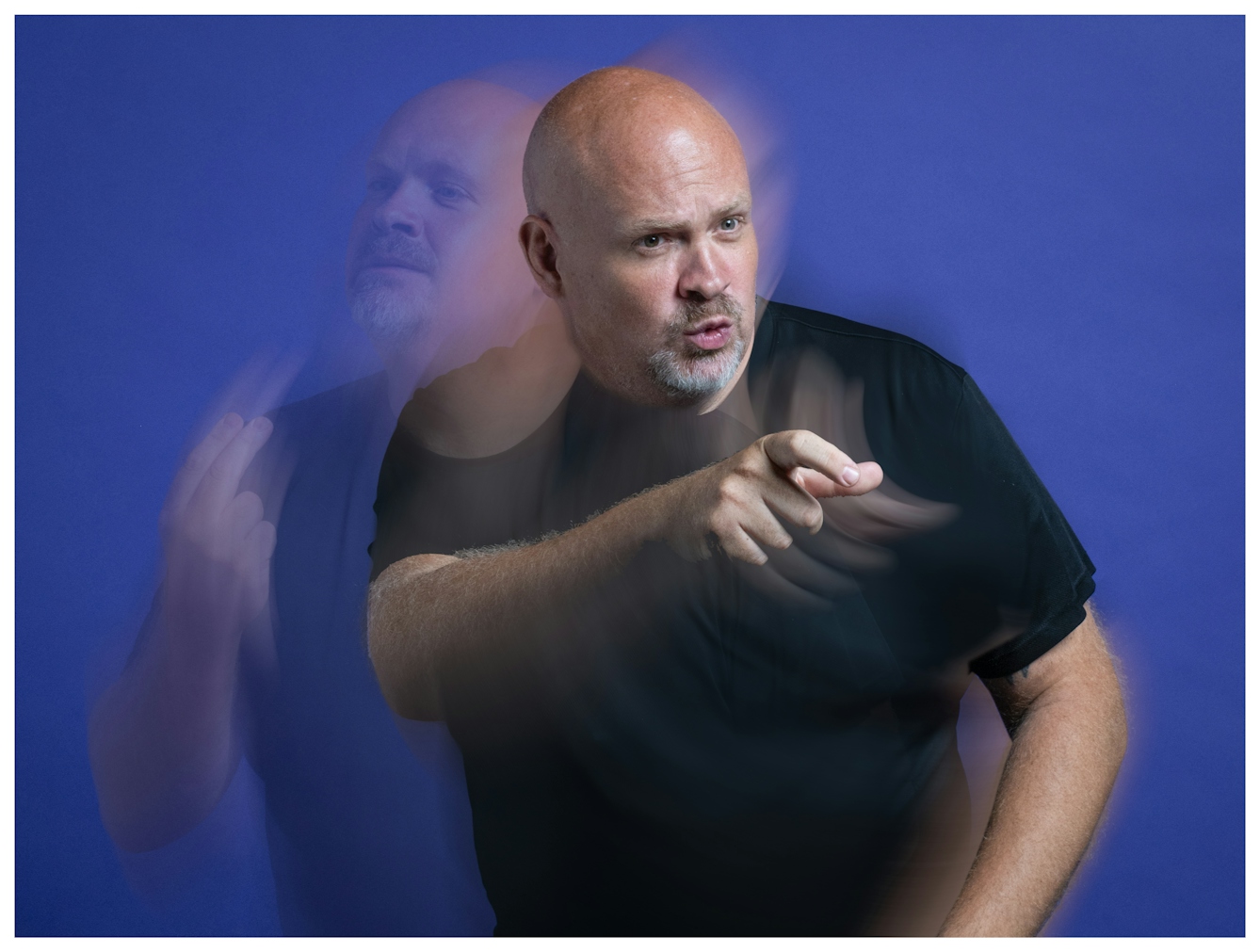
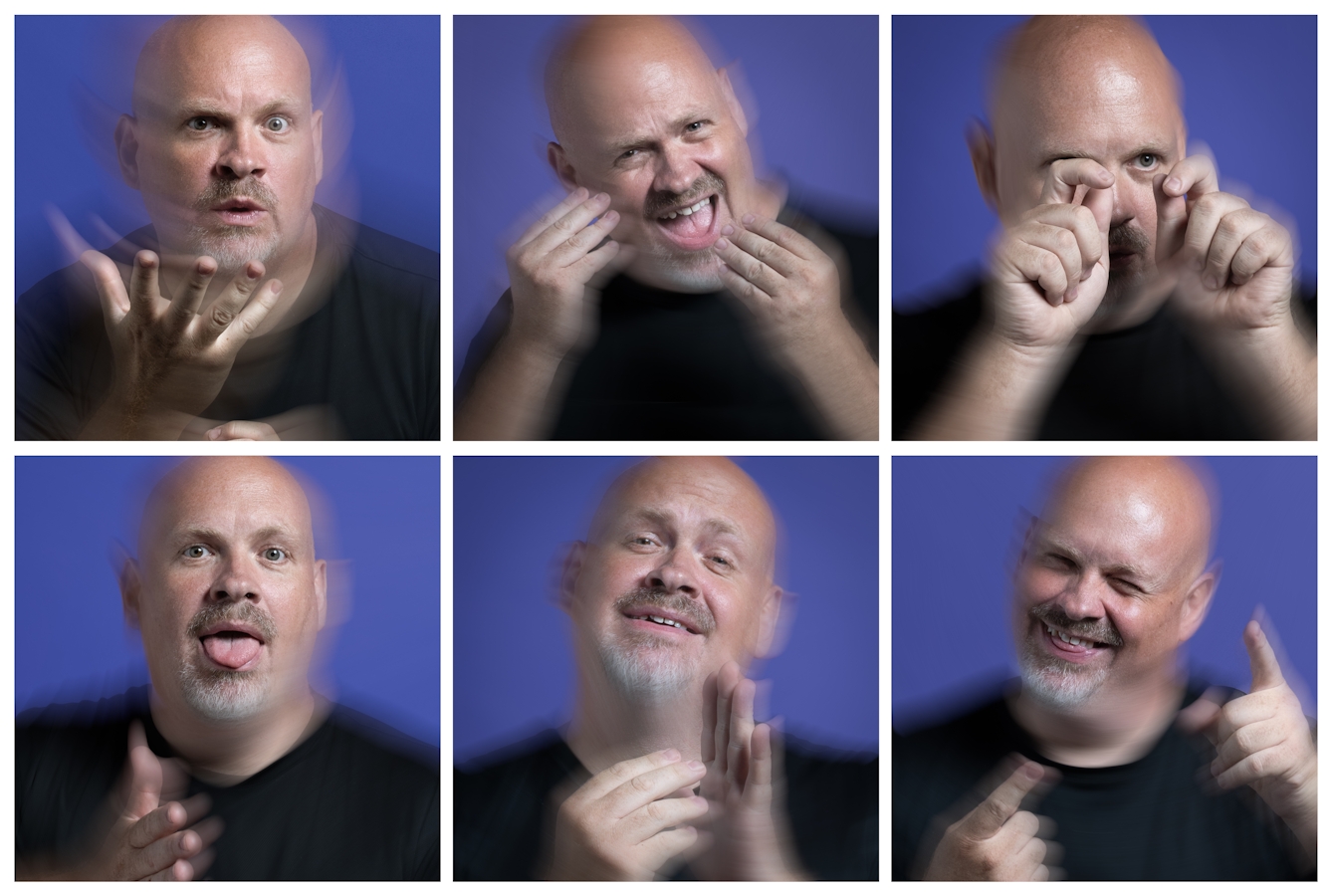
Gavin Lilley. © Stephen Iliffe for Wellcome Collection.
Gavin Lilley
“Deaf comedy allows us to release tension from the everyday struggles we face,” signs BSL stand-up comedian Gavin Lilley, with a smile. “We celebrate our shared experiences through laughter.
“I’m channelling the deaf culture that cascades down five generations of my family tree. All the way from my great-grandfather Stanley, born in 1870, an accountant’s clerk, to my two deaf kids at home.
“I grew up in an Ilford terraced-house where BSL was our home language. We used it to share news, tell stories, to argue and laugh with each other.
“I’d been the class clown at deaf school too. I’d sign jokes to my mates and pull pranks, which got me into trouble as you can imagine. One thing led to another. I did a comedy gig, things snowballed from there.”
Gavin has toured the traditional deaf club circuit while taking deaf humour into the mainstream on primetime TV and at the Edinburgh Festival.
“I do what most comedians do – tell stories that highlight the absurdities we face. And, believe me, deaf people in a hearing world put up with all kinds of crazy absurdities!
“It’s such a privilege to use BSL as it gives me access to an amazing visual toolkit. I use my whole body – face, posture, signs, gestures, mimicry – to develop the characters and scenes, control the mood, build towards a punchline.
“I can vary my speed and tempo, insert dramatic pauses. I switch rapidly between normal or exaggerated facial expressions and gestures – all for comic effect.”
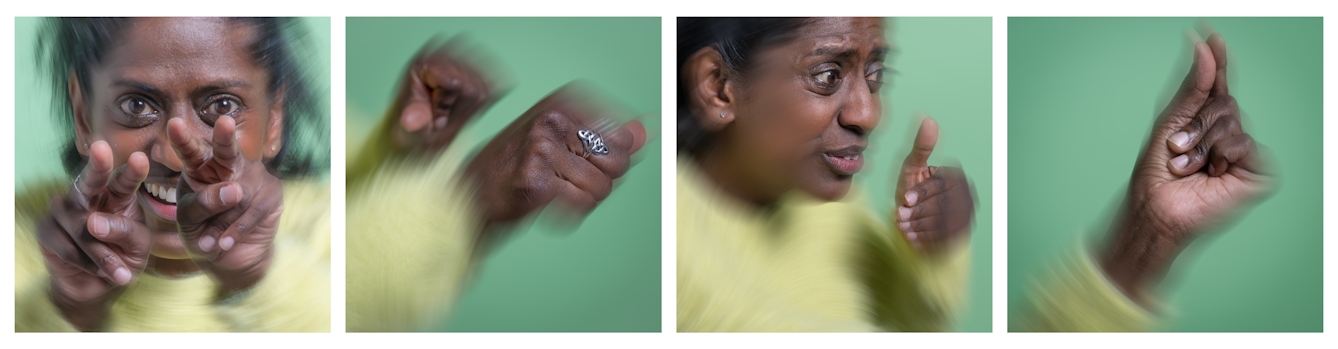
Nadia Nadarajah. © Stephen Iliffe for Wellcome Collection.
Nadia Nadarajah
“Shall I compare thee to a summer’s day?” signs Nadia Nadarajah in her translation for Shakespeare’s Globe theatre of the Bard’s classic sonnet. Her movements and expressions bring to life his richly multi-layered nouns, verbs, adjectives, metaphors and similes.
“Yes, deaf people can do pantomimes but we do Shakespeare too”, says actress Nadia.
“When I was at school, I hated Shakespeare. My education totally failed me. I was taught his plays by speech only, with no BSL to translate it. I couldn’t relate to it straight off the page either. I’d just shut it out.”
Fast forward to 2024, and Nadia is performing the lead role of Cleopatra at the world-famous Shakespeare’s Globe to rave reviews from theatre critics.
“So, what changed it for me? I’d always insisted to theatre companies that it could be done, but only if it was a 50-50 effort. With equal numbers of deaf and hearing actors, with BSL and English treated as of equal importance.
“I’m British-Sri Lankan, grew up in Luton, trained as an actress in Paris, and I’ve taught sign language for 20 years, including three years teaching in Reunion - a tiny island in the middle of the Indian Ocean. I’m fluent in three spoken and five signed languages.
“I do think this gives me the gift of turning Shakespeare’s text into sign language. I can peel back the layers and explore the underlying emotions.
“At the Globe, after long discussions, we confronted the power dynamics between English and BSL as unequal languages by having the conquering Romans speak English, while the oppressed Egyptians signed in BSL. Both deaf and hearing audiences loved it.
“As a result of this inclusive process, I finally fell in love with Shakespeare. For the first time I understood his stories to be universal to all of us.”
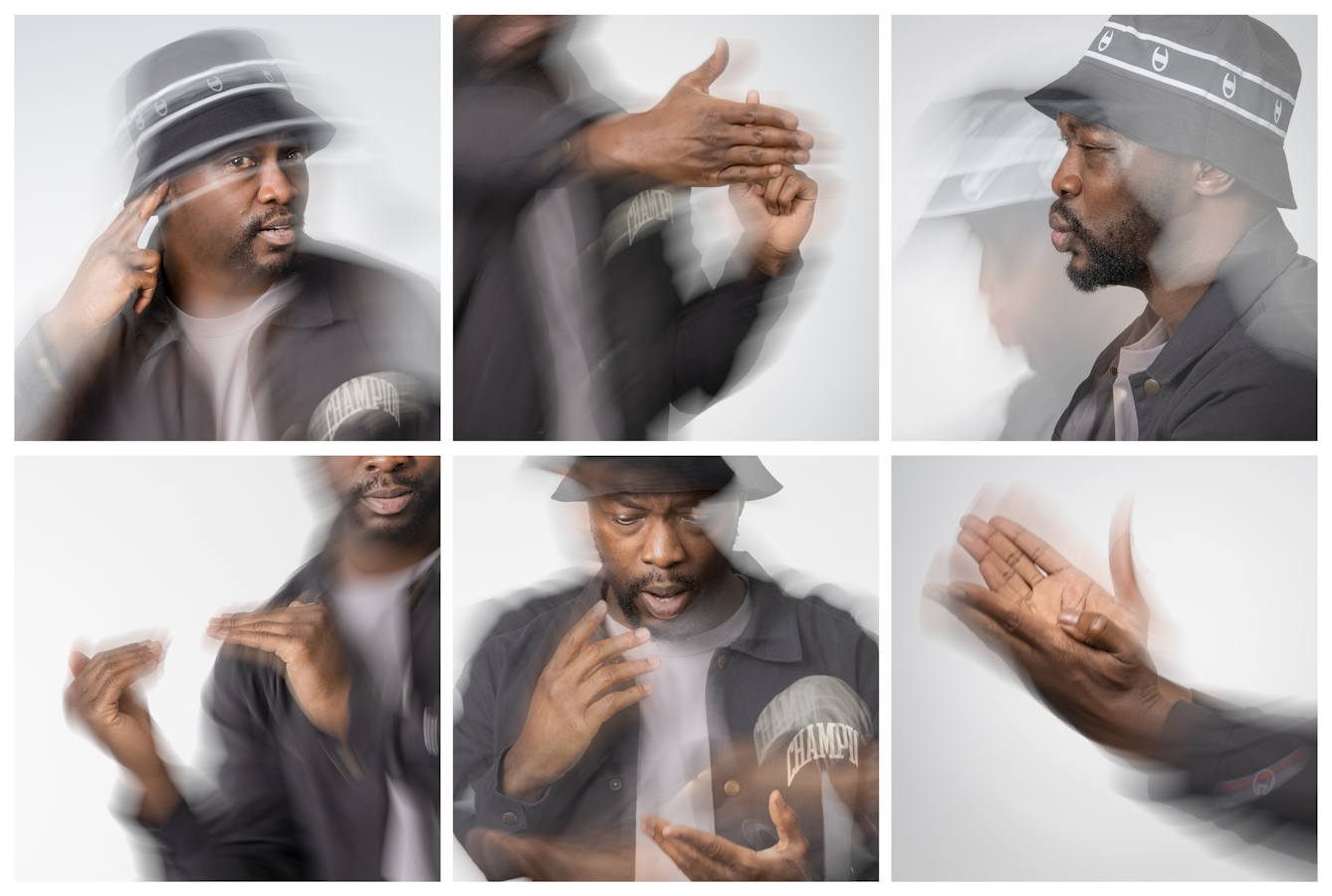
Signkid. © Stephen Iliffe for Wellcome Collection.
Signkid
From Shakespeare to hip-hop, BSL can adapt to any genre or style.
Signkid has performed his own signed songs on BBC Radio One and at major festivals by integrating BSL with Black youth culture, hip-hop and R&B.
“My signed songs unfurl everything I’ve ever known; hip-hop, R&B, Black street culture, deaf culture, vulnerability, defiance, assertiveness, love.
“One challenge when it comes to performing hip-hop songs is that the lyrics tend to use a lot of slang,” says Signkid. “For example, ‘swag’ or ‘aggie’. How do I sign that to an audience? I’ll always try to use a BSL sign, but if there isn’t one, I’ll just create one using my own Sign Slang until the deaf community comes up with one that has the right context.
“I’ve now compiled dozens of these new signs into my own online BSL dictionary for urban street language, like ’wagwan’, ‘peng’ and so on.
“I was three when I became deaf through meningitis. I lost all my hearing in my right ear, but can pick up a little sound from the left ear. As a kid, I loved Michael Jackson on TV. If I couldn’t quite make out the lyrics, I could follow the beats by watching my bro imitating Jackson’s dance moves.
“At the library, I had a go at writing my lyrics, inspired by greats like Tupac Shakur. You don’t necessarily need to fully hear music to create it. If I go to a festival and there are big speakers, I can physically feel the beat through my body. It’s this idea of feeling the music, rather than solely hearing it, that helps me create my own tracks.
“First, I compose my own signed lyrics. Then I fit the music around the signs. I use heavy bass to make the music tactile and vibratory. The lyrics to my choruses use simple, clear, repetitive signs that encourage my audiences – deaf or hearing – to sign along with me.”
Sign songs hit ya, just like a motion picture.
Facial interpretation, my hands as an illustration.
Body language and gestures, all concepts that will test ya.
Look at my expression, it’s all about visualisation.
I’m making it my mission to get you, to listen with your eyes.
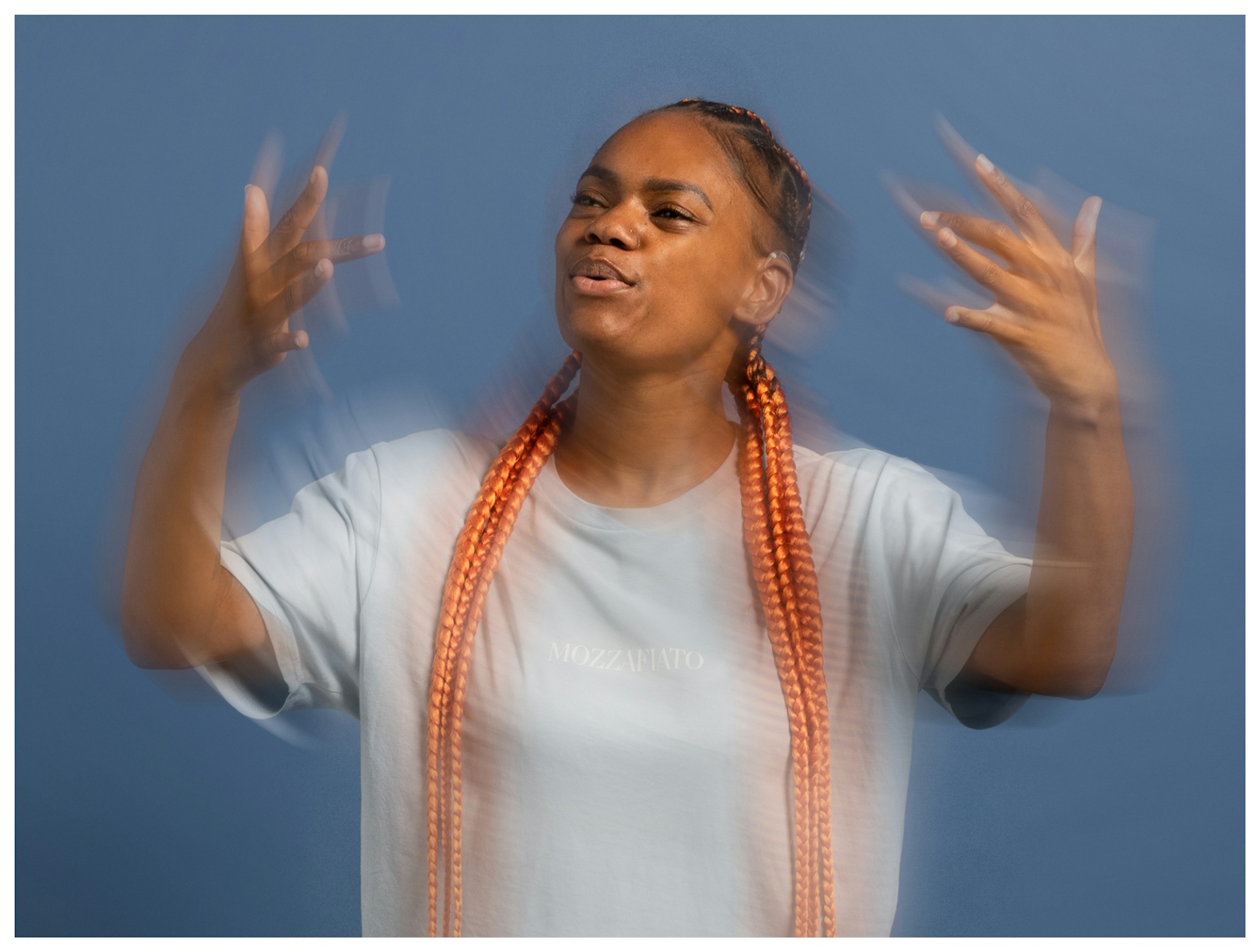
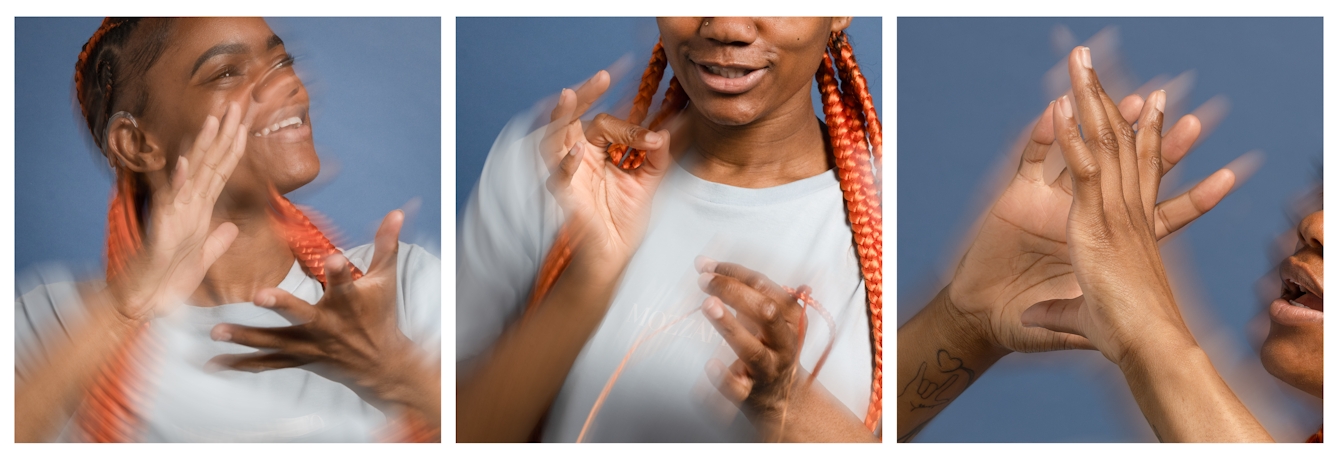
Sarah Adedeji. © Stephen Iliffe for Wellcome Collection.
Sarah Adedeji
As Sarah Adedeji performs her BSL translation of ‘Sun and Moon’ – a lush ballad by the Palestinian singer Anees, her flickering hands evoke heavenly stars, her spreading fingers conjure blossoming flowers.
“Deaf people shouldn’t be pushed to choose between speech or sign,” asserts Sarah. “I’m living proof of that.
“I’m one of a tiny number of deaf people in the NHS who works as an audiologist. I carry out hearing tests, fit hearing aids, do rehab and counselling.
“I was born with progressive hearing loss that wasn’t picked up until I was three. When I needed to pick my school GCSE subjects, Mum and I discussed career options and she pointed out that over the years we’d never seen a deaf audiologist! So, I took a degree in Healthcare Science Audiology at Middlesex University. I graduated three years later.
“Every audiology client is different, so I’ll communicate in speech or sign, or both, depending on their individual needs. Not many staff can do this.
“But listening and lipreading all day is exhausting. So, in my spare time, I love to unwind through dance and sign language songs.
“What’s so special about BSL songs is that I get to express my feelings through my whole body – my face, eyes, ears, arms, hands, hips, feet. Not forgetting my heart too!
“We don’t have to live by our ears alone.”
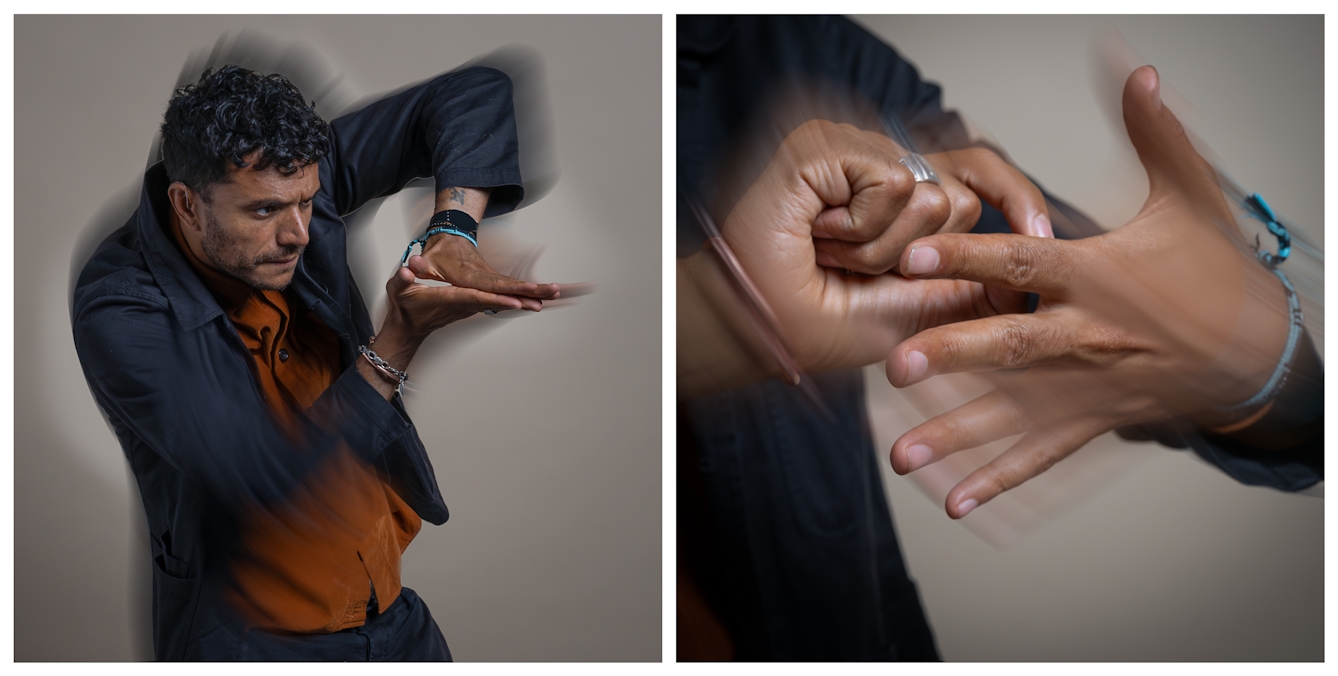
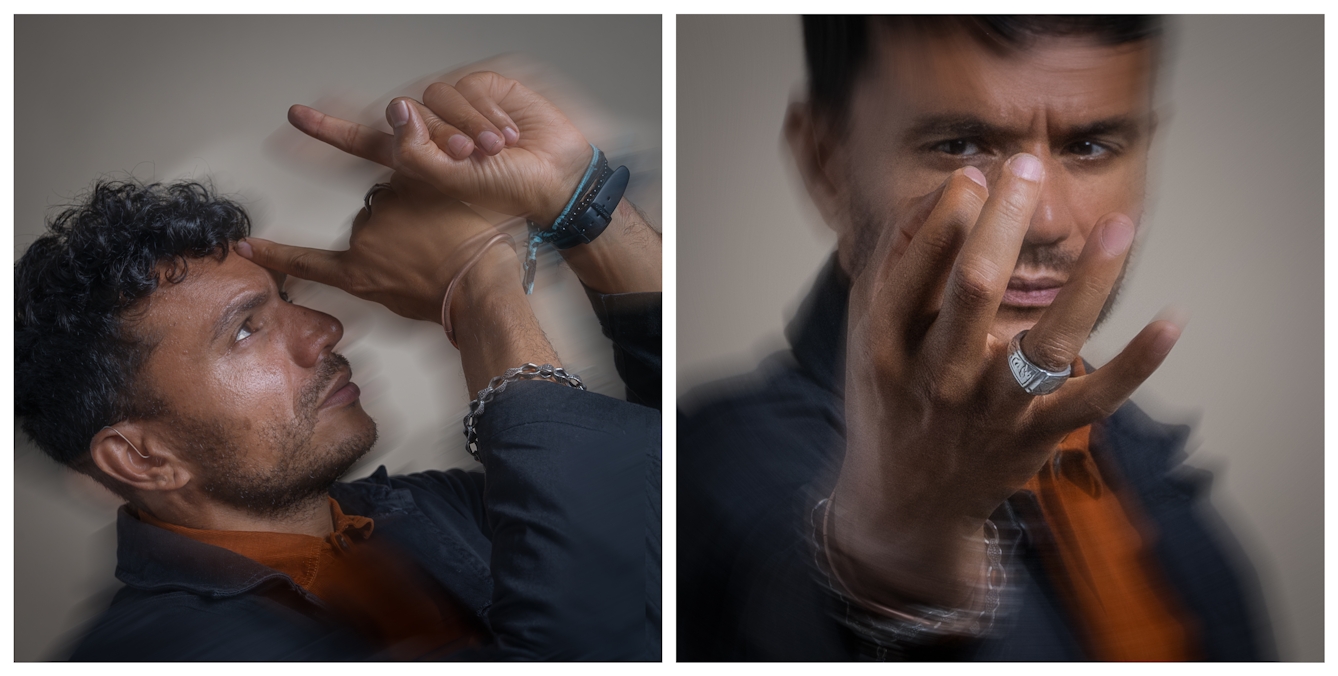
Raymond Antrobus. © Stephen Iliffe for Wellcome Collection.
Raymond Antrobus
“As the son of a British mother and Jamaican father, I didn’t qualify as white and yet wasn’t fully accepted as Black either,” says Raymond Antrobus. Add to this, my deafness was undiagnosed ‘til I was six. So, I went back and forth between hearing and deaf school without quite fitting into either.
“I was 11 before I had my first chance to join a BSL class. At first, I was keen to learn. Then, some of my hearing classmates asked me why I was doing ‘that spastic thing’ with the deaf kids. It took years of counselling to help me resolve the anger and confusion I felt about all these inner contradictions.”
As a poet and author, Raymond compassionately explores these uncertainties of sound, language, identity and memory, and alchemises them into gold, creating poems that transcend crude assumptions about gender, race and disability.
“On leaving school, I drifted miserably between zero-hours jobs in warehouses and courier services, while staying awake at night to write poems. Finally, I plucked up the courage to read them out at open mics and poetry slams.”
By 2024, Raymond was onstage at New York’s iconic Guggenheim Museum. He’d published four books and won multiple awards for his spoken and written poetry. But this time, he wanted to boldly go one step further.
“‘In New York I performed ‘Dynamic Disks’, my first-ever Visual Vernacular poem – or VV as we call it. This combines BSL signs, mime, gestures, facial expression and body movements. It was huge deal for me. I had to step right outside my comfort zone.
“For years I felt, as an English language poet first, that BSL and VV were out of my lane. Now I feel it is part of my poetic lineage. It added an essential dimension to my poetry. Now, I feel I am less compartmentalised, I can follow in the footsteps of the great Dorothy Miles, who showed the world that hybridity is an important part of d/Deaf poetics.”
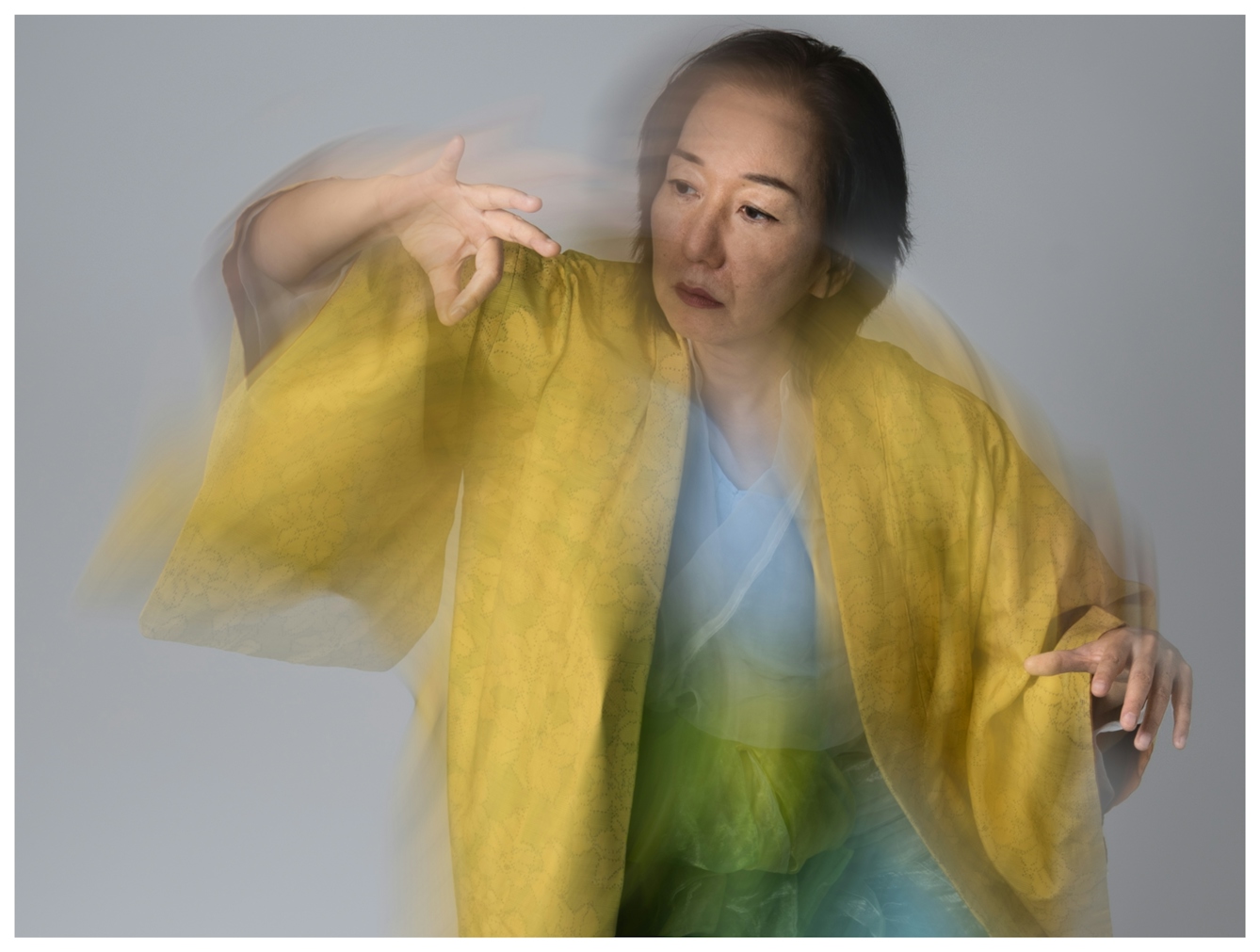
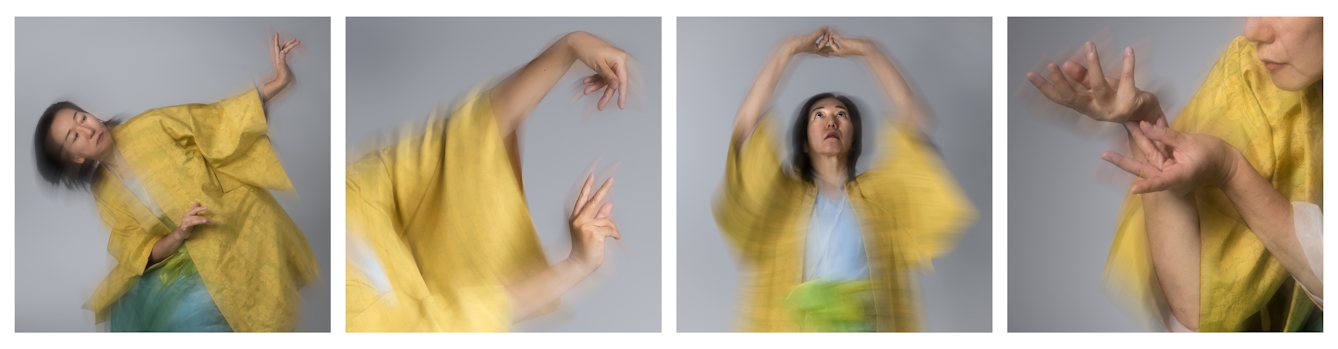
Chisato Minamimura. © Stephen Iliffe for Wellcome Collection.
Chisato Minamimura
“It's a myth that sign is the same all over the world,” says Tokyo-born and now London-based performance artist Chisato Minamimura.” As a rough estimate, there are over 300 different signed languages.
“As I was educated in a mainstream school not a deaf school, my first language is Japanese. Many of my deaf friends who grew up in similar environments also felt cut off from meaningful communication. So, we gathered every Saturday to create our own theatre works made by and for deaf people.
“At university, I saw other deaf people signing for the first time. I was attracted to learn it because it opened up a whole new world of communication for me. And so, Japanese Sign Language became my second language.
“Now I'm settled in Britain, I can't speak in English – as its impossible for me to lipread a different language from my own. I can read it, but I use BSL as my third language.
“My 2022 performance at the British Museum was inspired by Sumida River, a 15th-century Noh, which is one of Japan’s oldest surviving theatre traditions. It’s the story of a mother who, having lost her child, makes a long journey to the banks of the Sumida River, where she encounters her child’s spirit.
“I combine VV, sign language and dance to evoke inner and outer landscapes, subtle emotional nuances that lie beyond words. I’m now integrating performance with digital media, drawing on encounters with people and shared sensory experiences, and touring these works both in the UK and internationally.
“The world isn't just made of spoken languages.
“It never was.”
About the photographer
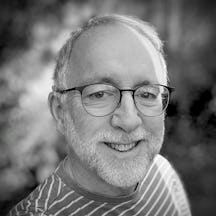
Stephen Iliffe
Stephen Iliffe is a deaf community photographer, writer and activist. His Deaf Mosaic online gallery has enjoyed 60,000 visitors from 148 countries. He has hosted 19 print exhibitions in high-profile venues, including Kings Cross, OXO Gallery and Houses of Parliament, as well as in hospitals, schools and community spaces. Stephen’s work has been funded by Arts Council England and British Council, shown at the National Portrait Gallery, and featured on BBC News and Sky News. He has won four photography awards plus a distinction from the Royal Photography Society. Stephen has collaborated with deaf communities in Barbados and Uzbekistan.