Victorian health tourists travelled, not in pursuit of treatment, but with the hope that a change of climate would improve their health. Medical texts in the 19th century have plenty to say about the potential benefits of a good climate, but there are fewer accounts from the travellers themselves. Richard Aspin's detailed research reveals the often-heartbreaking experiences of people, such as clergyman's wife, Elizabeth Wynter, in their own words.

Consumption, or pulmonary tuberculosis, was not a new disease in early 19th century Britain, but a number of factors, such as industrialisation and urbanisation, combined to increase its prominence. Unlike other major killers, such as cholera, consumption was not overwhelmingly confined to the poor. On the contrary, it was quite likely to afflict the well-to-do, tending to strike victims of both sexes in their teens or early adulthood.
There was no cure and physicians had little to offer by way of treatments. But the well-established prescription of a ‘change of air’, that had been recommended for many ailments for centuries, seemed especially applicable to a disease characterised by shortness of breath and a hacking cough.
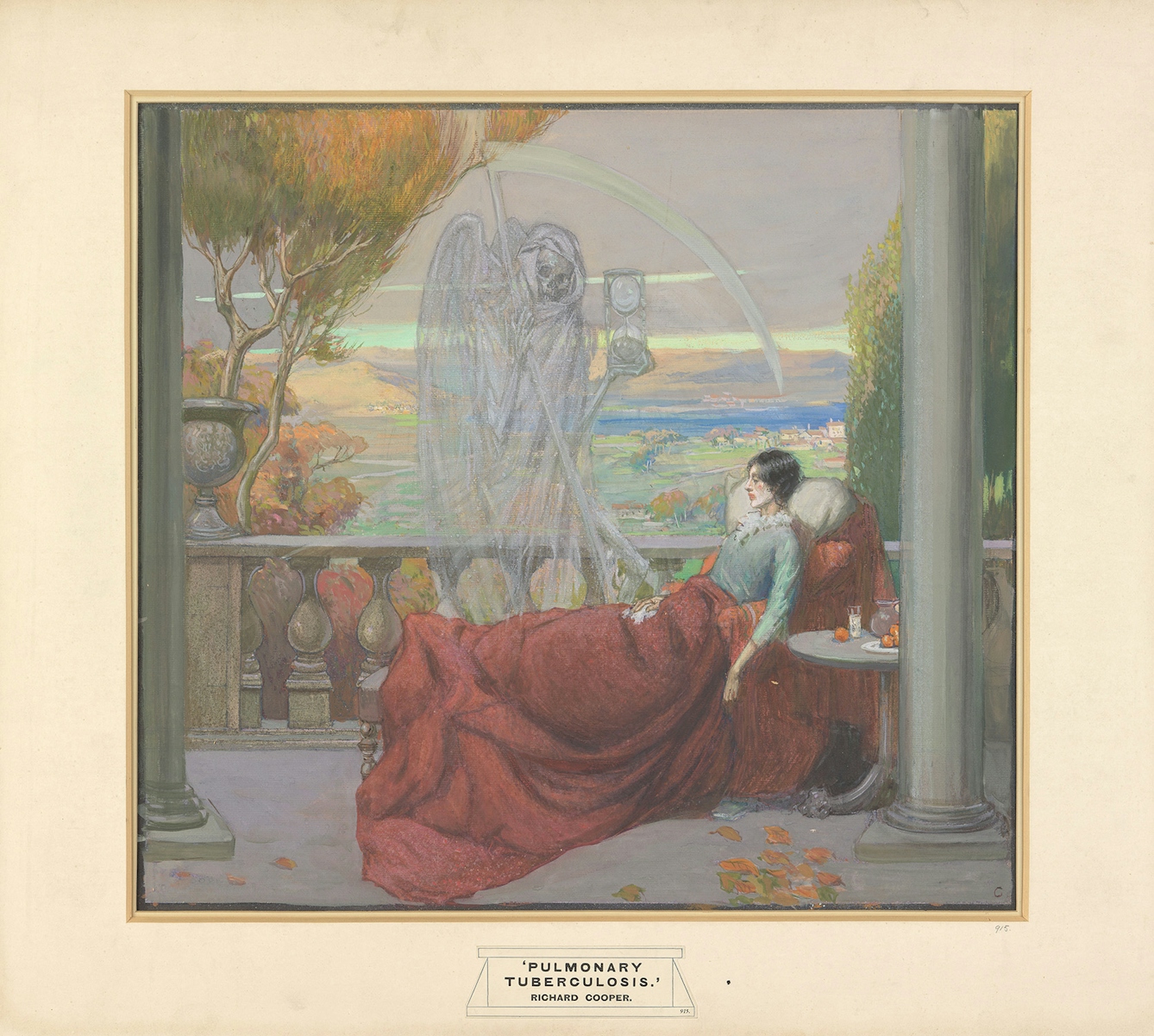
The Romantic view of the wealthy young consumptive, with the spectre of Death looming over her.
Wintering in Europe
Wealthier consumptive patients had long been directed to salubrious locations such as seaside resorts or spa towns to escape urban pollution or the fetid damp of many inland rural parts, especially in winter. In addition to better air, patients also required warmth, according to the settled medical consensus of the early 19th century.
Once the European continent became accessible after the defeat of Napoleon in 1815, wealthy British consumptives returned to pre-war haunts, such as Nice, Pisa and Rome, as part of the wider resurgence of continental touring. The returnees were not merely successors to the 18th-century tradition of The Grand Tour, however, but increasingly a new breed of middle-class tourist.
This new generation of travellers needed expert guidance to negotiate the vagaries of continental travel, and above all, help in selecting a suitable resort to spend the winter. Their medical advisers at home were little better informed than their patients on these matters. The only relevant published literature available before about 1820 were travellers accounts such as 'Travels in Italy: in a series of letters'(view in catalogue) by Mariana Starke and Henry Matthews’s 'Dairy of an invalid'(view in catalogue).
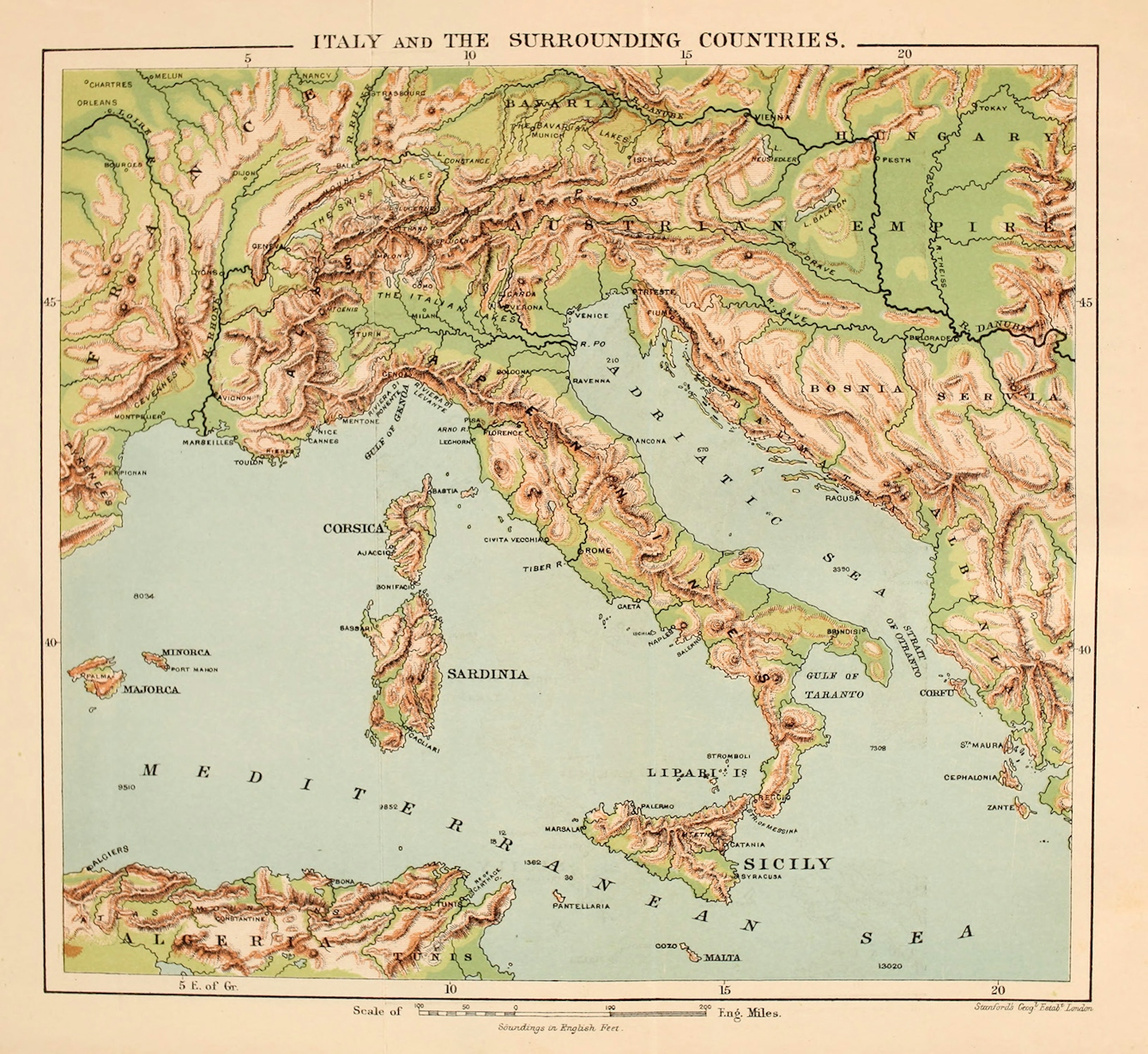
Italy and the surrounding countries in 'Winter and spring on the shores of the Mediterranean, or, The Riviera, Mentone, Italy, Corsica, Sicily, Algeria, Spain, and Biarritz as winter climates', 1870, Henry James Bennet. Source: Wellcome Collection. Attribution-NonCommercial 4.0 International (CC BY-NC 4.0).
Physician James Bennet promoted travel to Southern Europe as a treatment for consumption in his book 'On the treatment of pulmonary consumption by hygiene, climate, and medicine'.
In the mid-19th century, a burgeoning literature on foreign climates and health resorts emerged, testament to the new specialism of medical climatology. The works generally included a detailed analysis of the climate in the region and general travel information about local attractions and facilities for 'invalids'. They ranged from general surveys such as James Clark’s 'The sanative influence of climate'(view in catalogue) (1841) or Edwin Lee’s 'Continental travel'(view in catalogue) (1848), to single resort titles like William Farr’s 'A medical guide to Nice'(view in catalogue) (1841).
The authors were invariably medics who had practised on the continent, and in many instances continued to do so, and promoted the climatic and other advantages of their place of work. This was certainly the case with Alexander Taylor, who wrote 'On the curative influence of the climate of Pau'(view in catalogue) (1842), and later James Henry Bennet at Menton, the most well-known resort propagandist of the Victorian period.
Such works offer some insight into the 19th century experience of health tourism, but they generally reflect the vested interests and biases of doctors, keen to attract patients to their practices abroad.
A stay in Madeira
Books about the patient experience are comparatively rare but my research uncovered some accounts in the form of letters and personal writings dispersed in various historical archives, which I relate in my book 'The Lure of the South'(view in catalogue). One such example, is Elizabeth Wynter, a young clergyman’s wife despatched to Madeira in late 1838 with consumption. Elizabeth's correspondence to her family details her lengthy stay on the island.
The island of Madeira was a place whose climate had acquired an outstanding reputation for alleviating consumption in the previous century and was almost a British colony despite being part of the kingdom of Portugal. The climate was valued for its mildness and equability – warmer than the Mediterranean in winter and without its troublesome winds. And the pre-existing British expatriate community meant there were facilities that suited the influx of British visitors in the winter season.
Getting to Madeira in the early Victorian period required a sea passage of at least eight days. 'Invalids' were advised to sail before mid-October to avoid winter storms, but for some the sea voyage was part of their recuperation.
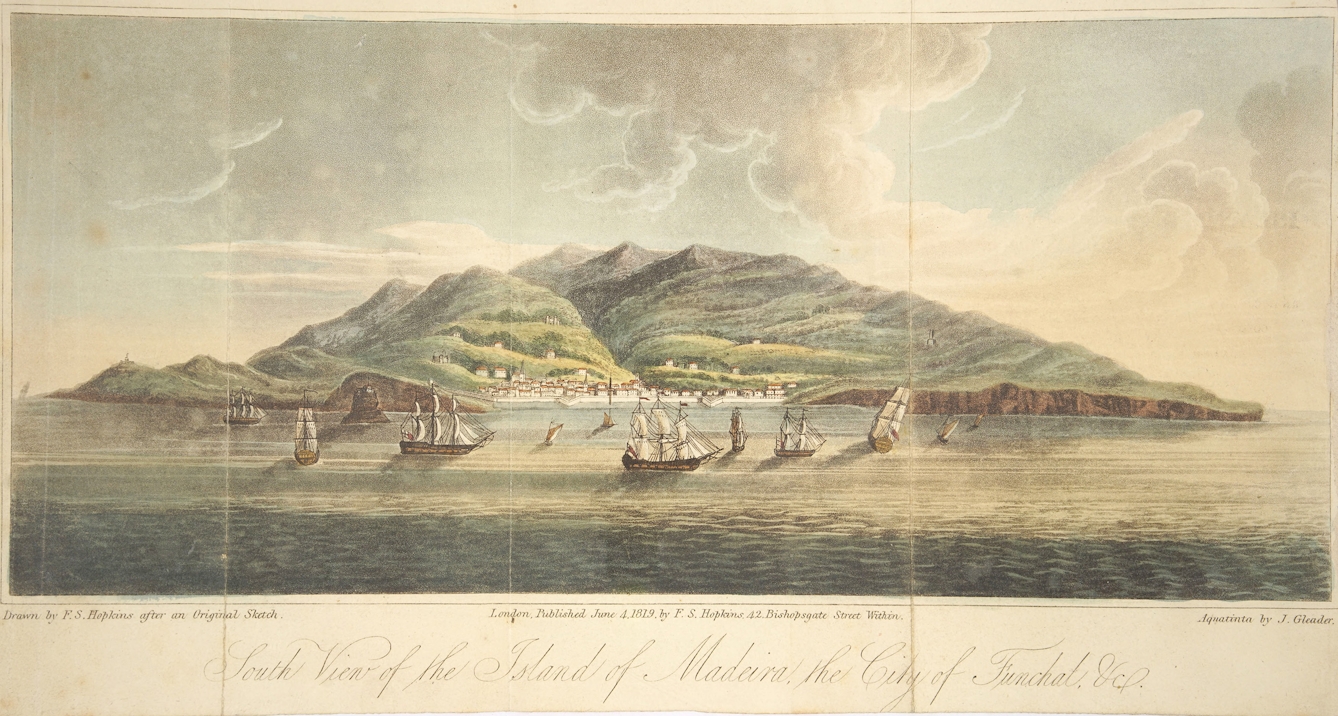
Madeira was already a popular destination for British travellers in the early 19th century, both because of its mild weather and as a convenient stop on the way to and from the colonies.
New arrivals were advised to eat moderately, dress as warmly as at home, beware excessive exposure to the sun and above all live quietly. But for those well enough, a more active lifestyle was available.
Elizabeth wrote to her brother: “I find enough to occupy me what with reading and practising the guitar and writing during the morning, and then there are visits to receive and pay. We generally ride in the afternoon and dine at five.”
Society in Madeira was famously soporific. Elizabeth dismissed it as “a dull repetition of dinners” with “little save the tittle-tattle of the place or discussion of various invalids and their status.”
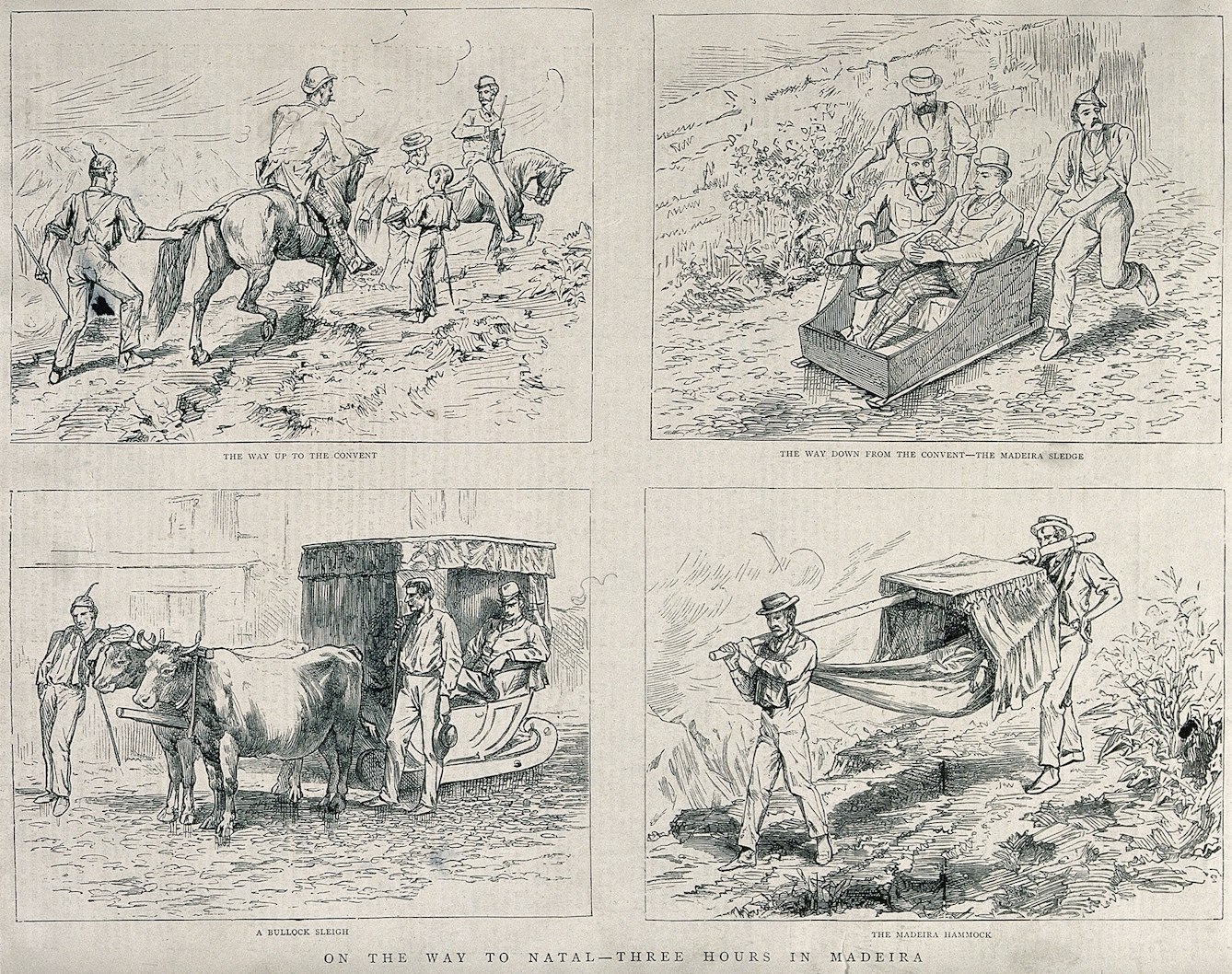
To compensate for the poor roads visitors relied on the novel forms of transport on the island, which also catered for the infirm.
Getting around was not straightforward. Wheeled transport was wholly unsuitable for the poor or non-existent roads, and Elizabeth found walking “more of a penance than a pleasure” owing to the state of the paths. Horseback was unsuitable for very delicate or elderly individuals who relied on hammocks and sleighs.
Initial optimism after arrival and the stimulation of meeting new (and old) friends often faded into the gloom of chronic illness. Elizabeth seems to have quickly lost any hopes of recovery she may have entertained. She remained in residence in Madeira from December 1838 till March 1840. Contemplating her return home after two winters spent on the island, she feared she “would feel like a bad penny returned ... ”, for she was “just what she was only perhaps thinner and weaker”. She died soon after her return, aged about 25.
Decline of the health resort
The guidebooks did their best to bolster the reputation of the winter health resort, but by the end of the century interest was waning. Cecil Monro was an aspiring young barrister afflicted by consumption soon after his call to the bar. He sampled several health resorts in turn between 1860 and 1870: Madeira five times; Algiers twice; Menton, Cimiez and Hyères once each; but was ultimately disappointed in all of them.
Cecil had little time for the health resort propagandist, J. H. Bennet: “Mentone is a trade with Bennet”, he complained, implying that Bennet milked unsuspecting patients lured to his practice in the sun. In 1870, Cecil decided to travel no more and got on as well at home as abroad. He survived till 1882, when he died aged about 50.
Suspicion of special pleading by mercenary medics was only one of several factors that increasingly undermined the health claims for wintering in southern Europe. The evidence that consumptive patients benefitted much from wintering abroad was never strong, and a lively debate continued in professional circles for as long as patients were sentenced, in the words of the Pall Mall Gazette, to “transportation by order of medicine”.
Consumption was a difficult disease to manage and treat. Not only was its bacteriological cause unknown until 1882, but it was easily confused with other respiratory complaints, and it affected patients in markedly differing ways: some sickened and died in short order, others languished for years on end, experiencing multiple unexplained intermissions and relapses.
The medical debates doubtless passed the majority of patients by. They operated by trial and error, by word-of-mouth recommendation, and, in the case of Madeira, perhaps in desperate hope of a brief stay of sentence.
About the author

Dr Richard Aspin
Richard Aspin is an Honorary Senior Research Fellow at Wellcome Collection. He specialises in 19th century archives, manuscript studies and curatorship.