A treatise on human physiology : designed for the use of students and practitioners of medicine / by John C. Dalton.
- John Call Dalton
- Date:
- 1871
Licence: Public Domain Mark
Credit: A treatise on human physiology : designed for the use of students and practitioners of medicine / by John C. Dalton. Source: Wellcome Collection.
77/768 (page 77)
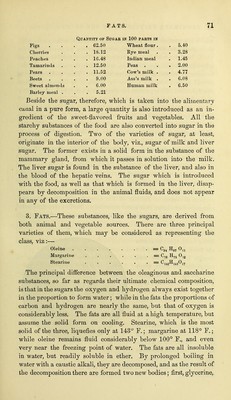
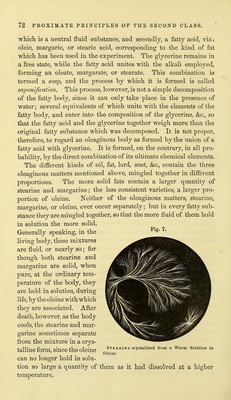
![Hepatic C ELLS. Human. In the glandular cells of the liver, oil occurs constantly, in a state of health. It is here deposited in the substance of the cell (Fig.13), generally in smaller globules than the preceding. In some cases of disease, it accumulates in excessive quantity, and produces the state known as fatty degene- ration of the liver. This is consequently only an ex- aggerated condition of that which normally exists in health. In the carnivorous animals oil exists in considerable quantity in the convoluted portion of the uriniferous tubules. (Fig. 14.) It is here in the form of granules and rounded drops, which sometimes appear to fill nearly the whole calibre of the tubules. It is found also in the secreting cells of the sebaceous and other glandules, deposited in the same manner as in those of the liver, but in smaller quantity. It exists, beside, in large proportion, in a granular form, in the secre- tion of the sebaceous gland- ules. It occurs abundantly in the marrow of the bones, both under the form of free oil-globules and inclosed in the vesicles of adipose tissue. It is found in considerable quantity in the substance of the yellow wall of the corpus luteu m, and is the immediate cause of the peculiar color of this body. It occurs also in the form of granules and oil-drops in the muscular fibres of the uterus (Fig. 15), in which it begins to be Urinipekous Tubc] Portion of Kidnev. Es OF Dog, from Cortical](https://iiif.wellcomecollection.org/image/b20389036_0077.jp2/full/800%2C/0/default.jpg)