Treatise on human physiology : for the use of students and practitioners of medicine / by Henry C. Chapman.
- Henry Cadwalader Chapman
- Date:
- 1887
Licence: Public Domain Mark
Credit: Treatise on human physiology : for the use of students and practitioners of medicine / by Henry C. Chapman. Source: Wellcome Collection.
127/942 page 139
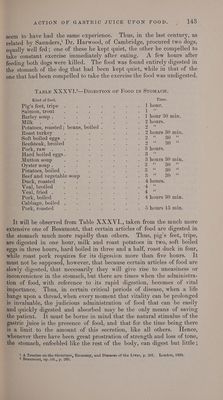
![from a patient affected with sarcina ventriculi, was analyzed by the method of dialysis, which does not involve heat, and gave signs of con- taining both hydrochloric and lactic acids, the latter being comparatively smal] in quantity. The question of the acidity of the human gastric juice reduces itself, therefore, as to whether it depends upon hydrochloric or lactic acid, or both. The evidence at present seems to us to favor the view that hydrochloric acid is the acid of the gastric juice. Practically, however, so far as digestion is concerned, either of these acids, or even acetic will do, though it is not true that any acid will replace the hydrochloric or lactic; acids, like malic, tartaric, tannic, etc., retarding or stopping digestion. The most important fact in gastric digestion is that the pepsin should be acidulated with either hydrochloric or lactic acid. Pepsin without acid will not digest, and, on the other hand, acidulated water without pepsin is equally without digestive effect. Whether the acid and the pepsin are united in the gastric juice, acting as one substance, or whether they exist there independently, has not et been positively determined. ‘The remaining matters entering into the composition of the gastric juice are unessential in digestion, so far as is at present known. 7 Let us now turn to a consideration of the action of the gastric juice upon the different articles of food. Our knowledge in this respect, so far as the living man is concerned, is essentially based upon the obser- vations of Beaumont,’ supplemented by those of Schmidt, Richet, etc. The principal effects of the gastric juice upon food, as observed in man, can, however, be easily demonstrated with a gastric juice artificially prepared in the following manner: The dried mucous membrane of the stomach is cut up into small pieces and placed in suitable test-tubes, into which distilled water is then poured. ‘l'o this infusion of the mucous membrane there should then be added a few drops of hydrochloric acid. The artificial gastric juice so prepared should further be maintained at a temperature of about 100° F. Into the test-tubes can now be put small pieces of coagulated white of egg, boiled meat, ete., and which, when left there about twelve hours, will be found digested. A little stirring from time to time will aid the process. Tn order to show the necessity of the combined effects of the pepsin and the acid, it is well to have at the same time one test-tube containing the macerated mucous membrane only, and another with acid, but with- out the prepared membrane. ‘The food in these two test-tubes will be found comparatively unchanged, that in the tube containing the hydro- chloric acid having become only syntonin. Post-mortem examinations made upon individuals dying during digestion also offer opportunities of examining the effect of the gastric juice upon food, which, unfortunately, are too often neglected. At one time it was supposed that the gastric Juice acted upon all kinds of food. It is well known now, however, that its action is limited almost entirely to those foods containing nitrogenized principles, such as meat, milk, eggs, gelatin, cheese, bread and other](https://iiif.wellcomecollection.org/image/b33764669_0127.jp2/full/800%2C/0/default.jpg)
 No text description is available for this image
 No text description is available for this image
 No text description is available for this image