Content advisory
This digitised material is free to access, but contains information or visuals that may:
- include personal details of living individuals
- be upsetting or distressing
- be explicit or graphic
- include objects and images of objects decontextualised in a way that is offensive to the originating culture.
Volume 1
The aborigines of Victoria : with notes relating to the habits of the natives of other parts of Australia and Tasmania / compiled from various sources for the government of Victoria by R. Brough Smyth.
- Date:
- 1878
Licence: Public Domain Mark
Credit: The aborigines of Victoria : with notes relating to the habits of the natives of other parts of Australia and Tasmania / compiled from various sources for the government of Victoria by R. Brough Smyth. Source: Wellcome Collection.
24/572
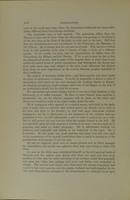
![area on the north-east coast, wliere the Australians build and sail canoes alto- gether different from those known elsewhere. The Australian type is well marked. The Australian differs from tlie I'a]nian in form and in color—from the Tasmanian less perhaps in the features of the face than in the form of the body, in color, and in the hair. Still less does the Australian show any resemblance to the Polynesian, the ilalayan, or tlie Chinese. He is darker, and his eyes are horizontal. If he has not a better head, he has probably, from what is known of him, a brain of a different quality. In his myths, his tales, and his superstitions, he differs from the Polynesians, the Malays, and the Chinese. If he is not a poet, he has in him the elements of poetry; and in many of his legends there is much that is not uulike the earlier forms of poetic conceptions that distinguish the Aryan race fi-om other races that were subject to the same local influences but derived from them no such inspirations as the ancient Sanscrit peoples embodied in their traditions. The natives of Australia dislike labor; and their muscles and their hands are those of sportsmen or hunters. It would be impossible to And in a tribe of Australians such hands as are seen amongst the working classes in Europe. An English ploughman might perhaps insert two of his fingers in the hole of an Australian’s shield, but he could do no more. The Australian can' endure fatigue, but he is not one to bear burdens, to dig laboriously, or to suffer restraint. He likes to exert himself when exertion is pleasurable, but not for ulterior purposes will he slave, as the white man slaves, nor would he work as the negro works, under the lash. He is courageous when opposed to a mortal enemy, and timid in the dark- ness of night when he believes that wicked spirits are abroad; he is cruel to his foes, and kind to his friends; he will look upon infanticide without rej)ugnance, but he is affectionate in the treatment of the children that are permitted to live; he will half-murder a girl in order to possess her as a wife, but he will protect her and love her when she resigns herself to his will. He is a murderer when his tribe requires a murder to be done; but in a fight he is generous, and takes no unfair advantage. He is affectionate towards his relatives, and respectful and dutiful in his behaviour to the aged. He is hospitable. He has many very good qualities and many very bad ones; and in the contrarieties of his mental constitution there is much to remind us of the peculiarities of the peoj)le of our own race. As may be supposed, there were no insane persons and no idiots amongst the Australians, and suicide was unknown when they were living in their wild state. As soon as the white man established himself on the rich pastoral lands of Victoria, and the natives were driven first from one spot and then from another, in order that tlie cattle and sheep of the invaders might feed peaceably and grow fat, tribes that perhaps had never met before were compelled to mingle. The ancient land marks were obliterated, the ancient boundaries had ceased to have any meaning, and the people, confused and half-stupefied by the new and extraordinary character of the circiunstances so suddenly forced upon](https://iiif.wellcomecollection.org/image/b24885228_0001_0024.jp2/full/800%2C/0/default.jpg)




 No text description is available for this image
 No text description is available for this image
 No text description is available for this image