Chronicles in cartoon : a record of our own times. XI. Science and medicine.
- Robinson, Bertram Fletcher.
- Date:
- [1906]
Licence: In copyright
Credit: Chronicles in cartoon : a record of our own times. XI. Science and medicine. Source: Wellcome Collection.
Provider: This material has been provided by The Royal College of Surgeons of England. The original may be consulted at The Royal College of Surgeons of England.
22/22 page 560
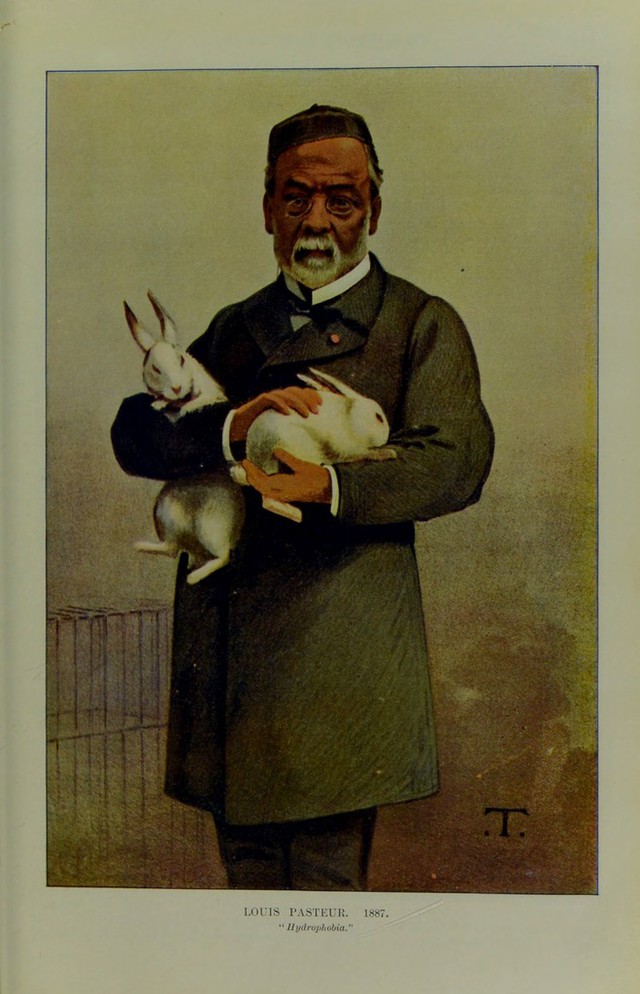
![THE WIN]) SOU M AG A'/ THE. ;')(!() municipal, lie had indulged in, Yirchow prefaced his collected writings thus: “No doubt science cannot admit of compromises, and can only bring out the complete truth. Hence, there must be controversy, and the strife may be, and sometimes must be, sharp. But must it, even then, be personal ? Does it help science to attack the man as well as the statement ? On the contrary, has not science the noble privilege of carrying on its controversies without personal quarrels ? ” Yirchow never quite accepted, nor perhaps appreciated, Darwin’s great work, and he scarcely realised the advance of pathology in its bacteriological and experimental depart- ments. The portrait of Pasteur, by Tissot, was one of the most inspired portraits of that artist. It presents to us a vivisector who was fond of animals, and his life gave war- rant for that theory. He first made his name in Europe as a chemist, and was already known to every man of science before he tackled the dreaded malady, hydrophobia. It cannot be said that the treatment which he invented was at all times successful, but he and his followers have progressed far towards the cure. He ever worked incredibly hard, and once brought on himself an attack of paralysis by his continual labours. He was a singularly kindly hearted and humane man. Pasteur had an extraordinary power of concentrating his attention upon a single subject, and perhaps the most important part of his work was done in those hours when he would sit silent and immovable, deep in thought,occupied with some difficult problem, allowing nothing to disturb or distract him until he had found some solution. But when lie had discovered a key to the difficulty, the whole expression of his face would alter,and he would eagerly communicate to those around him the experiments he had planned and the hopes of success which he cherished. Pasteur was intensely patriotic, and the war of 1870 plunged him into a melancholy depression, and he sent back to the University of Bonn his diploma as M.D., which they had conferred upon him in 18G8. He said : “To-day,the sight of this parchment is odious to me, and I feel insulted to see my name, with the designation of Virion clarrisimvm with which you endowed it, placed under the auspices of a name since devoted to the hatred of my country — that of Rex Guilelmus.” It will be remembered that this feeling of antipathy and patriotic resent- ment never wore off, for at the Kiel Canal festivities, some ten years ago, the Berlin Academy, at the instigation of the Kaiser, offered Pasteur, in the most flattering terms, a Prussian distinction. He replied that, whilst appreciating the honour as a savant, he could not, as a Frenchman, forget the war of 1870, and that he would never be able to accept a German decoration. Renan has eloquently said of Pasteur : “ His scientific life is like a luminous trail in the great night of the infinitely little, in those ultimate abysses of being where life is born.” B. Fletcher Robinson and Charles R. Hewitt.](https://iiif.wellcomecollection.org/image/b22267815_0024.jp2/full/800%2C/0/default.jpg)


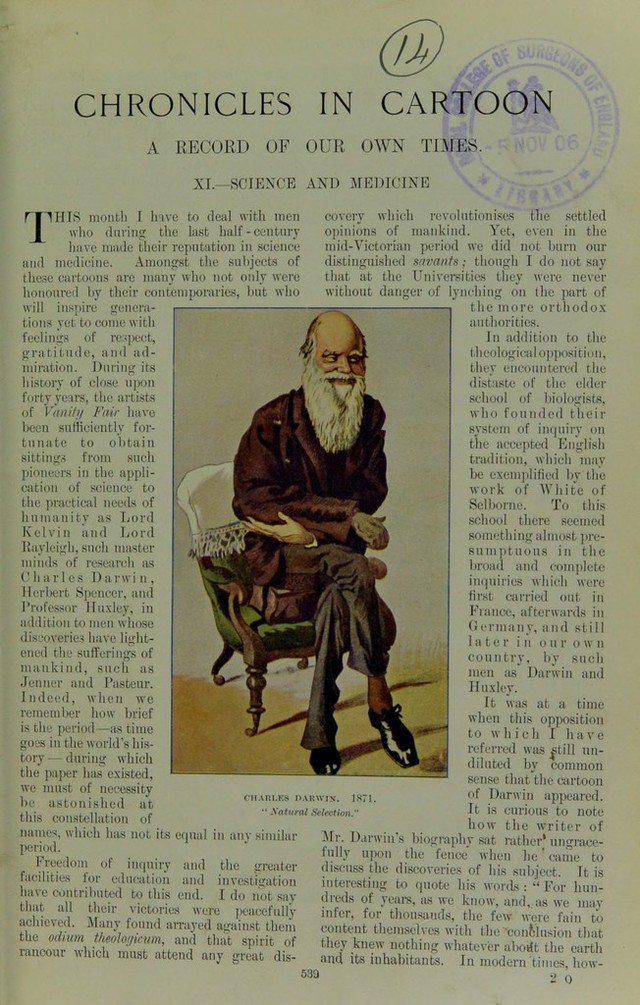 No text description is available for this image
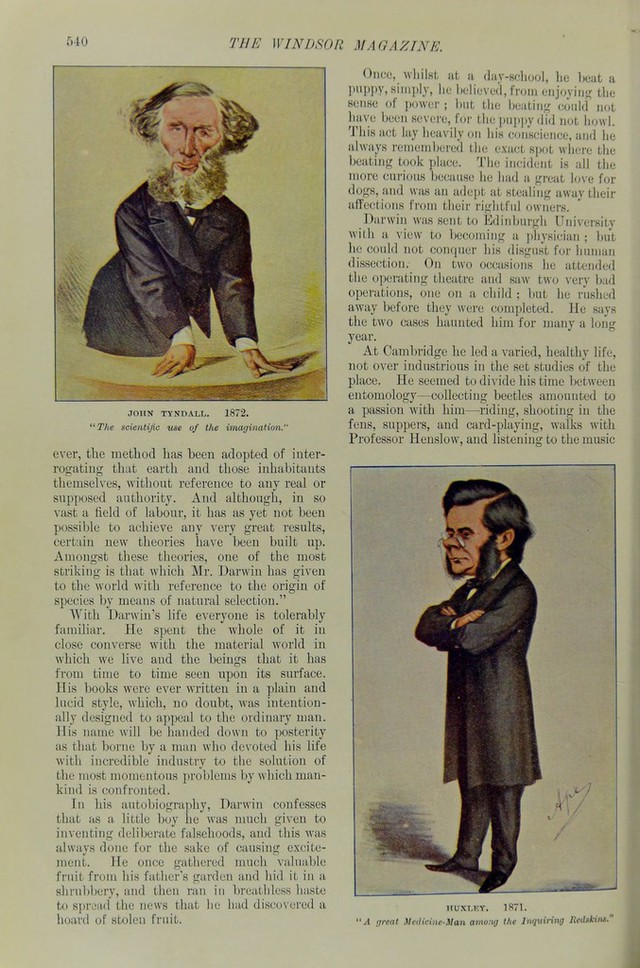 No text description is available for this image
 No text description is available for this image