Galeni Pergamensis De temperamentis : et De inaeqvali intemperie libri tres, Thomas Linacro Anglo interprete. Opus non medicis modo, sed et philosophis oppido q[uem] necessariu[m] nunc primum prodit in lucem cvm gratia & priuilegio / impressum apud praeclaram Cantabrigiam per Joannem Siberch, anno MDXXI : reproduced in exact facsimile : with an introduction by Joseph Frank Payne.
- Date:
- 1881
Licence: Public Domain Mark
Credit: Galeni Pergamensis De temperamentis : et De inaeqvali intemperie libri tres, Thomas Linacro Anglo interprete. Opus non medicis modo, sed et philosophis oppido q[uem] necessariu[m] nunc primum prodit in lucem cvm gratia & priuilegio / impressum apud praeclaram Cantabrigiam per Joannem Siberch, anno MDXXI : reproduced in exact facsimile : with an introduction by Joseph Frank Payne. Source: Wellcome Collection.
Provider: This material has been provided by the Royal College of Physicians of Edinburgh. The original may be consulted at the Royal College of Physicians of Edinburgh.
48/224 page 40
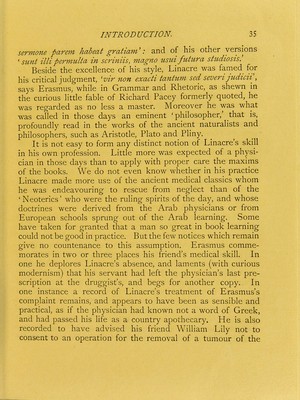
![that is Greek and Roman, should have been neglected, and instead the mean ditties (^nenice) of certain pretenders should have been cuhivated. Indigmim facinus, says Champier, {ita me deus amet) milhs bobus, nullisque victimis expiandum. Next, passing to the subjects of philosophy and medicine, he represents a war as arising between the Arabians and the Classics, which might have ended disastrously for the latter, but for the interposition of divine providence. Jam eo insolentiae ac temeritatis devenerant Arabi prin- cipes, ut nobis medicam artem funditus auferre audacissime conarentur; quandoquidem castra solventes in Gratcos ac Latinos omnem belH impetum convertebant, mukaque millia processerant, cum deus Opt. Max. (cujus est hominum repente et consiHa et animos immutare) ut auguror sanctissimi Lucae precibus et orationibus flexus, auxiHarios miHtes demisit, qui obsidione miseros, Hippocratem, Galenum, Dioscoridem, Paulum Aeginetam et nostrum Celsum CorneHum, jam dedi- tionem cogitantes eriperent et Hberarent; idque quanta sit confectum diHgentia, in confesso est. Hippocrati non pauci auxiHo fuere, Galeno ab Arabum principe oppresso strennue [sic]adfuit Vicentinorum dux[Nicolaus Leonicenus], prseterea ex GaHia Copus, ex AngHa Linacrus, bone deus quo studio, qui alacritate. Porro Dioscoridi GaHorum virtus et ferocia, Venetorum prudentia, Florentinorum divitise opem tulerunt. This passage only puts in an extravagant form the same ideas about the value of ancient learning in relation to medi- cine which we have already quoted from the letters of Leoni- cenus, and of Aldus. A more serious scholar than Symphorien Champier, Janus Cornarius, has left a very clear statement of the position which Galen and the ancient medical writers were considered to occupy at this critical epoch in the history of learning.](https://iiif.wellcomecollection.org/image/b21902835_0050.jp2/full/800%2C/0/default.jpg)


 No text description is available for this image
 No text description is available for this image
 No text description is available for this image