Dictionary of the active principles of plants: alkaloids : bitter principles; glucosides; their sources, nature, and chemical characteristics / with tabular summary, classification of reactions, and full botanical and general indexes. By Charles E. Sohn.
- Sohn, Charles E.
- Date:
- 1894
Licence: Public Domain Mark
Credit: Dictionary of the active principles of plants: alkaloids : bitter principles; glucosides; their sources, nature, and chemical characteristics / with tabular summary, classification of reactions, and full botanical and general indexes. By Charles E. Sohn. Source: Wellcome Collection.
Provider: This material has been provided by The University of Leeds Library. The original may be consulted at The University of Leeds Library.
18/210 page 6
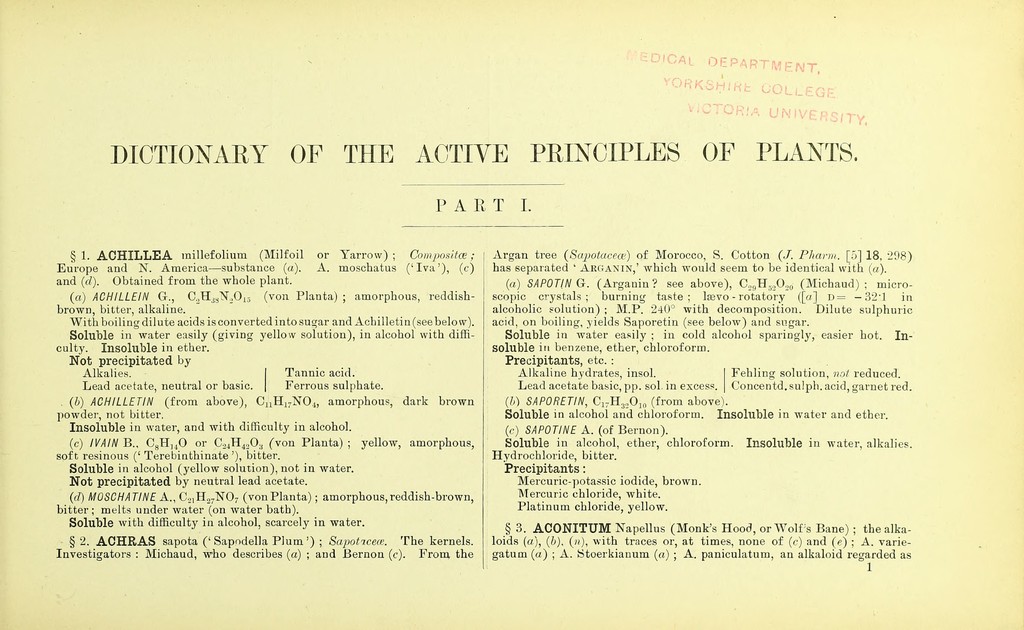
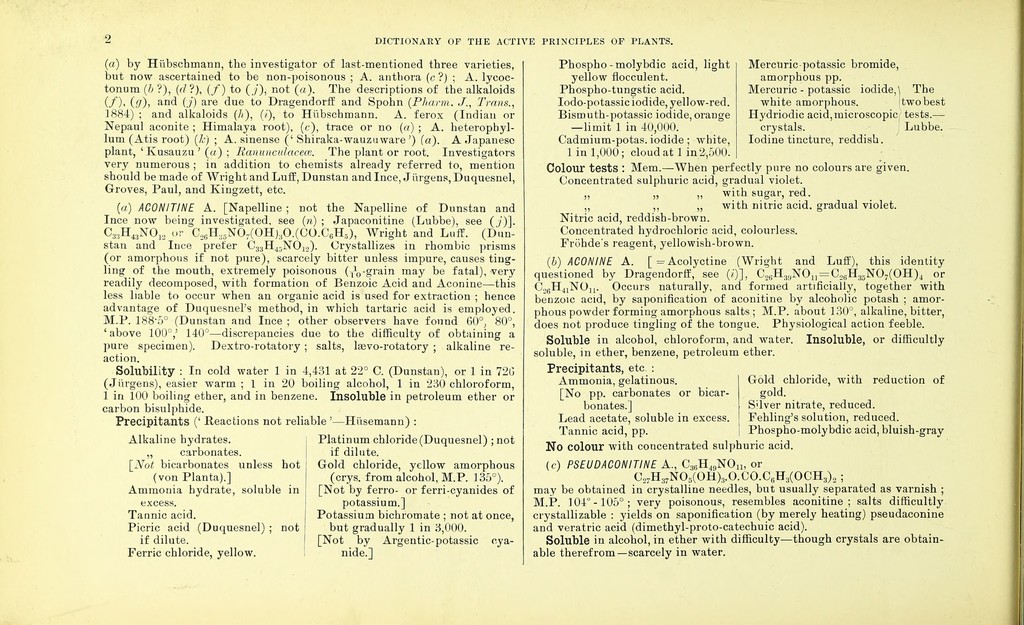
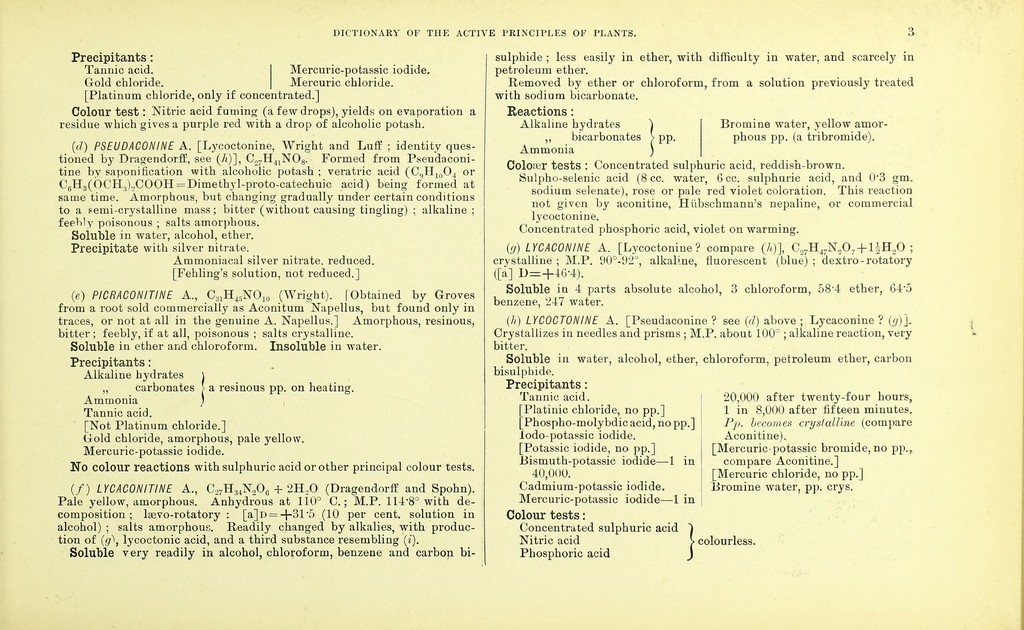
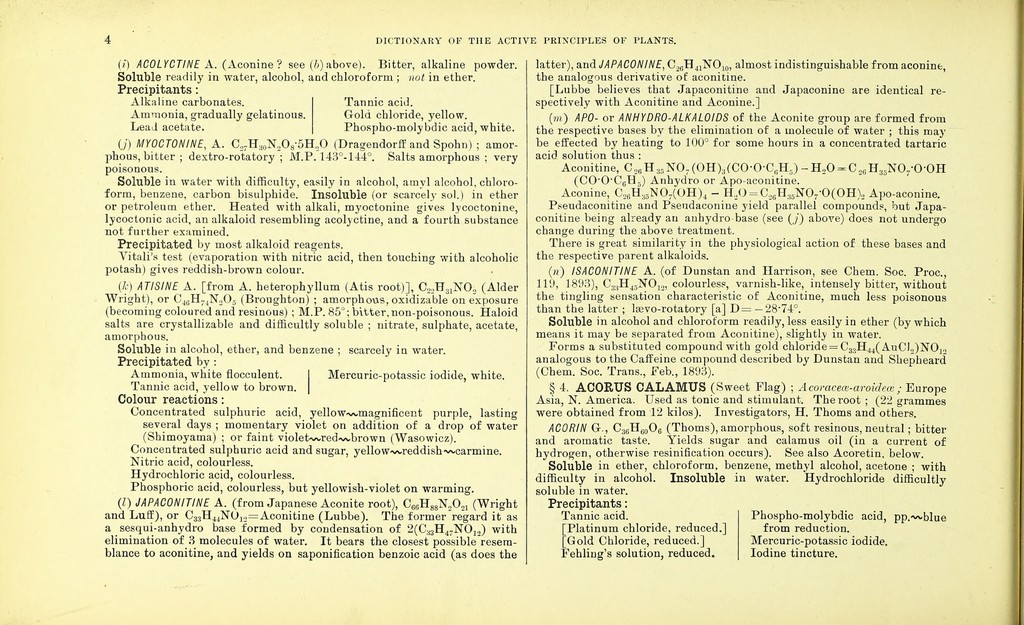
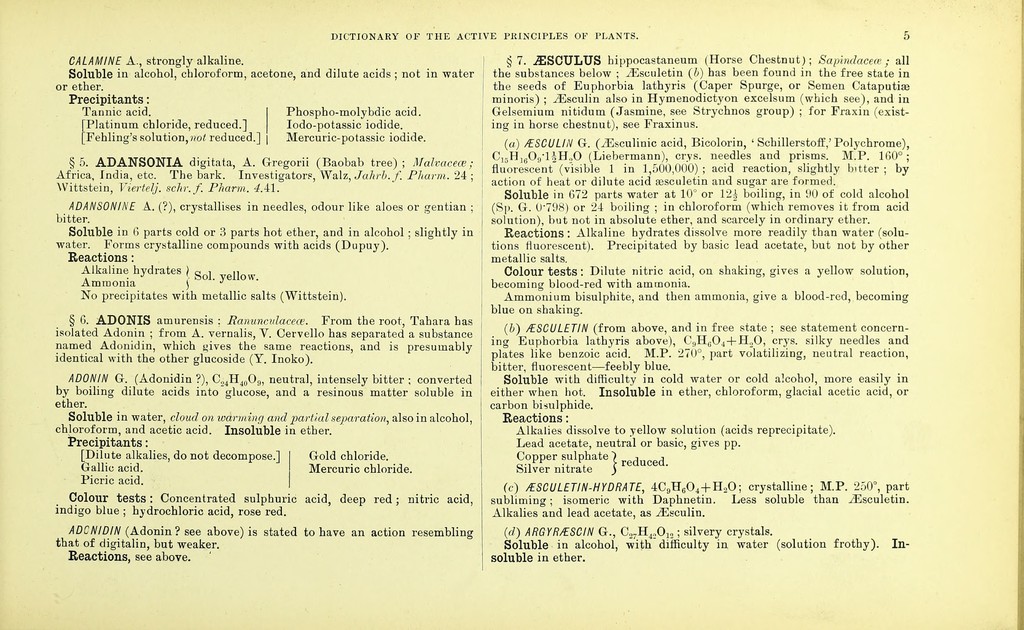
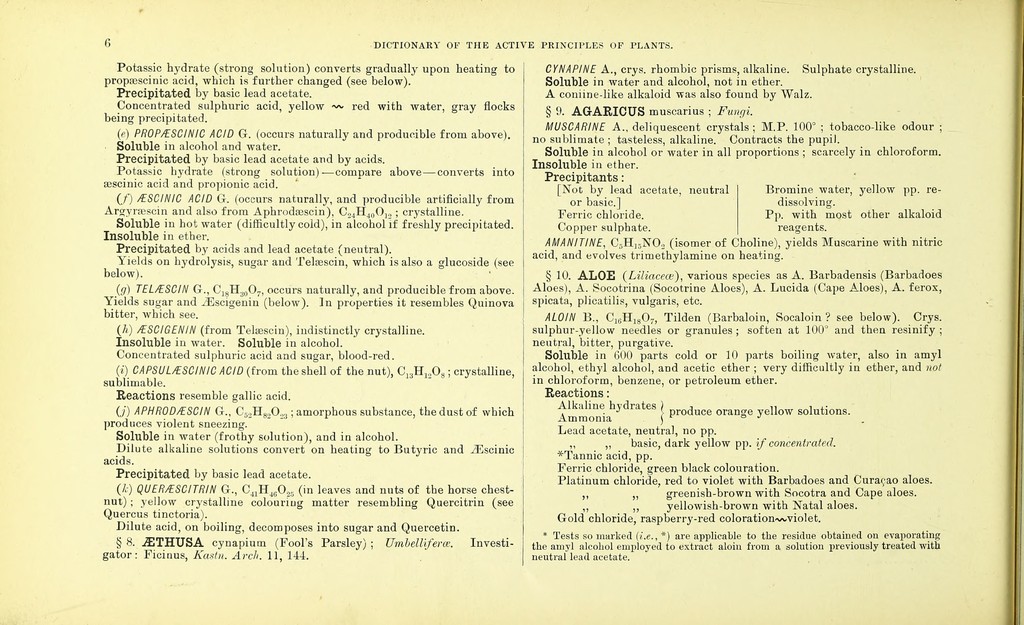
![Potassic hydrate (strong solution) converts gradually upon heating to propaescinic acid, which is further changed (see below). Precipitated by basic lead acetate. Concentrated sulphuric acid, yellow ~~ red with water, gray flocks being precipitated. (e) PROP/ESCINIC ACID G. (occurs naturally and producible from above). Soluble in alcohol and water. Precipitated by basic lead acetate and by acids. Potassic hydrate (strong solution)—compare above—converts into asscinic acid and propionic acid. (/) /ESCINIC ACID G. (occurs naturally, and producible artificially from Argyrsescin and also from Aphrodasscin), C2iH40O12; crystalline. Soluble in hot water (difficultly cold), in alcohol if freshly precipitated. Insoluble in ether. Precipitated by acids and lead acetate (neutral). Yields on hydrolysis, sugar and Telsescin, which is also a glucoside (see below). (g) TEL/ESCIN G., C18H30O7, occurs naturally, and producible from above. Yields sugar and iEscigenin (below). In properties it resembles Quinova bitter, which see. (h) /ESCIGENIN (from TelEescin), indistinctly crystalline. Insoluble in water. Soluble in alcohol. Concentrated sulphuric acid and sugar, blood-red. (i) CAPSUL/ESC1NICACID (from the shell of the nut), C13H1208; crystalline, sublimable. Reactions resemble gallic acid. (.7) APHROD/ESCIN G., C52H82023; amorphous substance, the dust of which produces violent sneezing. Soluble in water (frothy solution), and in alcohol. Dilute alkaline solutions convert on heating to Butyric and iEscinic acids. Precipitated by basic lead acetate. (Z) QUER/ESCITRIN G., C41H46025 (in leaves and nuts of the horse chest- nut) ; yellow crystalline colouring matter resembling Quercitrin (see Quercus tinctoria). Dilute acid, on boiling, decomposes into sugar and Quercetin. § 8. .SITHUSA cynapium (Fool's Parsley) ; Umbelliferm. Investi- gator : Ficinus, Kastn. Arch. 11, 144. CYNAPINE A., crys. rhombic prisms, alkaline. Sulphate crystalline. Soluble in water and alcohol, not in ether. A coniine-like alkaloid was also found by Walz. § 9. AGARICTJS muscarius ; Fungi. MUSCARINE A., deliquescent crystals; M.P. 100° ; tobacco-like odour ; no sublimate ; tasteless, alkaline. Contracts the pupil. Soluble in alcohol or water in all proportions ; scarcely in chloroform. Insoluble in ether. Precipitants: [Not by lead acetate, neutral Bromine water, yellow pp. re- or basic] dissolving. Ferric chloride. Pp. with most other alkaloid Copper sulphate. reagents. AMANITINE, C5Hj5N02 (isomer of Choline), yields Muscarine with nitric acid, and evolves trimethylamine on heating. § 10. ALOE (Liliacece), various species as A. Barbadensis (Barbadoes Aloes), A. Socotrina (Socotrine Aloes), A. Lucida (Cape Aloes), A. ferox, spicata, plicatilis, vulgaris, etc. ALOIN B., C16H1807, Tilden (Barbaloin, Soealoin ? see below). Crys. sulphur-yellow needles or granules ; soften at 100° and then resinify ; neutral, bitter, purgative. Soluble in GOO parts cold or 10 parts boiling water, also in amyl alcohol, ethyl alcohol, and acetic ether ; very difficultly in ether, and not in chloroform, benzene, or petroleum ether. Reactions: Alkaline hydrates > duce e Uow solutions. Ammonia ; Lead acetate, neutral, no pp. ,, ,, basic, dark yellow pp. if concentrated. *Tannic acid, pp. Ferric chloride, green black colouration. Platinum chloride, red to violet with Barbadoes and Curacao aloes. ,, „ greenish-brown with Socotra and Cape aloes. ,, yellowish-brown with Natal aloes. Gold chloride, raspberry-red colorationwviolet. * Tests so marked (i.e., *) are applicable to the residue obtained on evaporating the amyl alcohol employed to extract aloin from a solution previously treated with neutral lead acetate.](https://iiif.wellcomecollection.org/image/b21503023_0018.jp2/full/800%2C/0/default.jpg)