A synopsis of natural history : embracing the natural history of animals, with human and general animal physiology, botany, vegetable physiology, and geology / translated from the latest French edition of C. Lemmonnier, with additions from the works of Cuvier, Dumaril, Lacepede, etc., and arranged as a text book for schools by Thomas Wyatt.
- Lemonnier, Céran
- Date:
- 1839
Licence: Public Domain Mark
Credit: A synopsis of natural history : embracing the natural history of animals, with human and general animal physiology, botany, vegetable physiology, and geology / translated from the latest French edition of C. Lemmonnier, with additions from the works of Cuvier, Dumaril, Lacepede, etc., and arranged as a text book for schools by Thomas Wyatt. Source: Wellcome Collection.
Provider: This material has been provided by the National Library of Medicine (U.S.), through the Medical Heritage Library. The original may be consulted at the National Library of Medicine (U.S.)
111/198
![placed behind the hinge, and which throws open the valves when the muscles relax. FAMILY I. OSTRACEA. The mantle open, without tubes or any particular aper- tures ; foot very small or entirely wanting ; the greater part are fixed either by their shells or by their threads to rocks or other bodies under water. Two remarkable genera. Genus I. Ostrea. Oyster. No foot; mantle provided with a double range of fringes; shell hinged, inequivalved and laminated; hinge without teeth; ligament small; a single muscular mass extending from one valve to the other. Genus II. Avicula, Brug. Besides the single transverse muscular mass, another fasci- culus extending from one valve to the other, and placed before the mouth. Certain species are called Pintadinse, the most celebrated of which yields the mother of pearl. FAMILY II. MYTILACEA. Mantle opening before, with another separate opening ; all have a foot used in crawling, or at least in drawing out, directing and placing the byssus. Three remarkable genera. Genus I. Mytilus, Lin. Sea Muscle. Shell swoln out into a triangle with equal valves; one is fixed by a byssus. [The rocks of the sea.] Genus II. Anodontea. No byssus; hinge without a tooth ; in the interior of the shell a silvery nacre, and sometimes the most brilliant co- lours, purple and pink. [Fresh waters.] Genus III. Unio. Shell has a short cavity in one valve near the hinge, which receives a short plate or tooth of the other, and behind it is a long plate, which is inserted between two other plates on the opposite side. [Fresh waters; species of the United States numerous.]](https://iiif.wellcomecollection.org/image/b21136427_0111.jp2/full/800%2C/0/default.jpg)
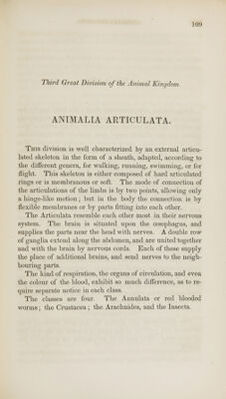
 No text description is available for this image
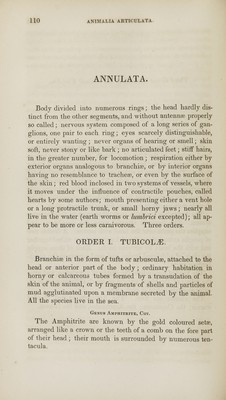
 No text description is available for this image
 No text description is available for this image