A synopsis of natural history : embracing the natural history of animals, with human and general animal physiology, botany, vegetable physiology, and geology / translated from the latest French edition of C. Lemmonnier, with additions from the works of Cuvier, Dumaril, Lacepede, etc., and arranged as a text book for schools by Thomas Wyatt.
- Lemonnier, Céran
- Date:
- 1839
Licence: Public Domain Mark
Credit: A synopsis of natural history : embracing the natural history of animals, with human and general animal physiology, botany, vegetable physiology, and geology / translated from the latest French edition of C. Lemmonnier, with additions from the works of Cuvier, Dumaril, Lacepede, etc., and arranged as a text book for schools by Thomas Wyatt. Source: Wellcome Collection.
Provider: This material has been provided by the National Library of Medicine (U.S.), through the Medical Heritage Library. The original may be consulted at the National Library of Medicine (U.S.)
48/198
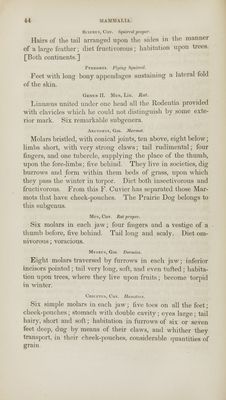
![Scums, Cuv. Squirrel proper Hairs of the tail arranged upon the sides in the manner of a large feather; diet fructivorous; habitation upon trees. [Both continents.] Pteromys. Flying- Squirrel. Feet with long bony appendages sustaining a lateral fold of the skin. Genus II. Mus, Lin. Rat. Linneeus united under one head all the Rodentia provided with clavicles which he could not distinguish by some exte- rior mark. Six remarkable subgenera. Arctomys, Gra. Marmot. Molars bristled, with conical joints, ten above, eight below; limbs short, with very strong claws; tail rudimental; four fingers, and one tubercle, supplying the place of the thumb, upon the fore-limbs; five behind. They live in societies, dig burrows and form within them beds of grass, upon which they pass the winter in torpor. Diet both insectivorous and fructivorous. From this F. Cuvier has separated those Mar- mots that have cheek-pouches. The Prairie Dog belongs to this subgenus. Mus, Cuv. Rat proper. Six molars in each jaw; four fingers and a vestige of a thumb before, five behind. Tail long and scaly. Diet om- nivorous ; voracious. Myoxus, Gm. Dormice. Eight molars traversed by furrows in each jaw; inferior incisors pointed; tail very long, soft, and even tufted; habita- tion upon trees, where they live upon fruits; become torpid in winter. Cricetus, Cuv. Hamsters. Six simple molars in each jaw; five toes on all the feet; cheek-pouches; stomach with double cavity; eyes large; tail hairy, short and soft; habitation in furrows of six or seven feet deep, dug by means of their claws, and whither they transport, in their cheek-pouches, considerable quantities of grain.](https://iiif.wellcomecollection.org/image/b21136427_0048.jp2/full/800%2C/0/default.jpg)