Volume 1
Dictionarium scoto-celticum: a dictionary of the Gaelic language: comprising an ample vocabulary of Gaelic words ... with their signification and various meanings in English and Latin ... and vocabularies of Latin and English words, with their translation into Gaelic. To which are prefixed, an introduction explaining the nature, objects and sources of the work, and a compendium of Gaelic grammar / compiled by J. Macleod and others and published under the direction of the Highland Society of Scotland ; edited by M. Mackay.
- Date:
- 1828
Licence: Public Domain Mark
Credit: Dictionarium scoto-celticum: a dictionary of the Gaelic language: comprising an ample vocabulary of Gaelic words ... with their signification and various meanings in English and Latin ... and vocabularies of Latin and English words, with their translation into Gaelic. To which are prefixed, an introduction explaining the nature, objects and sources of the work, and a compendium of Gaelic grammar / compiled by J. Macleod and others and published under the direction of the Highland Society of Scotland ; edited by M. Mackay. Source: Wellcome Collection.
75/848 (page 7)
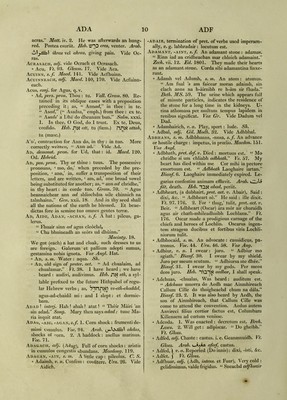
![Ripcji, become ripe : maturesce. C. iS'. Gr.'nZn, juventus. Hebr. ahib, produxit fructum pri- - mum et praecocem. abib, spica cum culmo. Abuicheachd, tW, Ì s. m. ety. (Abuich), Ripeness, Abuichead, -eid, J degree of ripeness: maturitas, maturitatis gradus. “ Air abuichead gu’n robh am bàrr” C. S. However ripe the corn may have ■ been. Quantumvis maturae fuerint fruges. ■ * Abuirt, s.f. (Abair), Speech, convei'sation: ser- ' mo, colloquium. “ Ro dhèan siad an abuirt sin eatorra.” Tain. 37. Thus they conferred. Ita colloquebantur. Id. q. Abairt. * Abulta, adj. Able, strong, capable : habilis, for- tis, validus. IJh. Wei. Abl. Span. Abil. Lat. Habilis. Angl. Able. ■ * Abultachd, s.f. ind. MSS. Vide Abaltachd. Ac, -A, -AN, et -ANNAN, S.f. Vide Achd. » Ac, s. m. 1. A refusal, denial: repulsa, recu- satio. Vail. Vide Ag. Arab. Uic akk, split- ting, ole disobedient. 2. Speech, tongue: oratio, lingua. Sh. 3. A son : filius, i. e. wiac, by the elision of m. Ac, Ì prep, conjoined with pers. pn'on. pi. (Aig, et Aca, j lad). With them: apud illos, illas, illa. “ Tha aca,” C. S. They have : est, vel sunt illis. “ Agus biodh uachdranachd am.” Gen. i. 26. And let them have dominion. Atque dominatio sit illis. * Aca, interj. (Faic), See, behold : ecce. “ Aca, an lamh, a Chu Chuailgne.” Vt. Behold the hand, Cuchullin, of Cuailgne ! Ecce manum, Cuchulline, Cuailgniensem ! * Aca-damh, s. f. An academy: academia. O’R. Vide Acaidh, an abode, and Dàmh, a learned man. Potius, vox Grcec. vel Lat. Acaid, -e, -ean, s.f. A pain, hurt, stitch : dolor, laesio, pleuritis. R. M^D. 126. Vide Aiceid. Acaideach, -eiche, adj. (Acaid), Painful, sickly, groaning : dolens, aeger, valetudinarius. Macf. V. « Acaideach, -eich, s. m. An inhabitant: incola. MSS. * Acaidh, -e, -ean, s.f. (Aig a thigh), -An a- bode, habitation : domicilium. 0'R. Properly “ Achaidh,” whence D’achaidh; home. q. vide. Acain, -e, -in, s.f. A sigh, moan, complaint: sus- pirium, questus, gemitus. “ Thàinig osag an crònan an uillt, “ ’N a luib bha acain a’ bbròin. S. D. 83. A blast came in the roar of the torrent, in its eddy it bore the wail of grief. Aura venit in rauco murmure lymphae; attulit sinu tristificum gemi- tum. Wel. Acceni. Germ. Ach, dolor. Fr. Ac- cent. Span. Acenta. Gr. K-yjoi, dolor gravis ; ’’Kyjopat, ingemo sub pondere. Hd). HN cuch, eheu ! Pers. azhan, grief, anguish. Acain,*-iDH, dh, v. n. 1. Sigh, or moan : suspira, geme. R. M^D. 239. 2. Regret: fer aegrè, vel raolestè. “ Fhleasgaich oig tha dol dachaidh “ ’S tu nach acain mo chall.” R. D. Mouthful wooer, homewards returning thou wilt not regret my loss. Amator juvenis, domum re- ditui'e, non aegrè feres infortunium meum. Acaineach, -eiche, adj. (Acain), Plaintive, pain- ful, sickly: aeger, dolens. “ Bidh fanna-ghal truagh air feadh na h-araich, “ ’S gearan cràiteach acaineach. Turn. 34. There shall be wretched moaning throughout the field of battle, and jxiinful, sickly lamentation. Erit per proelii campum, miserabilis luctus tristi- tiam afferens, aegraque ploratio. Acainich, -e, s.f. C. S. Vide Acanaich. Acair, -e, et Acrach, j)l. Acraichean, s.f. 1. An anchor: anchora. “ A’ gabhail orra bhi tilg- eadh a mach acraichean a toiseach na luinge.” Gniomh, xxvii. 30. Under colour, as if they would have cast anchors out of the foreship. Simulantes se anchoras extensuros e prora navis. 2. An acre : jugerum. C. S. 3. A rick of corn: acervus e messis frugibus factus. Provin. Ir. ?tT)C0]]te. Manx. Anker. Wel. Angor. Ar>}i. Eor, Enhor. Rasq. Aingura, Angura, et Acra. Span. Ancora. Spelm. Gloss. Corn. Ankar. Fr. Ancre. Ital. Ancora. Gr. Ay/.vffa. Arab, jlitl akar, areas, plots of ground. Pers. anhar. Heb. acar, agricola. Acair-pholl, -uill, s. m. (Acair, et Poll), An an- choring place, or birth : statio navium. C. S. Acanaich, -'e, s.f. (Acain), Grief, a complaining, sobbing: dolor, moeror, actus suspirandi vel ge- mendi. “ CÒ na daoine b’ àill m’ acanaich ?” Rep. Append. 232. W’ho are the men who wish to par- ticipate in my grief Quinam illi sunt qui mecum dolere volunt ? Acarach, -aiciie, adj. Merciful, mild : misericors, mitis. Macf. V. Wel. Achar, affectionate. Acar ACHD, s. f. ind. (Acarach). 1. Moderation, respect: modus, respectus. Stew. Gloss. 2. Gen- tleness, compassion: mansuetudo, misericordia. “ —’S ni acarachd fi truaghan bochd, “ Is dionar ’anam leis.” Ross. Salm. Ixxii. 13. And shall have compassion on the poor indigent one, and his soul shall be protected by him. Mi- sericordiam /adhibebit in miserum, ejusque anima servabitur ab illo. 3. Doubt, remissness: haesi- tantia, dilatio. R. M^D. 82. et 95. Acaran, -ain, s. m. Lumber : instrumenta domes- ticd ponderosiora. Provin. Acarsaid, -e, -ean, s.f. (Acair-aite), A harbour: portus, statio navium. Voc. 6. Acartha, s. f. ind. Profit, fitness, convenience : commodum, congruentia. Provin. Acartha, ) -aiche, adj. MSS. Id. q. Acar- Acarthach, j ach. Acarthachd, s.f. ind. MSS. Vide Acarachd. Acasan, prep. conjoined witYi pers. prm. pl. Emph. of Aca, q. vide. Acastair, -an, s.f. An axle : axis. Voc. 94./ * Accomar, adv. (An comas). 1. In hand, under subjection, at one’s mercy, or disposal: in ma- nibus, sub arbitrio. MSS. 2. Used in ancient writings also for faiceamaid, let us see: thus,](https://iiif.wellcomecollection.org/image/b22012096_0001_0075.jp2/full/800%2C/0/default.jpg)