A pocket botanical dictionary comprising the names, history, and culture of all plants known in Britain; with a full explanation of technical terms / By Joseph Paxton ... assisted by Professor Lindley. A new edition. With supplement containing all the new plants since its appearance.
- Joseph Paxton
- Date:
- 1849
Licence: Public Domain Mark
Credit: A pocket botanical dictionary comprising the names, history, and culture of all plants known in Britain; with a full explanation of technical terms / By Joseph Paxton ... assisted by Professor Lindley. A new edition. With supplement containing all the new plants since its appearance. Source: Wellcome Collection.
92/444
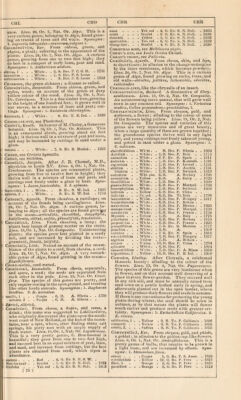
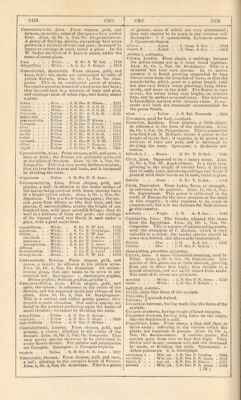
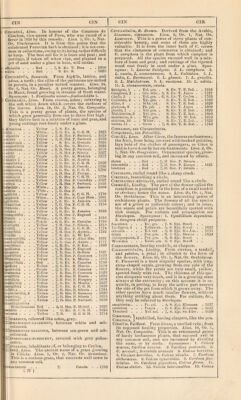
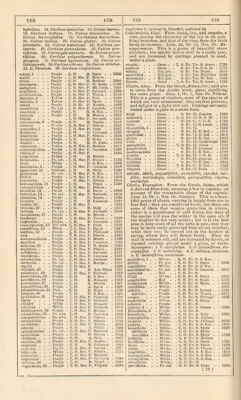
![CIIIl CHPv CHV C«RY?onALANUS, Lilin. From chrt/sos, f;old, ajxj lia/anoSf an aoorn ; some of the speci»*si hear yeHovv fruit. Linn. 12, Or. I, Nat. Or. Chrysohalanitrefc. A ^enus of fruiting slirubs, suceeeding be-st when fjrown in a mixture of loam and peat; increased hy layers nr cuttings in sand, under a glass. In the U^. Indies the fruit of C. Icoco is eaten, under the name ut cocoa-plum. I-flcfl .... WIdfj. . S. Ev. .s?. W. Ind. . 1752 oblon^irellus . . WniU'■ . 5, U. Ev. S. Gror^pu • 1(112 CiiRYsOcoMA, DeenndoUe. From chnjsos, gold, and koine, hair; the stems are terminated by tufts of yelloxY flowers. Linn. 19, Or. 1, N'ai. Or. Cum- posihe. This is an ornamental genus of plants, the species growing trom half a foot to six feet high ; they succeed best in a mixture of loam and peat, and cuttings taken off when ripe, root freely under a glass. b'flOril . . . . B’ le . . R, H. Hfr. P. .Liberia . . 1741 Ccfiiai . . . . White . . 7. 0. Ev. C. (J. H. . 1712 I'iiifiils . . . . AYliit<‘. . }!. 0 Kv. S. C. G. H. . 1759 rotn-<ur#il . . . Yel’nw . 7. n. Kv. S. C. G. H. . 1731 denciciilfit.'l . A'elldw . R. G. Ev. drkc inciil'>li(i.'s . Yellow . 8. 11. H-r. P. Sibr.ia . Lcnosyila • . . Y>-iiow . 9, H. Her. 1’. Europe . ! I.IDR iilvc-i . . . . Yellow . 7, G. Kr. S. C. G. H. . 1818 niiilAtil . . . . A'l-llnw . 9, H. Her. P. Coolina . IHIB p.liulii , . . . A’’ llnw . 7. G, Ev. S. C. G. H. . HIM s.'.'.hrA . . . . White . . 51, Kv. C. 0. H. . 17.^2 l•.Ml^lmAUl . . . A'cllow . 5, G. Her. P. .S. W. . H,37 villr.6.i . . . . V.l.ow . 5i, H. H r. Hunsp rv . 1799 virs-Ud . . . . Yellow . 9, H. Her. P. N. Am,-;, . . 1821 ChbysugSnCm, Linn. From c/i ri/soj, gold, and ffoiin, a knee or joiiit; the flowers are generally produced at tlie joints of the stem. Linn. 19, Or. 4, Nat. Or. Cotnpositie. This is a very pretty herbacerms pl.ant, tliat thrives best in peat and loam, and is increased by dividing the roots. rir^iniHiiClm . . VcUow . 5. H. Her. P. N. Anier. . CiiRYsoPiifM.rM, Linn. From c/»ri/sos, gold, and plty/lon, a leaf; in allusion t<i the under surface of the leaves being covered with dense shining hairs of a bright yellow colour. Linn. .5, Or. 1, Nat. Or. Sttpufnceic. This is a fruit-bearing gentis ; the spe¬ cies grow from fifteen tt* fifty feet high, and one species, C. macrophyllum, attains the heiglu of one hundred feet, tvith most splendid foliage; they do well in a mixture of loam and peat; and cuttings of the ripened wood root freely in sand under a glass, with a good moist heat. nuguttifoUOm . . AtHote. . S. Kt. T. W. Imt. . 1H19 aiijCnteuin . . . While . . .9. Kv. T. Mfrliniuiie. 17.58 CmuKII . . . . AVhite . . 5. S. Ivv. T. W. In.l, . 1737 cwtuleom . . White . . 5, .S. Kv. T. S. Ainer. . 1 :i7 jamniivn e . . Wliite . . .5, S. Ev. 'r. .lAinnii'.i . 1737 tiucrophyilum . While . . 5, S. K<f. T. S. A.«wr. . HlUO (^UtuCUi) . . . White . . S. Kv. T. Martin qiie . H123 ni •crophyllfim . While . . B. Kv. T. S. I.pone . 1821 iiioii(ip\ rCiiiim . . Hiown . . 8. Kv. T. W. Ina. . 1H12 ChrysopOoOn, Trillins. From cUryaoa, p*Id, and /logu/j, a beard; in allusion to tlie yellow auiis. Linn. 23, Or. 1, Nat. Or. Gminineie. .An uninte- reT-ting grass, that only needs to he soun in any Commiiii soil. Synntiymes: I. Anilropo^an ^ryllus, Hulcua f'njlhis, I*iiUinia I'ryllus—j'ryl/us 1. Cnnvsu't'i.RNlO.M, Lmn. Frxin chiysu*, gold, and svlen, the spleen ; in reference t4> tlie colour of the flowers, arid the supposed medicinal virtues of the plant. Linn. 10, Or. 2, Nat. Or. SurOrugureir. This is a curious and rather pretty genus; tlicy require a inoi>t siiualUin. Our native species are found in the gi eatest perfection unon the banks of small rivulets ; increased by dividing the routs, ■Ueni filllflm , . V'-How . 4. II. Her. I’, iiritnin . iifp-Uiuo . . . V-'lt.ov . 4. n. ll.T. p. NVj.h1 . . 1U20 oppo-itiiiilliim . A’l'lliiw . 4, li. Her. 1’. Hritiiiii . . CiinfsosTRMMX, I.essin/;. I'rom cfirysos, g<'ld, and tfeniniit, a crown; alluding to the colour of the flowers. I.inii. 19, Or. :J, Nat. Or. This very pretty species dc'crves to be i-ulti\ated in every floiviT-border. For lultiire and propagation see Coreopsit. .S'ty«oMi/»/ie.' I. Curcupais Iripteria. lilptOrl* . . . WllokV . 8, 11. n»r. I’. N. Aiiut. . HIP,7 CitiivsniiPs, Peraoon. From ehryaoa, gold, and oura, u tail; alluding to the eompaii lieads of riowets. Linn. 3, Or. 2, Nat. Or Giainiiinr. This is u genus of grasses, some of wiiich are very ornamental ; tliey only require to be sown in any common soil, Synoiiyniea: 1. C. cynusuroidea, Cjjnoauruj uureita. 2. Cyiiuaurua ele^uns. effi'inris .... Apeul . . 7- Crasic S. Eio’. • . 1824 Cli'g.tiis 2 . . . .Ai'cUi . . 7> Oras'. ti. Eur. . . lUl6 Anrins 1, echindiitt. CnVsis, Lindley. From chnaia, a melting; because the pollen-masses are as it were ftised together. Linn. 2n, Or. 1, Nat. Or. Orchidaccit. This is a splendid but very rare species. In its native country it is found glowing suspended by long fibrous roots from the branches of tree.«, so that the p.seiido-bulbs, which grow to a great length (and are also very brittle when growing), hang do^vn- vvards, and wave in the wind. The flower is very si-.owy, the colour being very briglit, its texture firm, and its surface even and waxy. The labelJum is beautifully marked with iTimson veins. It suc¬ ceeds well with the treatment recommended for the genus Vanda. auroii .... Yellow . 5, S. Epi. VeiiezusU . 1834 CiHARious, good for food, esculent. CihOtTCm, Kauljiiaa. I-'rom kibuthn, a little che''t: in reference to the form of the indusiuin. Lion. 24, Or. 1, .Nat. Or. Polypodiaceit. This i> a beau til ul tree fern fmm N. Holland, where it grows to the height of thirty feet; it requires to be grown in a mixture of loam and peat, and is incrca.-.ed by dividing the roots. Syiwnyme. 1. DUkauuia ant’ a ret tea. BilUrdivfl, 1 . . Bro\m . . C. Ev. T. N. Hoi’. . 1324 CiccA, Linn. Supposed to be a man’s name. Linn. 21, Or. 4, Nat. ()r. Enphorbiaeeee. Is a fruit tri-e, growing to the height of twenty feet; it thrives best in s.andy loam, and strong cuttings root freely if planted with their leaves on in sand, under u glu-'S. distlcliit . . . Green . . S. Er. T. E. Ind. . . ClcuR, Touriiefurt, From kykis, force, or strength; in reference to its qualities. Linn. I7, Or. 4, .Nat. Or. Legnminuscr. This genus is euUivuted in the south of Kurope for the same purpose as the lentil in this Country; it only requires to be soun in common soil, but it is loo delicate for field culture this country. ari^tinilm . . . Purpl® . 7» H. A. i*. Eur. . . 1543 CimriRTrst, I.inn. The (Ireeks adopted this name from the Kgx’ptians. Linn. 19, Or. 1, .Nat. Or. Cciniposihr. This is a genus of uninteresting plants, with the exception of C. Endivia, which is very valuable us a s;ilad; tht‘ tender species should be sown on a hotbed, and afieruards transplanted. En.lu-Ut . lllue . . 7, II. A. E. In i. . , 1548 IntybCii. . . . Hlu? , . 7, ]{. Ilor. I'. Uiitniu . . divarirdfftm, pfitnllOm, apinflslim. Cici'TA, Lintt. name nf doubtful meaning, used by I'linv. 5, Or. 2, Nat. Or. Vmhellijer.t 'I'lie species of this genus are or little interest, grou iiig fioin one to tliree feet high; they deliglil in a humid situation, and aie ea>ily raised from seeds. I'he roots ol C. eiVojd arc puisutiuus. niRculAt.t . . . W'liitc . . 7« lb Hi*r. 1*. N. Amer. . 1759 viroii.\ .... WUite . . 7, H. lln. i*. UittAiu . . Imlldft’rtl, daOrlcd, (‘fi.I.v, hairs like those of the e) elasli. Cn':17iv'.’‘ CiMATUi Y-TOOTiiuu, having teeth like the hairs of the eyelash. Cii'iAMY-scABROus, having nuigli ciliated margins. Cii.iATKi.v-piuMosK, having long liaiis on the edges, like the feathers ot a quill. CimicTkOoX, Linn. From cimr.r, a bug. and /ngo, to drive awa)'; referring to the xiriues wliicii the plants are supposed to possess. Lion. 13, (ir. 5, Nat. Or. /Innii/untaeea-. .A curious genus; the species grow from two to four teoi high. They tiirive well in any ennuuon soil, tuul are iiUTisised by seeds, or dividing the r<»ots. S’jnonynua: I. ^leAiru poducarpa. 2. .4. C'louV^uga. AinciicAiiA, 1 . . W'ht. vel.. 7. H. Her. 1*. r.vmlina . 1824 riiniil'oll.t . . . Whi. Yvl.. li, H. lUr. P. N. Auwr. . I»li3 fu'tliM, 2 . . . I.t'l. yrl. . t>, H. Her. I*. Sibook . , 1777 p.vluiAU . . . Wilt. ycl.. 7> H. ilro P. N. Aiitsr. . 1312](https://iiif.wellcomecollection.org/image/b2933486x_0092.jp2/full/800%2C/0/default.jpg)