Licence: In copyright
Credit: Sir Henry Trentham Butlin, Bart. ... : obituary. Source: Wellcome Collection.
Provider: This material has been provided by The Royal College of Surgeons of England. The original may be consulted at The Royal College of Surgeons of England.
2/14
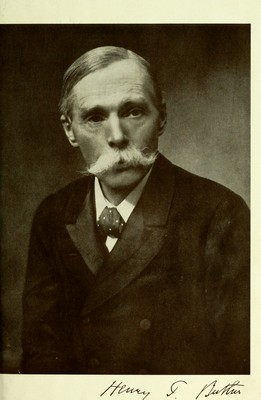
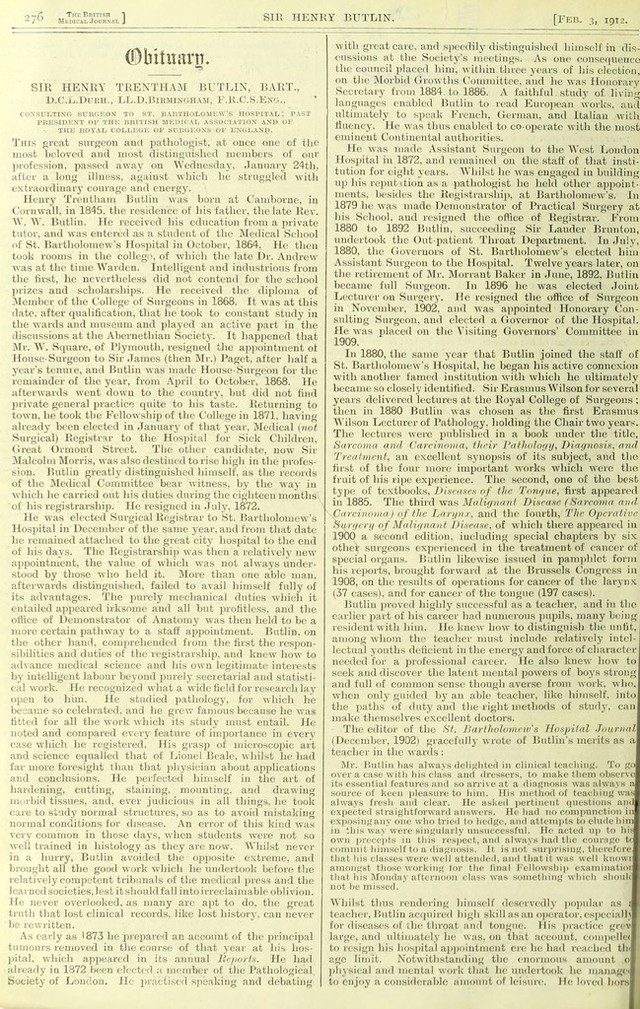
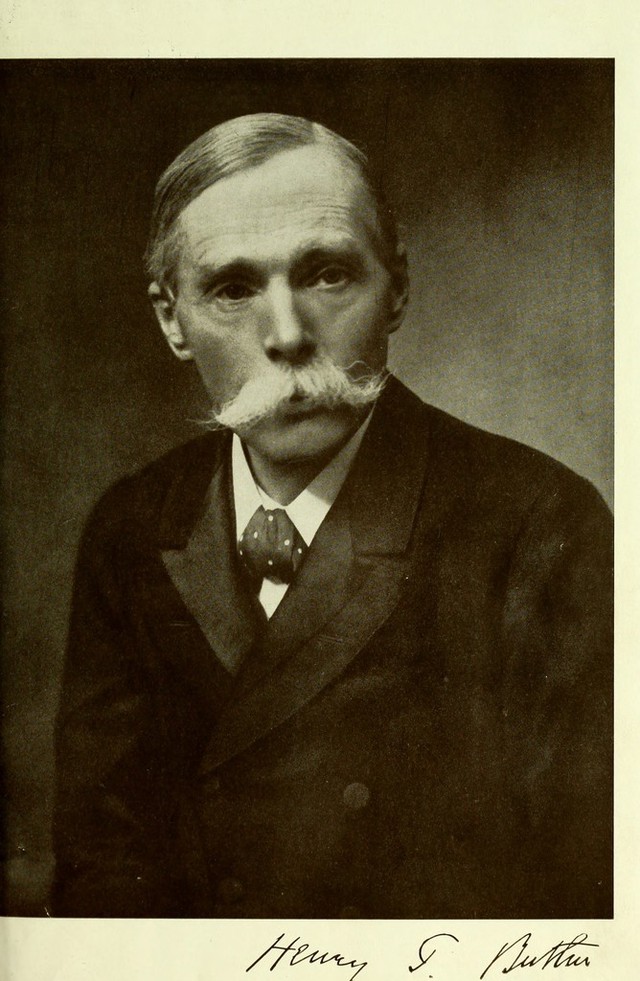
![Tim British *| Medical Journal J SIR HENRY BIITLIN. = 76 [Feb. 3, 1912. (Dbitiuini. '-5 SIR HENRY TRENTHAM BUTLIN, BART., D.C.L.Duitlt., LL.D.BlinilNGHAJl, E.R.C.S.Eng., CONSUI/TING SUBCiKON TO ST. B.\nTUOI.OMKWB HOSPITAl, ; P.VST rUESIDENT OI’ THE BIUTrSH MED[C.\t, ASSOd.ATION AND OF THE IlOYAL COLLEGE OP SGliOEONS OP ENGl.AND. This great surgeon and pathologist, at once one of the most hclovctl and most distinguished members of our profession, jiassed away on Wednesday, dauuary 24th, after a long illness, against which he struggled with extraordinary courage and energy. Henry Trentharn Butlin Avas horn at Camborne, in Cornwall, in 1845, the residence of his father, the late Rev. W. W. Butlin. He received his education from a private tutor, and was entered as a student of the Medical School of St. Bartholomew’s Hospital in October, 1864. He then took rooms in the collegia, of which the late Dr. Andrew was at the time Warden. Intelligent and industrious from the first, he nevertheless did not contend for the school ))i’izcs and scholarships. He received the diploma of Alember of the College of Surgeons in 1868. It Avas at this date, after qualification, that he took to constant study in the Avards and museum and played an active part in the discussions at the Abernethian Society. It hapiicned that IMr. W. Square, of I’lymouth, resigned the apj)ointment of House-Surgeon to Sir dames (then Mr.) Paget, after half a year’s tcnine, and Butlin Avas made House-Surgeon for the remainder of the year, from April to October, 1868. He aftei'AA'ards AA'ent doAvn to the country, but did not find private general practice (piite to his taste. Returning to toAvn. he took tbc FelloAVsIiip of the College in 1871, having already been elected in January of that year. Medical {not Surgical) Registrar to the Hos))ital for Sick Children, (Ireat Ormond Street. The other candidate, noAv Sir iMalcohn Morris, was also destined to rise high in the ])rofes- siou. Butlin greatly distinguished himself, as the records of the iMedical Committee bear Avitness, by the Avay in Avhich he carried out his duties during the eighteen months of his registrarship. He resigned in July, 1872. He Avas elected Surgical Registrar to .St. BartholomcAv’s Hospital in December of the same year, and from that dat(; he remained .attached to the great city hospital to the end of his daA'S. T’he Rogistrarshii) As-as then a relatiAcly iieAV appointment, the value of Avhich Avas not alAA'ays under- stood by those who held it. More than one able man, afterwards distinguished, failed to avail himself fully of its advantages. The purely mechanical duties Avhich it entailed appeared irksome and all but profitless, and the oliice of Demonstrator of Anatomy aa us then held to be a more certain pathway to a staff appointment. Butlin, on the other hand, comprehended from the first the rcsiion- sibilities and duties of the registrarship, and kneAV hoAv to adA'ance medical science and his OAvn legitimate interests by intelligent labour beyond purely secretarial and statisti- cal AAork. He recognized Avhat a Avide field for research lay open to him. He studied pathology, for Avhich he became so celebrated, and he grew famous because he Avas fitted for all the Avork Avhich its study must entail. He noted and compared CA'cry feature of importance in every case Avhich he registered. His grasp of microscopic art and science equalled that of Lionel Beale, Avhilst he had far more foresight than that X’hysician about applications and conclusions. He perfected himself in the art of liardening, cutting, staining, mounting, and drawing morbid tissues, and, ever judicious in all things, he took care to study normal structures, so as to avoid mistaking normal conditions for disease. An error of this kind Avas very common in those days, AA-hcn students Avere not so AA'ell trained in histology as they are now. Whilst never in a hurry, Butlin avoided the op^iosite extreme, and brought all the good Avork Avhich he undertook before the relatively competent tribunals of the medical press and the learned societies, lest it should fall into irreclaimable oblivion. He never overlooked, as many are apt to do, the great truth that lost clinical records, like lost history, can ncA^er he rcAvritten. As early as >873 he prepared an account of the principal tumours removed in the course of that year at his hos- ])ital, Avhich appeared in its annual lieportH. He had already in 1872 been elected a UKunber of the Pathological Society of London. He iir.actiscd speaking and debating Avith great care, and speedily distinguished himself in dis- cussions at the Society’s meetings. As one consequence the council placed him, Avithin three years of his election, on the Morbid tIroAvths Committee, and he Avas Honorary Secrchary from 1884 to 1886. A faithful study of living languages enabled Butlin to read Euro])ean Avorks, and ultimately to speak Freneh, Germ.an, and Italian Avith lluoncj’. He Avas thus enabled to co-operate Avith the most eminent Continental authorities. He Avas made Assistant Surgeon to the West London Hospital in 1872, and remained on the staff of that insti- tution for eight years. Whilst he A\as eng.aged in building up his reputation as a pathologist ho held other appoint- ments, besides the Registrarship, at BartholomeAv’s. In 1879 he Avas made Demonstr,ator of Practical Surgery at his School, and resigned the office of Registrar. From 1880 to 1892 Butlin, succeeding Sir Lauder Brunton, undertook the Out-patient Throat Department. In .July, 1880, the Governors of St. BartholomeAv’s elected him Assistant Surgeon to the Hospital. Twelve years later, on the retirement of Mr. Morrant Baker in .Tune, 1892, Butlin became full Surgeon. In 1896 he Avas elected Joint Lecturer on Surgery. He resigned the office of Surgeon in November, l902, and Avas a])pointed Honorary Con- sulting Surgeon, and eleeted a Governor of the Hospital. He Avas placed on the Visiting Governors’ Committee in 1909. In 1880, the same year that Butlin joined the staff of St. BartholomeAv's Hospital, he began his active connexion Avith another famed institution Avith Avhich he ultimately became so closely identified. Sir Erasmus Wilson for several years delivered lectures at the Royal College of Surgeons ; then in 1880 Butlin Avas chosen as the first Enismus Wilson Lecturer of Pathology, holding the Chair two years. The lectures Averc published in a book under the title, Sarcoma and Carcinoma, their ratladoyij, IHagnosift, and Treatment, an excellent synopsis of its subject, and the first of the four more important Avorks Avhich Avcrc the fruit of his ri[)e experience. The second, one of the best type of textbooks, DIseasex of the Tongue, first aj)peared in 1885. The third Avas Malignant DiHcane (Sarcoma amt Carcinoma} of the Largn.r, and the fourth. The Operative. Surgerg of Malignant J)isease, of Avhich there appeared in 19(X) a second edition, including special chapters by six other surgeons experienced in the treatment of cancer of special organs. Butlin likeAvise issued in pamphlet form his reports, brought foi'Avard at the Brussels Congress in 1908, on the results of operations for cancer of the larynx (37 cases), and for cancer of the tongue (197 cases). Butlin proved highly successful as a teacher, and in the earlier jiart of his career had numerous pupils, many being resident Avith him. He kneAV Ijoav to distinguish the unfit, among Avhom the teacher must include relatively intel- lectual youths deficient in the energy and force of character needed for a profe.ssional career. He also knevA' hoAv to seek and discover the latent mental poAvers of boys strong and full of common sense though averse from Avork, who, Avlien only guided by an able teacher, like himself, into the ]iaths of duty and the right methods of study, can make themselves excellent doctors. The editor of the St. Bartholomew's Hospital Journal (December, 1902) gracefully Avrote of Butlin’s merits as a teacher in the Avarcls : Mr. Butlin las always delightoil in clinical teaching. 4'o go over a case with his class and dressers, to make them observe its essential features and soarriA cat a diagnosis Avas ahvays a source of keen pleasure to him. Mis method of teaching Avas alAA'ays fresh and clear. He asked |iertincnt <|Ucstions and expectetl straightforward ansAvers. He had no compunction in exposingany one avIio tried to hedge, and attemjits to elude him in this AA'ay Avere singularly unsuccessful. He .acted u)) to hii OAvn prece|)ts in this resjiect, and always had the courage t( commit himself to a diagnosis. It is not sur))rising, therefore that his classes were Avell attended, and that it Avas Avell knowi amongst those Avorking loi' the final l‘'elloAVshii) cxaminatioi that his Monday afternoon class avus something Avhich shonU not he missed. Whilst thus rendering himself deseiA’edly ))opular as f teacher, Butlin acquired high skill .as .an ojicrator, especial 1\ for diseases of ihc throat .and tongue. His practice! grev large, and ultimately he Avas, on that .account. coni))ellc( to resign his hosjjital ap])ointmcnt ere he had re..acb(!d tin .ago limit. NotAvithstanding tluj enormous amount o physical and mental Avork that he undertook he managei to enjoy a considerable .amount of leisure. He loved hcjrs](https://iiif.wellcomecollection.org/image/b22418982_0004.jp2/full/800%2C/0/default.jpg)