Licence: In copyright
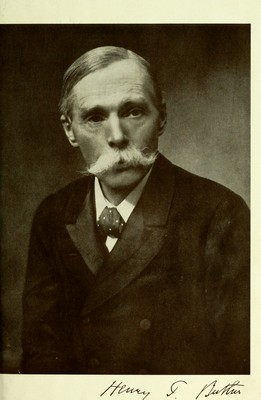
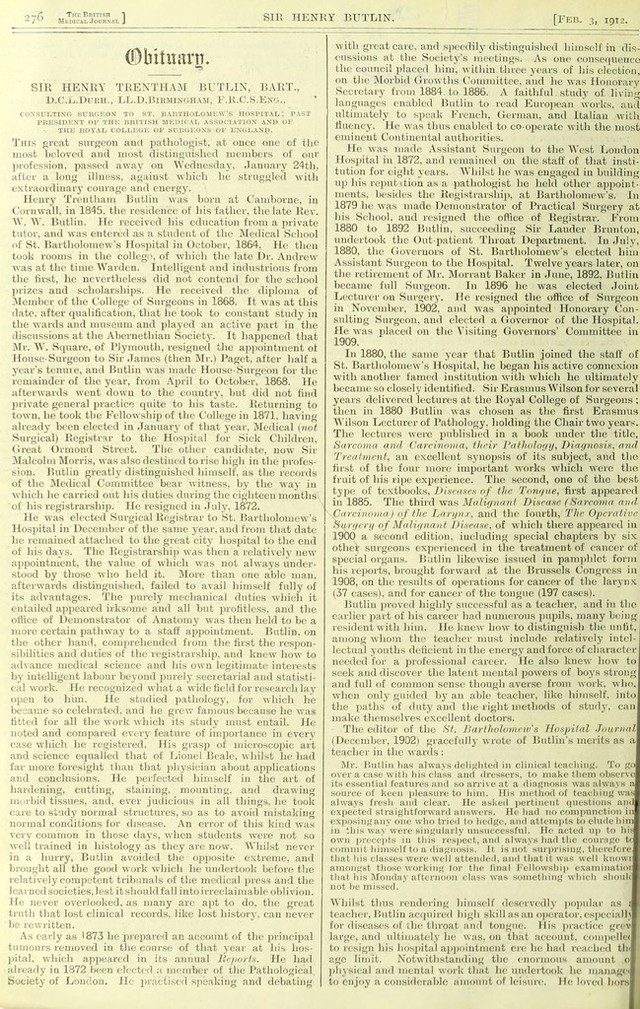
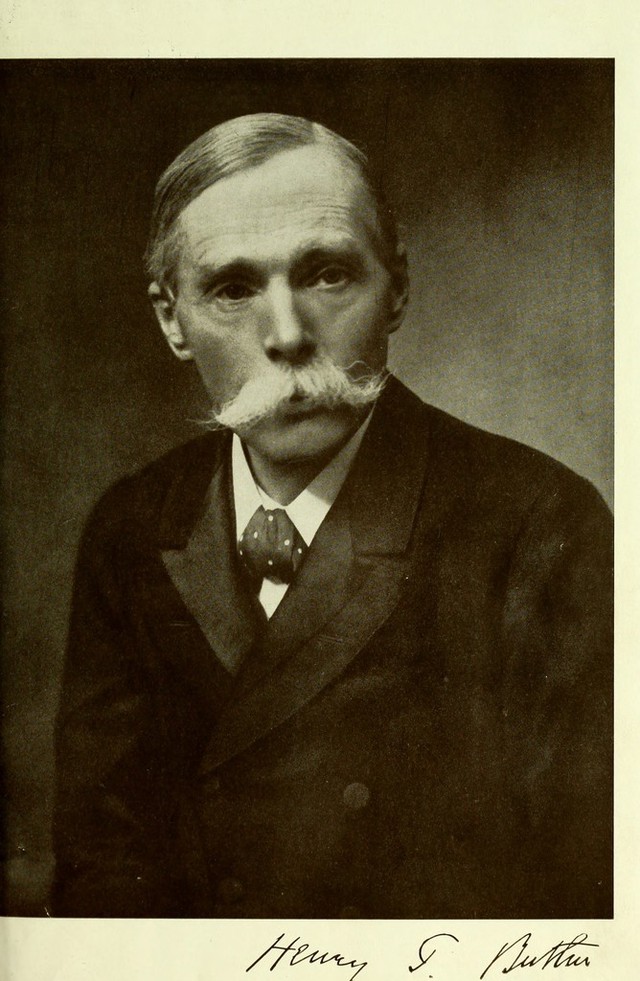
Credit: Sir Henry Trentham Butlin, Bart. ... : obituary. Source: Wellcome Collection.
Provider: This material has been provided by The Royal College of Surgeons of England. The original may be consulted at The Royal College of Surgeons of England.
6/14 page 278
![Keith, Ml'. Biivne, and the Secretary (Mr. S. F. Cowell), and Librarian (Mr. I’larr). Another memorial service was held at St. Bartholomew’s- the-Less, in the precincts of the hospital, the service being conducted by the Rev. H. N. Close, the A'icar and Hospi- taller. It was attended by the Lord INIayor. Sir Dj’ce Hnclcworth, Sir M'illiam Church, Sir Trevor Lawrence, Dr. Godson, Dr. Garrod, Mr. Harrison Cripps. and other members of the staff, the assistant matron, and several of the sisters. Bntlin was an Honorai'3- Fellow of the Tjaiyngological Societj’ of Berlin, and was made a Membre Associc do la Societe de Chirnrgie dc Baris hnt six weeks ago; onh' twentv surgeons receive this hononr. as the Societe pi'ides itself on being highly select. He was also for a time Dean of the Faculty of Medicine of the I’niversitv of Ijondon. In 1893 he received the houorarv degree of D.C.Tj. from the Universitv of Durham, and the Cniversity of Hirniing- ham honoured him in a similar manner with the degree of Llj.D. in 1910. He was a Governor of Rnghv School. .Sir Henry Butlin married, in 1873. Annie, daughter of 3lr. Henrj’ Balderson, of Hemel Hempstead, who, with their three children, survive him. The son. Henr^- Gu\' Treutham Butlin. horn in 1893. educated at Harrow, and now of 'I'rinit)’ College. Cambridge, succeeds to the title. As late as December20th, 1911. Dr. Lucas-Championnicre wrote to Sir Heni y Butlin the following letter announcing the honour so recently conferred upon him : !Mon cher President,— I.a Societe de t’liirnrgie vient sur ina i)ro]iosition de vous nonuncr Jlemlire Associe. C'est iiii lionueur ipie dans iiotre milieu purement cliirnrgical nous faisons a jien des maitres dc la cliirurgie, les statuts de la Societe de Cliirurgie ayant decide (pie viiigt senlement iicnvent <''tre associt'S. Les corre- ])ondants sont liien plus noiuln-enx. Vous (-tes la cn coinpagnie de Lister, de (,'zernj', do Durante, de Keen, de Macewen. de Keverdin, de Sonnenluirg. 1,'honnnage (jui vous a litf' rendu a (t(j coinplet, car le vote a ('•tii fait a runanin-.ite cc (jni est Irien rare dans cette sociiHii un ]ieu restreinte et nn jieu frondeuse. \'os amis ont etii tivs heureu.x de le faire constater apivs Ic vote. .Pai appris par les jonrnan.x (pie vous aviez resigiu- vos fonctions de President du College Koval pour cause de santii. .1 espere (lue ce n'a eW (jn'un pen de fatigue et (pie votre santii est aujourdliui nitablie Pai vu(pie vousaviez pn continuer vos beau.x travanx sur la nature purasitaire dn cancer, je les siiis avec le plus grand interet. Professor Robert S.vundby. I’resident of the British iMeclical As.sociation, writes: Twenty-tive years of private friendship and public association with Sir Henry Bntlin make me painfully conscious of the gap caused hj- his death. Perhaps his chief characteristic was his very- remarkable power of impressing, even on comparative strangers, the sense of trustworthiness. IVe all leant upon him as the strong man, and when we had him with us we felt sure that everything would go right. This was illustrated in a remarkable fashion in 1890, when as a comparatively new member of the Council of the Association he was elected to the post of Treasurer, and at the end of his three years’ term of office he was induced to accept the liosition for another three years. Another striking example of how men turned to him for help was when he was asked to be President of the Association in 1910, as the only man who could make the meeting a success. There were difficulties, but they melted away as if by magic when it was known that he would preside. It is hard to explain this wonderful gift, but it seems to me to have been due to the iierfect simplicity' of his character. He yvas just yvliat he seemed to be. His affectionate manner yvas the indication of his kind heart, and he inspired love and confidence because he brimmed over yvith these qualities. He yvas a most effective siieaker. although he had no special gift of voice or language, but he took infinite pains in the preparation of yvhat he had to say', and for this reason his speeches yvere ahvays yvorth hearing, and at times ro.se to a very high level—as, for examplon the occasion of the dinner given to him by the medical profession. That dinner yvas a remarkable testimony- to the affectionate regard in yvhich he yvas held by’ his colleagues in all ranks. 'I’lie frail tenure hj- yvhich he held his life yvas painfullj- olivions in Bii-mingliam last .Tulv. yvhen he fulfilled in the kindliest and mo.st perfect manner his duties as the |•■ ■il■ing I’resident of the Association. Although so yveak that he yvas scarcelj- fit for the effort, he insisted on going through all the ceremonial, and nothing could have been more gracious or more touching than his jiersonal refer- ences to our long connexion in the yvork of the Association. He honoured the Association by the part he played in it, but he did not seem to think he yvas doing an^-thing extra- ordinarj-, although the effort and the sacrifice he made yvere so great that no yvords of mine can express the gratitude I feel, nor can I acknoyyledge in fitting terms the (lebt I cannot repaj-. Dr. Waro Cousins yvrites: I am glad of an opportunitj' of contributing a few yvords to express my y-er^- great esteem and sincere regard for mj' old and generous friend and colleague. Sir Henry Butlin, yvho after reaching the summit of professional success, covered yvith honours, and in the enjoyment of the confidence and yvarni appreciation of all his friends, has been called ayvaj-. Only a few ^-ears ago his election to the position of President of the Royal College of Surgeons caused the greatest satisfaction throughout the profession, and now the sad news of his death has iiroduccd everj-where deep ij’o- pathy- and regret. At the end of list November 1 leccived from him a very kind letter which too clearly- revealed to mo that his .splendid energy and self-sacrilicing labours yvere drayving to .a close. In the j'car 1885 Sir Heurj- Butlin (then Mr. Butlin) yvas ap- ])ointcd a Representative of the Metropolitan Branch on the Central Council, and the great value of his presence and co-operation at the meetings yvere recognized at once. He jirovcd to be an e.xcellent speaker, with a clear articulation and pleasant voice, and he soon exhibited his jioyver of expressing his opinions in a feyy yvords yvith vigour and jn-ecision yvhich never failed to arouse both attention and careful com sidcration. At the annual meeting in 1890 he yvas unanimonslj’ appointed Treasurer of the Association. Our old and much esteemed friend the late Mr. M’lieel- house occupied the chair, and I yvell remember the {.re it enthusiasm of the members when Mr. Butlin’s nanu^ yvas mentioned. The folloyviug years yvere a y'cry critie.,! period in the history of the organization, and the office of the neyvlj’-appointcd Treasurer appeared to he ])j- no means easy and free from anxiety; but his tact and good judgement, combined yvith a complete knoyvledge of cverj- detail, soon overcame all difficulties, and his yvise efforts gave a new impulse toyvards financial success and prosperity. In 1893 Butlin was requested to retain the office for another term, and he consented to do so. At the annual meeting held at Newcastle his rc- election yvas carried by acclamation amid warm ex2n-es- sions of satisfaction from all the members. The time had now arrived yvhen many urgent (xuestions had to bo settled having reference to the management of Ihe JouRNAi. and the general business of the Association. The number of members, too, yvas raiiidly increasing in all jiarts of the countiy, and neyv branches undergoing forma- tion at home and abroad yvere seeking recognition. Now Sir Henrj- Butlin clearly foresayv that the gradual exjian- sion of the organization yvas not far ahead, and that an urgent necessity- existed for securing more accommodation for successfully carrying on the y-arious departments of the yvork. He had ahvaj’s been in favour of acipiiring the site and building in the Strand, of yvhich the Association then had a lease. It yvas a conviction of the real necessity for making prejiaration for future develojiments, and that an ex- tension of the area yvas indispensable for the erection of a more commodious building, yvhich induced him strongly to recommend the jmrehase of scy-eral adjoining houses; this advice yyas at once acted on. f hay-e often tliou”lit over this yvise anticipation, and it is an interesting fact that the valuable jiroiierty in the Strand and Agar Street yvas secured two y-ears after, and that the conveyance was duly- signed on 3Iarch 24th. 1898. When tlie anniwl j meeting yvas held in Ijondon during 1910 Sir Henry Piitlin yvas rightly- selected for the I’rcsidcntial chair, and it yv.is the unanimous desire of the ^'rofessioii that he should be reijuested to accctit the office, for throughout his life lie had never lost an opjiortunity of doing all in his powe r to ju'omote the interests of the .\ssociation. .Xoyv. on reviewing; the stress and [ircssurc of all his professional duties, yve feel sure that he must have iiosscsscd jihysieal strength and strong self-control far above the normal. His high in- tellectual qualities yvere always y-isible in combmation with the Jioyver of mental concentration and ceaseless energy.](https://iiif.wellcomecollection.org/image/b22418982_0008.jp2/full/800%2C/0/default.jpg)