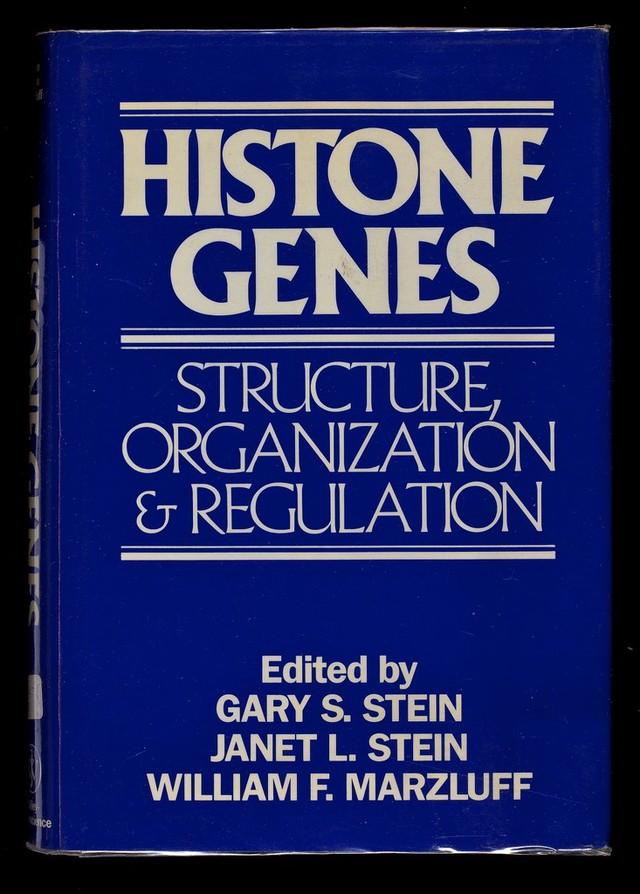
Histone genes : structure, organization, and regulation / edited by Gary S. Stein, Janet L. Stein, William F. Marzluff.
- Date:
- [1984]
Licence: Attribution-NonCommercial-NoDerivatives 4.0 International (CC BY-NC-ND 4.0)
Credit: Histone genes : structure, organization, and regulation / edited by Gary S. Stein, Janet L. Stein, William F. Marzluff. Source: Wellcome Collection.
14/520 page X
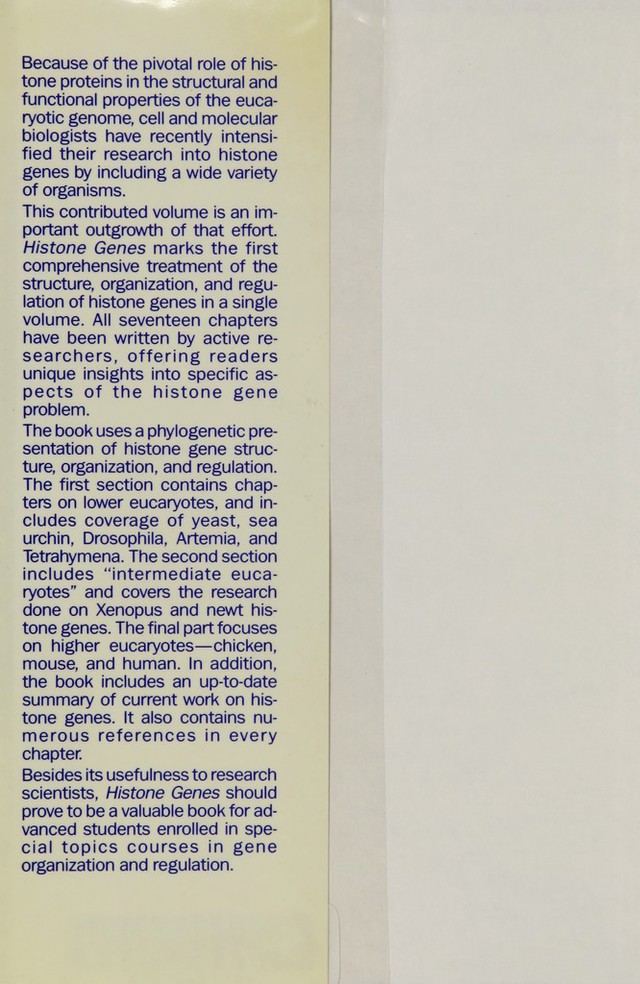
![X PREFACE other eucaryotic genes. With the exception of one chicken histone H3 gene described by Engel (Chapter 11), histone mRNAs are encoded in the genome by contiguous nucleotide sequences. The attractiveness of histone genes as a model system for studying regulation is further supported by the high gene copy number, abundant mRNA levels, and the sensitive regulation at the levels of both mRNA synthesis and degradation. At least two organisms, sea urchins and chickens, have different gene sets active during different developmental stages. A further complexity of histone gene structure is the existence of a number of nonallelic protein sequence variants, which are products of independent genes (reviewed in Chapter 3 by von Holt, Chapter 14 by Zweidler, and Chapter 17 by Bonner). Many of these proteins are expressed in the same cell under independent control. The structures of these genes must differ from one another, and we expect progress in the elucidation of the structures and regulation of the different genes in the next few years. A book containing contributions from laboratories that have done the major work on various aspects of the histone gene problem has not been assembled to date. Chapters written by the actual investigators permit a presentation of specific aspects of the histone gene problem with the type of insight possible only from the people who execute the experiments. We feel that this approach ensures that the book provides an in-depth yet comprehensive treatment of the structure, organization and regulation of histone genes. In preparing this book, we used a phylogenetic presentation of histone gene structure, or¬ ganization, and regulation. The first section contains chapters on lower eucaryotes and includes coverage of yeast, sea urchins, Dro- sophila, Artemia, and Tetrahymena. Although an extensive discussion of the structure and organization of sea urchin histone genes has not been included, this topic has been the subject of several comprehensive reviews [C. C. Hentschel and M. L. Birnstiel, Cell 25, 301-313 (1981); L .H. Kedes, Ann. Rev. Biochem. 48, 837-870 (1979)]. The second section includes intermediate eucaryotes and covers the work done on Xenopus and newt histone genes. The last section focuses on higher eucaryotes—chicken, mouse, and human. We have included in this book an up-to-date summary of current work involving histone genes and their expression. With the biological systems being studied and the molecular approaches being employed,](https://iiif.wellcomecollection.org/image/b18024890_0015.JP2/full/800%2C/0/default.jpg)