An introduction to the old English history / comprehended in three several tracts. The first, an answer to Mr. Petyt's Rights of the commons asserted; and to a book intituled, Jani Anglorum facies nova [by William Atwood]; the second edition very much enlarged. The second, an answer to a book intituled, Argumentum antinormanicum [by Edward Cooke], much upon the same subject; never before published. The third, the exact history of the succession of the Crown of England. The second edition, also very much inlarged. Together with an appendix containing several records, and a series of great councils and parliaments before and after the conquet, unto the end of the reign of Henry the Tkhired. and a glossary expounding many words used frequently in our antient records, laws and historians...By Robert Brady.
- Robert Brady
- Date:
- 1684
Licence: Public Domain Mark
Credit: An introduction to the old English history / comprehended in three several tracts. The first, an answer to Mr. Petyt's Rights of the commons asserted; and to a book intituled, Jani Anglorum facies nova [by William Atwood]; the second edition very much enlarged. The second, an answer to a book intituled, Argumentum antinormanicum [by Edward Cooke], much upon the same subject; never before published. The third, the exact history of the succession of the Crown of England. The second edition, also very much inlarged. Together with an appendix containing several records, and a series of great councils and parliaments before and after the conquet, unto the end of the reign of Henry the Tkhired. and a glossary expounding many words used frequently in our antient records, laws and historians...By Robert Brady. Source: Wellcome Collection.
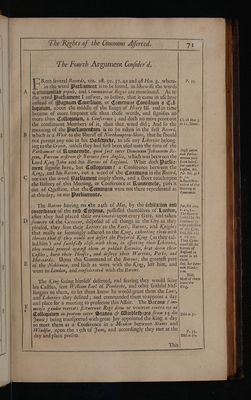
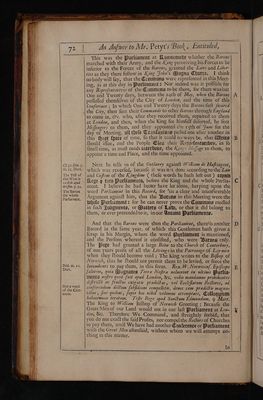
![63 | An Anfwer to Mr. Petyt’s Book | Entituled, pee GRAUMA OBEN ie | which were no real’Baroxzs, ye BaronsPeers. | | | Milites (9 Fi- | | deies were | Tenents in Ca- | pire in this » Record. + It was the an- | cient Cuftom, for our Kings | to fend Let- | ters to all Parws fol. 257. Nl. 20, 3°. The Law of Summons to great Coun- cils or Parlia- ments. Barones Cati- tales minores, funt qui a Kege Ternent in Ca- pite, Spel Gloffar. fol. 69. col. 2. * , yet were often calledto Great Conacils, as Watongs jOcers. And fuch that were not actually Barons, there’ are mahy Jxflawces, of their being called to fit amonegft the Lords fometimes, and fometimes again omitted in feveral Azzgs Reigns |, afer the Commans-were a third Cllate, and Reprefented as at this day. And that the @ptlttes’¢ ffideles mentioned in this Writ were only Genents tn Capite, tis very clear from the clofe of the Writ | ir felf, where ’tis faid, Gntcurque pefirum ff fieri porelt Litera nofiras trantiniflemus, (ed ut negottum erpeb.retue Mafoet fettr natione, &c. We had fent our Lerrers ro every one of you, if it might have been done, for the Bufine/s st felf, which requires a quick dif- patch, &c. ths fo] v It cannot be thought that the King ever wrote to all the Knights and Fendataries of England to meet ina Great Council, or if Fibeles Ibe taken in the largeft and the moft,comprehenfive fenfe that may e, for Subjects in Geweral, nO man can believe that ever any Kg | did write particulat Letters to every @drvidual Subjet, or Free: holder to come to, afid fend their Reprefentatives to Great Councils. And therefore whatfoever the words of ‘the Writ are, the defign of it was to convene, {uch only as had u{wally in thofe times been called to Great Councils, which: were the @enents in Capite though no Barons, who only. Reprefented themfelves, and not the Commons, and were all fummoned by particular Writs, and not fent or chofen | by the People, and this Appears to be fo by the irrefragable authority of King John’s Bagna Charts, confirmed at Bunnemede not full two years after, which was to be a Law for the /wmmoning of Great Councils, or if our Author pleafe, Parliaments in the fubfequent times, ‘The words are Submonert faciemus Accbiepilcopos, Cpit- copos, Abbates, Comites, ¢ Majfozes Barones Beant fingillacim per Literas noftras, € peeteten factemus fubmonert in general per Tlirecomites a Walibos nottros, omnes alfos qut de nobis tenent in Gaptte ad cerium diem, feiltcer ad terminum quadeaginta Dierum ad minus @ av certum Locum in omnibug Uteris {ulmonttionis iftius, caufam Cubmonittonts tttius erponemus 5 ¢ fic faca (ubmo: | nitione negotiuim peocedat ad Diem alfignatum, fecundum concilium coum qui peefentes fuerint,quambis non omnes fubmonitt benerint. We will caufe to be fummoned, the Avch-Bifhops, Bifbops, Abbats, Earls, and the great Barons of the Kingdom feverally by our Letters, and moreover. we will caufe to be /ummoned in general, by our She- riffs and Bayliffs, all others which hold of us in Gapite at a certain day, to wit, at the term of 40 days at leaft, and at a certain place. In all our Letters of Summons we fhall'declare the caufe of ‘the Sum- mons, and fo they being fummoned, the Bufinefs fhall proceed at the day affigned, according tothe advice of fuch as are prefent, although all that were f{ummoned fhall not come. | | By this Law the way and manner of Summons to great Councils was fetled, and made more eafie than it was formerly ; for by the former Writ the rsth Fohannis, it appears to have been the cuftom for the King to. write to every one of the Midires & Fideles, or Ge: nents in Gapite, which were no formal Barons; particularly as he did to the Barons,’ and that ‘the Ca/tom was fo, ’tis likewrfe implyed in this eftablifhment of Summons for the-future, that it fhould , be](https://iiif.wellcomecollection.org/image/b30335929_0068.jp2/full/800%2C/0/default.jpg)
 No text description is available for this image
 No text description is available for this image
 No text description is available for this image