Pambotanologia. Sive enchiridion botanicum. Or a compleat herball ... / [Robert Lovell].
- Robert Lovell
- Date:
- 1665
Licence: Public Domain Mark
Credit: Pambotanologia. Sive enchiridion botanicum. Or a compleat herball ... / [Robert Lovell]. Source: Wellcome Collection.
46/782 page 34
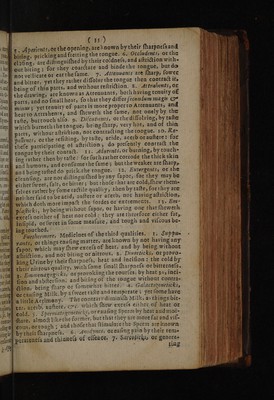
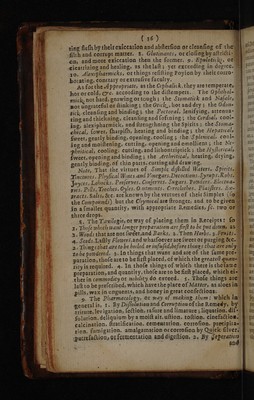
![half. 2c. Spirits; if wellkept that they do not exhale, mag 2 T laftverylong. 26. Juyces liquid, are to be changed every year, 95 0 ? but the mots hardand thick, may be kept two or three Years or more. 27. Syrups fimple, are to be changed every Year ; but the Conipound and Aromatical may laft two Years. 28. Tin- Elures, in Powder may laft divers Years; butthe liquid laft ac- cording to the diverfity of the Menftruams. 29. Troches, and dry Collyries, may laft one Year, except thofe that contain O- gium, orSeedsapt to grow mouldy ; for thofe with Opium may lat fix orfeven Years, and thereíthardlyone. 30. Cerets Tearce endure one Year. 31. Clyflers lat not long, and are therefore to be made when ufefal. 32. Emplaflers hardly en- dure a Yearand half. 33. Ointments, for the mof part are kept a Year,ora Year and half. 7. The Crifeology, or difcrimination and diftin&ion thereof, thus aretobe fhunned: 1. Herbs, that are greateft, {mallet and withered; asalfothofethatareof an evil tafe, {mell and colour. 2. Flowers, that are corrupted , broken, unripe or fale, or of aneviltafte, {mellor colour. 3. Fruits, that are wrinkled, notcorpulent, or rotten, of an evil tafteand fmell. 4. Seeds, thatare withered, unripe, or not corpulent, rotten; of anevilfmellortafte. 5. Barks, that arewormeaten, rot- ten, orfoakedinwater. 6. Juices, that are (tale, without good fmell, tate orcolour. 7. Liqvors and Gums, that are old, and have loft their vertues, 8. Woods, that are rotten, light og corrupted. 9. Roots,that ate worm. eaten or withered. 10. Parts] ef living Creatures, that are taken from thofe that are fick, old; or dying by difeafes : henceappeareth the choice. Alfo 1. £mollients, orthe foftning Remedies, are known by their temperatenefs in heat and moifture; alfo by the guitile or tactile quality, or touch and take; beingin tafte nearfweet- nefs, but of afatandoily fubftance, fo that they are neither gharp,auftere, acid, falt, or of any othertafte, that may fhew eitheraftri&ion, or vehement heat or cold; neither do they feem rough or glutinous being touched. 2. Indwrants,orthe hardening, are known by fapor or tate, which is fuch, that neither fheweth heat; nor biteth ot contracteth the tongue 5but is rather infipid, cold; fo neither falt, fharp, bitter; fweet;acetb; auftereoracid. 3. Tendents and Laxants, or the ftretching and loofening; are knownas Emollients 3 yet Laxants are leís hotanddry then Emollients. 4. Rarefacients and Denfantss or ratifying and thickening, are known as Emollients, fc. by fapor, fhewing moderate heat: fo alfo Denfants being contra- xy hereunto, and not vehemently cold, therefore ( according to Galen) thole things which vellicate the tongue, by a biting fa- por, oraltcingent, aie Botte be accounted among Denfants? i. i: “Pty —-— mus aser. zo 3 z — - $ * > da] E E T LI L3 = ` = = — IS € mi E ^ - z » T9 > = - ra c» c 2 L1 oa ^A E — E t. 3 S 3 — ,5 - > c PUE = 1 > = > & 3 4 x < E z RB c x13 I os = = = sm PER F eO 5 e à € 2E 3 ; - - c i , : Un fM, m. 5| n» es EI. LI D 3 + F e om NN IOOET ERR, BARON pear](https://iiif.wellcomecollection.org/image/b3033360x_0046.jp2/full/800%2C/0/default.jpg)