A manual of family medicine and hygiene for India / by Sir William Moore.
- Moore, W. J. (William James), Sir, 1828-1896
- Date:
- 1889
Licence: Public Domain Mark
Credit: A manual of family medicine and hygiene for India / by Sir William Moore. Source: Wellcome Collection.
48/784 page 36
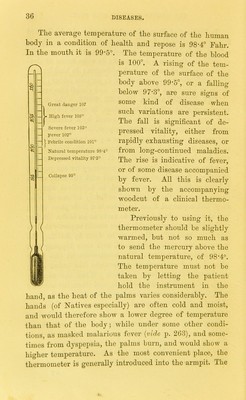
![Tlie average temperature of the surface of the human body in a condition of health and repose is 98-4° Fahr. In the mouth it is 99-5°. The temperature of the blood is 100°. A rising of the tem- perature of the surface of the body above 99-5°, or a falling below 97'3°, are sure signs of some kind of disease when such variations are persistent. The fall is significant of de- pressed vitality, either from rapidly exhausting diseases, or from long-continued maladies. The rise is indicative of fever, or of some disease accompanied by fever. All this is clearly shown by the accompanying woodcut of a clinical thermo- meter. Previously to using it, the thermometer should be slightly warmed, but not so much as to send the mercury above the natural temperature, of 98’4°. The temperature must not be taken by letting the patient hold the instrument in the hand, as the heat of the palms varies considerably. The hands (of Natives especially) are often cold and moist, and would therefore show a lower degree of temperature than that of the body; while under some other condi- tions, as masked malarious fever {vide p. 263), and some- times from dyspepsia, the palms burn, and would show a higher temperature. As the most convenient place, the thermometer is generally introduced into the armpit. The r7\ Great danger 107 • High fever 105° Severe fever 103° pever 102° ]. Febrile condition 101° Natural temperature 98‘4° Depressed vitality 07’3° Collapse 95°](https://iiif.wellcomecollection.org/image/b2809430x_0048.jp2/full/800%2C/0/default.jpg)
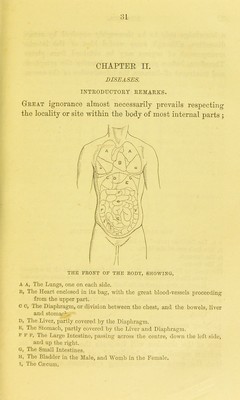

 No text description is available for this image
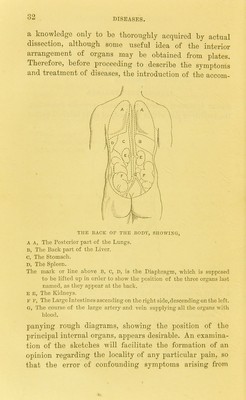
 No text description is available for this image
 No text description is available for this image