Dr. Gregory's conspectus medicinae theoreticae : embracing pathology and physiology / with the original text, an ordo verborum, and literal translation. By John Steggall.
- James Gregory
- Date:
- 1855
Licence: Public Domain Mark
Credit: Dr. Gregory's conspectus medicinae theoreticae : embracing pathology and physiology / with the original text, an ordo verborum, and literal translation. By John Steggall. Source: Wellcome Collection.
Provider: This material has been provided by Royal College of Physicians, London. The original may be consulted at Royal College of Physicians, London.
48/580 page 40
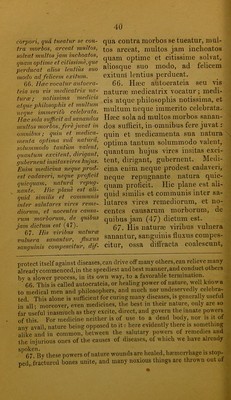
![J corpori, qua tueatur se con- tra morbos, arceat multos, solvat multos jam inchoatos, quam optime et citissime,que perducat alios lentius suo modo adfelicem ewitum. 66. Heec vocatur autocra- teia seu vis medicatrix na- turae; notissima medicis atque philosophis et multum neque immerito celebrata. Iloec sola sufficit ad sanandos multos morbos, fere juvat in omnibus; quin et medica- menta optima sud naturd, solummodo tantum valent, quantum excitent, dirigant, gubement insitasvires hujus. Enim medicina neque prod- est cadaveri, neque proficit quicquam, naturd repug- nante. Hie j)lane est ali- quid similis et communis inter salutares vires reme- diorum, et nocentes causa- imm morborum, de quibus jam dictum est (47). 67. His viribus natures vulnera sanantur, fluxus sanguinis compescitur, dif- qua contra morbos se tueatur, mul- - tos arceat, multos jam inchoatos quam optime et citissime solvat, i aliosque suo modo, ad felicem : exituni lentius perducat. ^ 66. Hsec autoorateia seu vis h naturae medicatrix vocatur; medi- 4 cis atque philosophis notissima, et \ multum neque immerito celebrata. . Hsec sola ad multos morhos sanan- ^ dos sufficit, in-omnibus fere juvat: . quin et medicamenta sua natura S optima tantum solummodo valent, ' quantum hujus vires insitas exci- • tent, dirigant, gubernent. Medi- i cina enim neque prodest cadaveri, :‘- neque repugnante natura quic- quam proficit. Hie plane est {ili- j quid similis et communis inter sa- ; lutares vires remediorum, et no- .■ centes causarum morborum, de ( quibus jam (47) dictum est. { 67. His naturee viribus vulnera sanantur, sanguinis fluxus compes- citur, ossa dilfracta coalescunt, f protect itself against diseases, can drive off many others, can relieve many 3 alreadycommenced,in the speediest andbest manner,and conduct othei-s 3 bv a slower process, in its own way, to a favorable termination. .M ' 66 This is called autocrateia, or healing power of nature, well known ■ to medical men and philosophers, and much nor undeservedly celebra- ted This alone is sufficient for curing many diseases, is generally useful i in all- moreover, even medicines, the best in their nature, only are so J far uskul inasmuch as they excite, direct, and govern the innate lowers g of this For medicine neither is of use to a dead body, nor is it oi^ anv avail, nature being opposed to it: here evidently there is something alike and in common, between the salutary ]>owers of remedies and the injurious ones of the causes of diseases, of which we have already * spoken^^ these powers of nature wounds are healed, haemorrhage is stop- .‘t- pcd,.fractured bones unite, and many noxious things are thrown out of](https://iiif.wellcomecollection.org/image/b28149452_0048.jp2/full/800%2C/0/default.jpg)