Report on the outbreak of the plague at Sydney, 1900 / by the Chief Medical Officer of the Government and President of the Board of Health.
- Thompson, J. Ashburton (John Ashburton), 1848-1915.
- Date:
- 1900
Licence: In copyright
Credit: Report on the outbreak of the plague at Sydney, 1900 / by the Chief Medical Officer of the Government and President of the Board of Health. Source: Wellcome Collection.
Provider: This material has been provided by King’s College London. The original may be consulted at King’s College London.
37/112 page 31
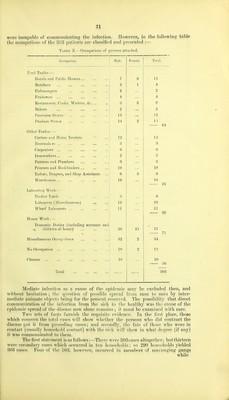
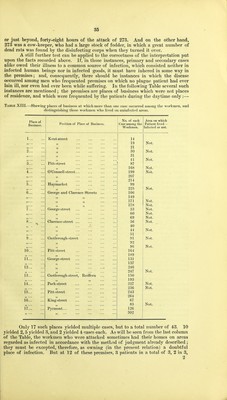
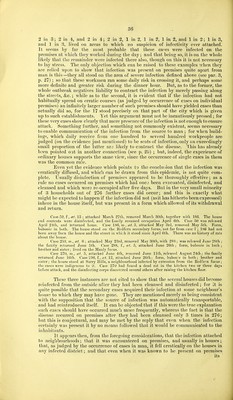
![were incapable of communicating the infection. IIoAVCver, in the following table the occupations of the 303 patients are classified and presented :— Taelk X.—Occupations of persons attacked. Oocupation. Male. Female. Total. Pood Trades •— Hotels and Public Houses... 7 G 13 Butchers ... ... 3 1 4. Pishuiongers 2 2 Fruiterers ... 4i 4 Restauruuts, Cooks, W^aitcrs, &c.... G 3 9 Bakers ... ... ... ... 2 2 Provision Stores U< li Produce Stores 2 \; Gi Other Trades : — Carters and Horse Tenders 12 12 Bootmakers .. 3 3 Carpenters ... G G Ironworkers... 5 5 Painters and Plumbers G G Printers and Bookbinders ... 19 19 Tailors, Drapers, and Shop Assistants G 3 9 Warehouses... 16 IG 7G Labouring Woi'k:— Tiuibcr Yards (] 6 Labourers (Miscellaneous) 19 19 Wharf Labourers ... ... 11 11 oo House A¥ork : — Domestic Duties (including servants and children at home) • 2G 71 7L iMiscellaneous Occupations 32 2 34. No Occupation ... 10 2 12 Chinese 10 10 5G Total 303 Mediate infection as a cause of the epidemic may be excluded then, and wdthout hesitation ; the question of possible spread from man to man by inter- mediate animate objects l)eing for the present reserved. The possibility that direct communication of the infection from the sick to the healthy was the cause of the epidemic spread of the disease now alone remains ; it must be examined with care. Two sets of facts furnish the requisite evidence. In the first place, those which concern the total cases will show whether the persons who did contract the disease got it from preceding cases; and secondly, the fate of those who were in contact (usually household contact) with the sick will show in what degree (if any) it was communicated to them. The first statement is as follows —There were 303cases altogether; butthirteen were secondary cases which occurred m ten households; so 290 households yielded 303 cases. Eour of the 303, however, occurred in members of scavenging gangs while](https://iiif.wellcomecollection.org/image/b21298968_0037.jp2/full/800%2C/0/default.jpg)
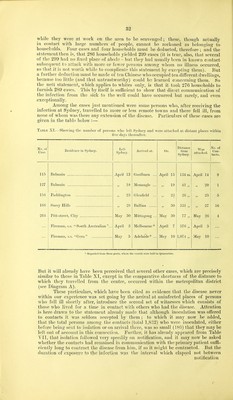
 No text description is available for this image
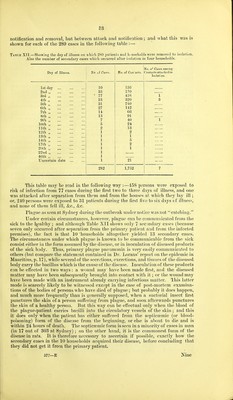
 No text description is available for this image
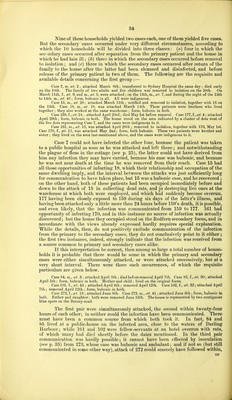
 No text description is available for this image