Report of the Commitee appointed by the Lords Commissioners of the Admiralty, to enquire into the causes of the outbreak of scurvy in the recent Arctic Expedition ; the adequacy of the provision made by the Admiralty in the way of food, medicine, and medical comforts ; and the propriety of the orders given by the commander o[f] the Expedition for provisioning the sledge parties.
- Great Britain. Admiralty. Committee on Scurvy.
- Date:
- [1877?]
Licence: Public Domain Mark
Credit: Report of the Commitee appointed by the Lords Commissioners of the Admiralty, to enquire into the causes of the outbreak of scurvy in the recent Arctic Expedition ; the adequacy of the provision made by the Admiralty in the way of food, medicine, and medical comforts ; and the propriety of the orders given by the commander o[f] the Expedition for provisioning the sledge parties. Source: Wellcome Collection.
Provider: This material has been provided by London School of Hygiene & Tropical Medicine Library & Archives Service. The original may be consulted at London School of Hygiene & Tropical Medicine Library & Archives Service.
542/570 page 482
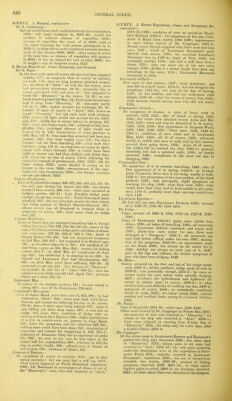
![MEN, SELECTION OF. 2. Standard of Age and Height, continued— height from 5ft, 6in. to 5ft. 9in., 9303; personally examined every man entered, 9303. Captain Stephenson— Difficulty in obtaining a cooper, a man entered above age, 352. Captain Hamilton— Average age of men in his expeditions, 3017 ; older than recent expedition, 3018: rscant expedition, men too young, 2996. Admiral Richards— The ages of men in his expedition, 3145 ; the men in the recent one rather young, 3145 ; the best age is thirty, 3146; limit of recent expedition, of twenty to thirty, rather low, 3147 ; it was adopted in consequence of the recommendation of the Medical Director-General, 3149 ; extract from, this recommendation as to selection of men, 3150. Sir L. M'Clintock— Seamen between twenty-five and twenty-six less liable to scurvy than men over thirty, 3310. Captain Hobson— Best age between twenty-five .and thirty-five, 3438. Dr. Toms— Men between thirty and forty less liable to scurvy than younger men, 3613 ; they have more determination and system is stronger, 3614 ; and have less anxiety, 3617 ; limit should be between thirty-one and forty-eight, 3618 ; formed his opinion upon conditions of crews taken home in Phoenix, 3619-21; the ages of men of the North Star and Pioneer, 3726. Captain Allen Young— Prefers men from thirty to thirty-five, 3809. Dr. Scott- Limit of age should be from twenty-five to forty, 3930. Mr. Ede— Erom twenty-five to thirty the best age for men, 4106-7. Dr. Lyall— The best age from twenty-four to thirty-four, 4316, 4402-3 ; to what extent men of the late expedition were younger, 4404. Dr. Piers— Erom twenty-one to thirty the best age for a first voyage, 4533 ; but some up to thirty-five might be taken, 4534. Dr. Macdonald— Erom twenty to thirty the best age, about five feet six or seven inches the best height, 4843. Dr. De Chaumont— Best age from twenty-five to thirty for arctic service, 5129. Mr. Busk— Best age for exertion between twenty-five and thirty-five, 5289. Dr. Guy— Best age, twenty-seven upwards, 5400-1; the constitution being more formed, 5402. Dr. Dickson— * The age for arctic service should be from twenty-five to thirty-five, 5635, 5699 ; the young and old men more susceptible to scurvy than the middle aged, 5700-1. Vice-Admiral Ommanney, 1850-51— Average age was twenty-eight or thirty, 5777, 5884 ; stan- dard shoidd be from twenty-five to thirty, average height five feet ten inches, 5885. Captain Eeilden, R.A.— Men of twenty-seven or twenty-eight better than of forty, 5967 ; the ages of the men employed were a proper standard, 5971 ; officers may be older, experience being necessary, 5969. Mr. Bayley— Best age from twenty to thirty, 6309-10. Mr. Murray— The proper age for arctic service is not over thirty or thirty- five, 6899, 6927 ; the youngest in Enterprise, 1850-55, twenty-two, 6928; his own age whilst serving, 6898, 6910. Dr. Barnes— Would not select men under twenty-seven or twenty-eight, 7134 ; the constitution being then more formed, 7135. Color-Sergeant Wood— Majority of crew of Alert under thirty, 7927; and a very good age for the work, 7928. Wm. Jenkins— Ages of the crew of Discovery, 8421-3. Sir A. Armstrong— Best men those from twenty to thirty, 9301. MERCHANT SERVICE— Alexander G-ray, Ice-quartermaster— No doctor winters in whalers which remain to catch whales, the hands being too few to require it, 7184-92. MILK. Proposed addition to arctic dietary of condensed milk, Captain Markham, 655 ; Dr. Coian, 2102 ; Lieutenant Rawson, 1171 ; Dr. Moss, 2432 ; Dr. Ninnis, 2710 ; Dr. Coppinger, 2930 ; Mr. Ede, 4253 ; Dr. Buzzard, 5473-4 ; Dr. Dickson, 5718. Dr. Coppinger— Should be taken as a medical comfort, 2933. MILK, continued— Dr. Toms— Desiccated milk taken and much appreciated in his expedi- tion, 3665-8, 3744 ; it may contain nutritive properties of fresh milk, 3667-9; difficulty of taking it sledging from want of fuel, 3669. Mr. Ede— Condensed milk highly desirable, 4190-91 ; must be anti- scorbutic, containing all the elements of life in proper proportions, 4192-4. Dr. Lyall— Supplied as a medical comfort in the late expedition, 4390-5. Sir L. M'Clintock^ Condensed milk taken in his expedition as an experiment, 3402. Commander Cameron— Milk ; to what extent obtained in Africa, 4768, 4799. Dr. Pavy— Milk an important element in dietaries, containing all the elements required by the body, 5194-5. Mr. Busk- Efficacious as an antiscorbutic, a considerable amount of belief in it justified, 5249. Dr. Guy- Advantage of mdk in convict diet as compared with that in the late expedition, 5323. Dr. Buzzard— Condensed and desiccated milk very valuable, 5474-5; great antiscorbutic property of milk, children brought up on it, 5477 ; instance of existence for eight. months on boiled milk without scurvy, 5477. Dr. Dickson— Preserved milk has not antiscorbutic property, 5717. Vice-Admiral Ommanney— Preserved milk a medical comfort in Assistance, but liberally used, 5854 ; Moore's milk taken sledging, 5835-6; it was excellent, 5835; no difficulty in using it, 5838; description of it, 5853. Dr. Barnes— Excellent antiscorbutic effects, 7077 ; children thrive on it, 7082. Dr. Rae— Took condensed milk sledging, 8747. Mr. Mitchell- Condensed milk was used in the recent expedition by the officers, 8922-3 ; not issued as a ration, 8924. Sir A. Armstrong— Is antiscorbutic, 9192. MOLASSES. [See Diet.'] MONTEIRO, MA J OR— Commander Cameron— Mention of scurvy among natives of_ Africa in 1836-37, 4743-4, 4802. MURRAY— Captain Hamilton— Murray, G., petty officer of a sledge of Resolute in 1853, letter expressing his views, 2996. MUSK OX. [See Meat.] MUSTARD AND CRESS— Sir G. Nares— Mustard and cress grown and issued, but not as a general ration, 46, 48. Dr. Colan— Mustard and cress grown, doubtful efficacy as an anti- scorbutic, 2150. Dr. Moss— Mustard and cress grown in small quantities, 2458 ; how reared, difficulties in raising it, 2459-60; good as an antiscorbutic, 2461. Dr. Ninnis— Large supplies of mustard and cress and other vegetables grown in warm weather, 2738 ; frames for growing should be taken, 2738. Admiral Richards, 1852-54— Grew a little mustard and cress ; difficulty in growing it, 3154-6. Sir L. M'Clintock— A little mustard and cress raised in his ship, 3307-8. Dr. Toms— Had some in North Star about once a week, 3623-4. Mr. Ede— Found some and sorrel at the Carey Islands, 4109 ; grew a little in Assistance, 4110; found it beneficial, 4112 ; preference for, over Edwards's potato, 4125 ; Americans ate it raw as a salad, and found it beneficial, 4125 Dr. Lyall— Grew some in Assistance, 4319. Dr Piers— In Investigator, not much grown, 4542. Mr. Bayley— Grew some in North Star, 6300-1. Vice-Admiral Ommanney- - A little, grown in Assistance, 5758. Captain Feilden— Much might be produced on land in July with glass frames 5974 ; it was grown on board Alert in flannel and in boxes, 6070 ; not used as a ration, 6071.](https://iiif.wellcomecollection.org/image/b24397945_0542.jp2/full/800%2C/0/default.jpg)