Volume 1
The history and antiquities of the county of Dorset / Compiled from the best and most ancient historians, inquisitions post mortem, and other valuable records and mss. in the public offices, and libraries, and in private hands. With a copy of Domesday book and the Inquisitio Gheldi for the county: interspersed with some remarkable particulars of natural history; and adorned with a correct map of the county, and views of antiquities, seats of the nobility and gentry, &c. By John Hutchins, M.A.
- John Hutchins
- Date:
- 1774
Licence: Public Domain Mark
Credit: The history and antiquities of the county of Dorset / Compiled from the best and most ancient historians, inquisitions post mortem, and other valuable records and mss. in the public offices, and libraries, and in private hands. With a copy of Domesday book and the Inquisitio Gheldi for the county: interspersed with some remarkable particulars of natural history; and adorned with a correct map of the county, and views of antiquities, seats of the nobility and gentry, &c. By John Hutchins, M.A. Source: Wellcome Collection.
103/804 (page 3)
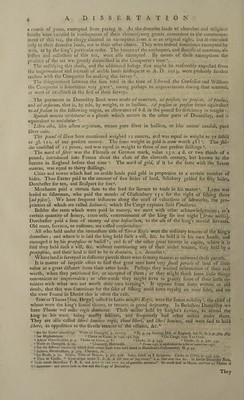
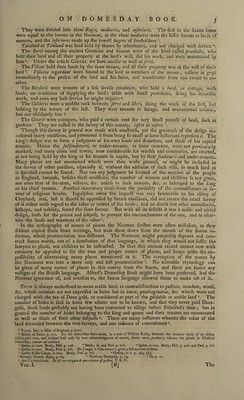
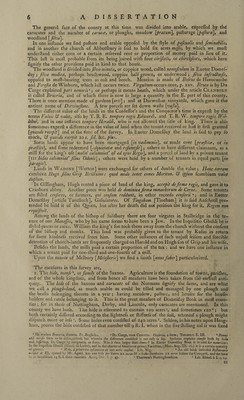
![ON DOMESDAY BOOK. n 3 a Welfh county : but all the reft of Wales is omitted. It is written in a fair legible hand, nearly pure Roman, with a mixture of Saxon r. Engraved fpecimens of the character may be feen in Gale’s Regiftrum Honoris de Richmond, p. 238; in Morant’s Effex ; and a lmall one in Grofe’s Antiquities. That in Hickes’s Thefaurus, vol. I. p. 144, is a very bad one. But the moft exadt is that which is intended to be prefixed to Mr. Manning’s Hiftory of Surrey. The fpecimen annexed to this Dilfertation, without pretending to be a fac Jimile of the character (which types can never reprefent), may be confidered as a very ufeful one. Tilz firfl page in particular will give the reader a very good idea of this noble record, being an entire page (viz. p. 75. a.) of the original, copied lineatim & literatim and every the moft minute con¬ traction in it is faithfully reprefented. It was not thought necefiary to be fo very exadt in the form of the fucceeding pages, which are therefore adapted to the fize of this work ; but on the whole a ftridt attention has been paid to preferving the true fenfe of the original. The firft and largeft volume, finely written on both fides of 382 leaves of vellum, in a fmall but plain character, in double columns on each page, contains thefe counties in the following order : Kent. SufieXi Surry; Hants. Berkfhire; Wiltfhire.- Dorfet. Somerfet. Devonlhire. Cornwall; Middlefex. Hertfordfhire. Bucks. Oxford (Eire. Gloucefterfhire. W orcefterfhire. Herefordfhire. Cambridgefhire; Huntingdonfhire. Bedfordfhire. Northamptonfhire. Leicefterfhire. Warwickfhire. Staffordfhire; Shropshire. Chefter. Derbyfhire. Nottinghamftnre. Rutlandshire. Yorkshire, divided into Weft North Eaft Lincolnshire. ■Riding. The fecond and lefler volume is in quarto, written on 450 leaves of vellum, in fingle columns, in a large but very fair charadter, and contains the three counties of Elfex, Suffolk, and Norfolk. The counties of Northumberland, Cumberland, Weftmoreland, and the bifhoprick of Dur¬ ham, are omitted in this furvey. Lancafhire does not occur; but that part which lies between the rivers Ribble [Ripa~\ and Merfey [Mer/a~\ isfurveyed in Yorkshire or Cheshire. The reft might be omitted either by the king’s death, or by the debateable lands being fubjedtto inroads at this time. Part of the county of Rutland is included in that of Northampton. The Conqueror A. D. 1070 laid wafte the counties north of the Plumber, particularly all between York and Durham, for fixty miles. The Eaft-Riding and the moft foutherly parts of Yorkfhire were made a perfedt defart, to cruSh the infurredbion in the North the year before. Weftmoreland, Cumberland and Nor¬ thumberland might then be in the hands of the Scots, or in fuch a condition, by reafon of their frequent depredations, that no commifiioners dared to venture into them. By this furvey the Conqueror was likewife enabled to fix the proportion of Damegcld on the property of each land-holder. This tax, called alfo Hide-Geld, or Hidage, and Carucage, Heregeld, or 'TributUm Militare vel Navale, was a kind of land-tax, which began to be col¬ lected by king Ethelred, about A. D. 991, as feme luppofe to fatisfy the Danes who .ravaged the kingdom, or as others A. D. 1012 or 1013, to hire Danifh or other fbips, mariners, and foldiers, to oppofe foreign invafions. It was originally an annual land-tax of two (hillings generally on every hide of arable land, was the firft ftated tax of that kind, and though called Dane Geld becaufe paid to the Danes, retained that name long after, when it was appropriated to different ufes. Edward the Confeffor fuSpended the payment of this tax during part of his time. William levied it in the fecond year of his reign. How often afterwards does not ap¬ pear. But in 1084 or 1086 he increafed it to 6 s. s an hide, which was three times more than it ever appears to have been before. In the reign of William Rufus it was 4 s. j 7 Henry I. 3 s.; in the reign of Stephen 2 s. an hide. It continued to be collected to 21 H. II. and probably later c. Perhaps the rate varied according to the exigence of affairs or avaricious humour of the prince. The demefne lands belonging to the king and queen, and thofe in the hands of their imme¬ diate tenants and farmers, though affeffed, did not pay this tax, becaufe that would be paying with one hand what they were to receive with the other. The demefne lands of the great lords, and thofe who held by military fervice, were alfo exempt, becaufe it was unreafonable, that thofe whofe perfons were by tenure obliged to ferve in the wars fliould be doubly charged for their lands for the fame fervice. The eftates of many other perfons were originally, or in r Mr. Hearae, in the preface to hi3 Collection of curious Difcourfes and in his Gloflury to Peter Langtoft’s Chronicle, has inferted a table of abbreviations ufed in this record. One for the furvey of this county is annexed to this DilTertation. s Or, as the Saxon Chronicle exprefl’es it, tpa q hunb yeoptnti pennija, 72 pence ; and this it appears to have been in the Inquifitio Gheldi hereafter fubjoined. ‘Webb on Danegeld, p. 2, 16. The terms for making this payment in this record are fe defoid:bat and gcldabat, <]. d. anf.vered for, or was rated at, as in gcldo means lubject to this tax. Dilt>, Tributuin. a courfe](https://iiif.wellcomecollection.org/image/b30456496_0001_0103.jp2/full/800%2C/0/default.jpg)