Contributions to the anatomy of anthropoid apes / by Frank E. Beddard.
- Frank Evers Beddard
- Date:
- 1893
Licence: Public Domain Mark
Credit: Contributions to the anatomy of anthropoid apes / by Frank E. Beddard. Source: Wellcome Collection.
92/246 page 244
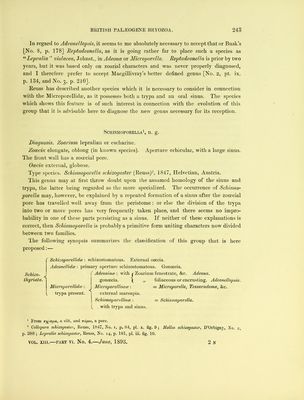
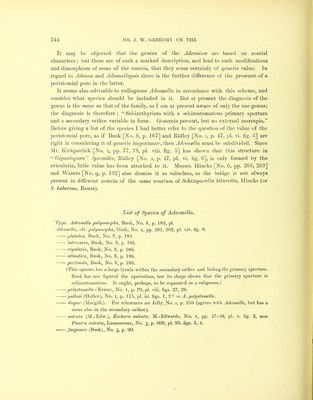
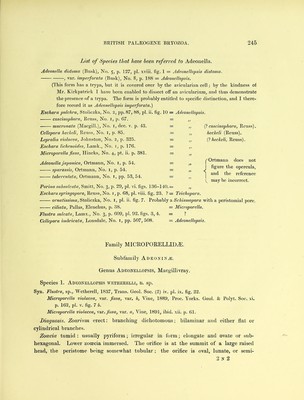
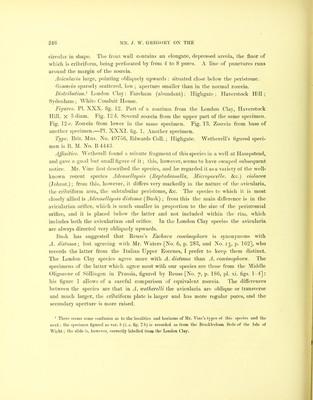
![It may be objected that the genera of the Adeonince are based on zoarial characters; but these are of such a marked description, and lead to such modifications and dimorphism of some of the zocecia, that they seem certainly of generic value. In regard to Adeona and Adeonellopsis there is the further difference of the presence of a peristomial pore in the latter. It seems also advisable to rediagnose Adeonella in accordance with this scheme, and consider what species should be included in it. But at present the diagnosis of the genus is the same as that of the family, as I am at present aware of only the one genus; the diagnosis is therefore : “ Schizothyriata with a schizostomatous primary aperture and a secondary orifice variable in form. Gonoecia present, but no external marsupia.” Before giving a list of the species I had better refer to the question of the value of the peristomial pore, as if Busk [No. 8, p. 167] and Ridley [No. i, p. 47, pi. vi. fig. 6] are right in considering it of generic importance, then Adeonella must be subdivided. Since Mr. Kirkpatrick [No. i, pp. 77, 78, pi. viii. fig. 5] has shown that this structure in “ Gigantopora ” lyncoides, Ridley [No. i, p. 47, pi. vi. fig. 6], is only formed by the avicularia, little value has been attached to it. Messrs. Hincks [No. 6, pp. 268, 269] and Waters [No. g, p. 192] also dismiss it as valueless, as the bridge is not always present in different zocecia of the same zoarium of Schizoporella biturrita, Hincks (or S. tuberosa, Reuss). List of Species of Adeonella. Type. Adeonella polymorpha, Busk, No. 8, p. 183, pi. Adeonella, Ay. poly morpha, Gioli, No. i, pp. .261, 262, pi. xiv. fig. 8. platalea, Busk, No. 8, p. 184. —-— intricaria, Busk, No. 8, p. 185. regularis, Busk, No. 8, p. 186. atlantica, Busk, No. 8, p. 186. pectinata, Busk, No. 8, p. 189. (This species has a large lyrula within the secondary orifice and hiding the primary aperture. Busk has not figured the operculum, but its shape shows that the primary aperture is schizostomatous. It ought, perhaps, to be separated as a subgenus.) polystomella (Eeuss), No. i, p. 70, pi. viii. figs. 27, 28. pallasi (Heller), No. i, p. 115, pi. iii. figs. 1, 2? = A. polystomella. dispar (Macgill.). For references see Jelly, No. i, p. 259 (agrees with Adeonella, but has a sinus also in the secondary orifice). sidcata (M.-Edw.), Eschara sulcata, M.-Edwards, No. i, pp. 47-49, pi. v. fig. 2, non Flustra sulcata, Lamouroux, No. 3, p. 609, pi. 92. figs. 3, 4. fuegensis (Busk), No. 3, p. 90.](https://iiif.wellcomecollection.org/image/b28141386_0092.jp2/full/800%2C/0/default.jpg)