Hospitals, infirmaries, and dispensaries : their construction, interior arrangement, and management, with descriptions of existing institutions, and remarks on the present system of affording medical relief to the poor / by F. Oppert.
- Oppert, Franz.
- Date:
- 1867
Licence: Public Domain Mark
Credit: Hospitals, infirmaries, and dispensaries : their construction, interior arrangement, and management, with descriptions of existing institutions, and remarks on the present system of affording medical relief to the poor / by F. Oppert. Source: Wellcome Collection.
Provider: This material has been provided by The University of Leeds Library. The original may be consulted at The University of Leeds Library.
226/250 page 202
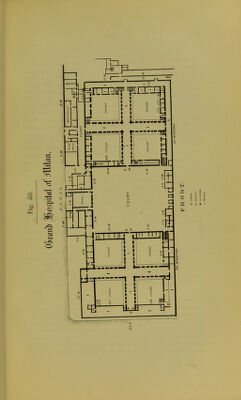
![202 transformed into hospitals, as the founders belonged generally to religious fraternities. In the hands of the latter, the administration generally rests, but laymen are ap])oiuted as directors. In some instances the director is a medical man, as at Milan. Monks and nuns attend as nurses in most establishments. The separation of sexes and difl'ercnt classes of patients is much neglected, and frequently sick, lunatics, and aged, are found domesticated in one and the same establishment. Some hospitals undertake to visit the patients at their homes. In the lying-in M^ards gi-eat secrecy is obsen'cd, and females are admitted without being obliged to give their names (Venice, Home). The construction of verandahs in some of the hospitals is remark- able. Florence. • The largest hospital is called Ospedale di Sta. Maria Nuova ; it adjoins the church of the same name. It is very old, having been founded in 1289, and by the addition of several wings is now of an ii-regular shape. There are 600 beds for males, and as many for female patients. The number of Avards is about fifty. The kitchen is worth a visit. A medical school and public dispensary are con- nected with it, Geneva. The general hospital is called Ospedale Grande; it is a large building constructed around five yards. It is of ancient origin. Another, called Osp, degF Incurabili, is of less extent, and of an irregular shape. As the name implies, it is especially intended for incurable diseases. Ma7itua. The largest military hospital of Upper Italy, was founded here by the Austrians. It is notorious for its unhealthiness, being badly situated on low ground, near the shore of a large lake, Lago Maggiore, where malaria is endemic. The civil hospital is an old, irregular, and defective building. MILAN HOSPITALS. Grand Hospital [Ospedale Maggiore).'*' I will give a description of this establishment, because it was many years ago considered as a model one. I was not favourably impressed by it when I jiaid it a visit. Many historical recollec- tions are connected with it, and it contains, like all public buildings * Dr. Verga, Dell' Ospedale Maggiore di Milano e delle sue case sussidarie. Es-](https://iiif.wellcomecollection.org/image/b21510192_0226.jp2/full/800%2C/0/default.jpg)