Licence: Public Domain Mark
Credit: A history of the British zoophytes / by George Johnston. Source: Wellcome Collection.
Provider: This material has been provided by the Royal College of Physicians of Edinburgh. The original may be consulted at the Royal College of Physicians of Edinburgh.
24/460 page 4
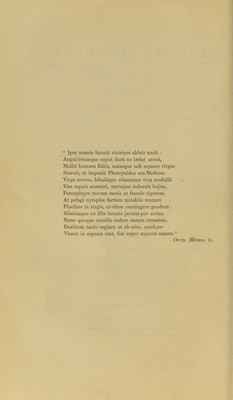
![terance, and raised no echo to awaken further inquiry. The only opposition to the botanical theory came from the mineralogists, who some of them questioned the vegetability of such of these productions as were of a hard and stony nature, contending they were rather rocks or stones formed by the sediment and agglutination of a submarine general compost of calcareous and argillaceous materials, moulded into the figures of trees and mosses by the motion of the 'waves, by crystallization, by tbe incrustation of real fuci, or by some imagined vegetative power in brute matter. But although not more—perhaps less repug- nant to the outward sense than the opposite hypothesis, yet the mineral theory seems at no time to have obtained very ge- neral favour or credit; and accordingly we find that, in the works of Tournefort and Ray,* the leading naturalists of the age imme- diately antecedent to the discoveries which led to the modern doctrines, the zoophytes, whether calcareous and hard, or horny and flexible, were arranged and described among sea-weeds and mosses without any misgivings concerning the propriety of doing so. Ferrante Imperato, an apothecary in Naples, was the first naturalist, according to M.,De Blainville, distinctly to publish, as the result of his proper observations, the animality of corals and madrepores,-f- and he is said to have accompanied the de- • III bis “ Wisdom of God in tbe Creation,” Ray bas, bowevcr, reckoned tbe Lilhophyta among “ inanimate mixed bodies.” Of these, be says, “ some have a kind of vegetation and resemblance of plants, as corals, pori, and fungites, wbich grow upon tbe rocks like sbnibs.”—p. 83, duod. Loud. 1826. His opi- nions on this point were probably unsettled j and certainly many naturalists be- lieved that Ovid only expressed tbe simple fact when be wrote— “ Sic et curalium, quo primum contigit auras “ Tempore durescit; mollis fuit berba sub undis.” Mctam. lib. xv. f Man. d’Actinol. p. 14—Lamouroux on tbe contrary places Imperato on tbe same level with Gesner, Boccone, and Sbaw—none of whom bad any distinct notion of tbe animality of any zoophytes, and bad no doubt of tbe vegetable nature of almost all of them. “ Les observations de ces bommes celebres, au lieu d’eclairer les naturalistcs sur cette brancbe interessante de la science, em- brouillaient encore plus son etude.”—Lam. Cor. Flex. Introd. p. xiv. My copy of Imperato’s work is of tbe edition printed at Venice in 1672, folio. It is written entirely in Italian, and, being ignorant of that language, I can give no opinion of tbe value of its lettcr-]>ress. Tbe only copper..plate is a very curious one representing tbe interior of Imperato’s museum, which appears to have been a very elegant and copious collection of curiosities, a servant pointing with a](https://iiif.wellcomecollection.org/image/b21910479_0024.jp2/full/800%2C/0/default.jpg)