The mystical hymns of Orpheus / Translated from the Greek, and demonstrated to be the invocations which were used in the Eleusinian mysteries, by Thomas Taylor.
- Date:
- 1824
Licence: Public Domain Mark
Credit: The mystical hymns of Orpheus / Translated from the Greek, and demonstrated to be the invocations which were used in the Eleusinian mysteries, by Thomas Taylor. Source: Wellcome Collection.
30/278
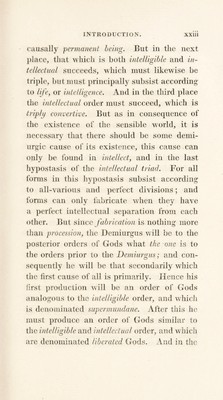
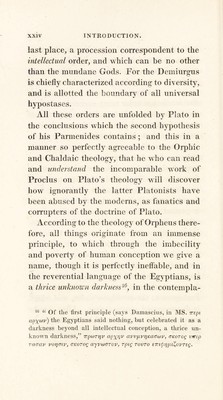
![last place, a procession correspondent to the intellectual order, and which can be no other than the mundane Gods. For the Demiurgus is chiefly characterized according to diversity, and is allotted the boundary of all universal hypostases. All these orders are unfolded by Plato in the conclusions which the second hypothesis of his Parmenides contains ; and this in a manner so perfectly agreeable to the Orphic and Chaldaic theology, that he who can read and understand the incomparable work of Proclus on Plato’s theology will discover how ignorantly the latter Platonists have been abused by the moderns, as fanatics and corrupters of the doctrine of Plato. According to the theology of Orpheus there¬ fore, all things originate from an immense principle, to which through the imbecility and poverty of human conception we give a name, though it is perfectly ineffable, and in the reverential language of the Egyptians, is a thrice unknown darkness16, in the contempla- 10 u Of the first principle (says Damascius, in MS. 7Tfpt apx^v) the Egyptians said nothing, but celebrated it as a darkness beyond all intellectual conception, a thrice un¬ known darkness,” Trpiorrjv cipxi1v avvpvrjKacnov, aicorog vvrep racrav vorjciv, CKorog ayrucTov, rpig rovro tTTupi]pi^Gvrtg.](https://iiif.wellcomecollection.org/image/b29340548_0030.jp2/full/800%2C/0/default.jpg)