The banquet of Dun na n-Gedh : and the battle of Magh Rath : an ancient historical tale now first published from a manuscript in the Library of Trinity College, Dublin / with a translation and notes by John O'Donovan.
- Date:
- 1842
Licence: Public Domain Mark
Credit: The banquet of Dun na n-Gedh : and the battle of Magh Rath : an ancient historical tale now first published from a manuscript in the Library of Trinity College, Dublin / with a translation and notes by John O'Donovan. Source: Wellcome Collection.
384/410 (page 340)
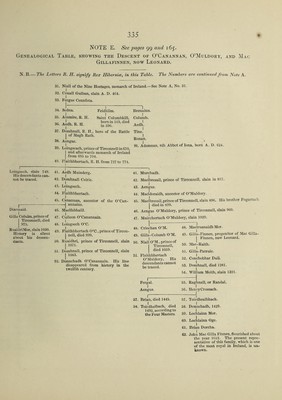
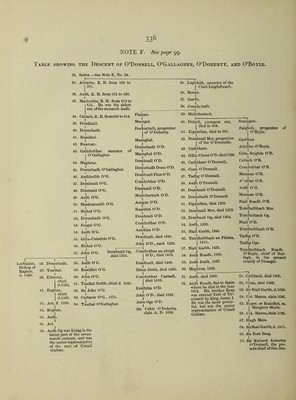
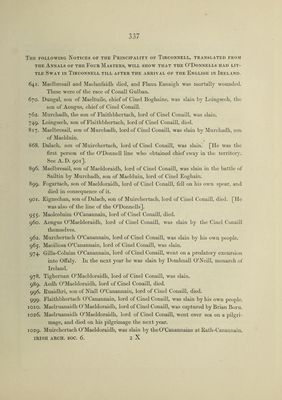
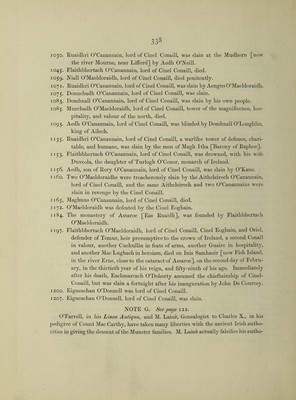
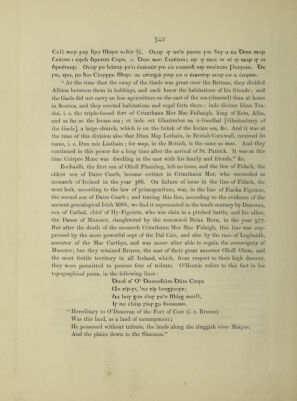
![Cell mop pop Bpu ITlapa n-lcc Jc. Ocup ip oo’n porno pm Bep a ca t)mo map Gerain 1 cipib 6pecan Copn, .1. t)un mic Ciacain; ap ip mac in ni ip map ip in ópernaip. Ocup po bácap po’n curhacc pin co cianaiB lap ciaccain pacpaic. Oe pin, cpa, po B01 Coipppe lDupc ac acaijio paip co a muincip ocup co a caipoe. “ At the time that, the sway of the Gaels was great over the Britons, they divided Albion between them in holdings, and each knew the habitations of his friends ; and the Gaels did not carry on less agriculture on the east of the sea (channel) than at home in Scotica, and they erected habitations and regal forts there : inde dicitur Dinn Tra- dui, i. e. the triple-fossed fort of Crimthann Mor Mac Fidhaigh, king of Erin, Alba, and as far as the Iccian sea; et inde est Glastimber na n-Gaedhal [Glastonbury of the Gaels], a large church, which is on the brink of the Iccian sea, &c. And it was at the time of this division also that Dinn Map Lethain, in British Cornwall, received its name, i. e. Dun mic Liathain ; for map, in the British, is the same as mac. And they continued in this power for a long time after the arrival of St. Patrick. It was at this time Coirpre Muse was dwelling in the east with his family and friends,” &c. Eochaidh, the first son of Olioll Flannbeg, left no issue, and the line of Fidach, the eldest son of Daire Cearb, became extinct in Crimthann Mor, who succeeded as monarch of Ireland in the year 3 66. On failure of issue in the line of Fidach, the next heir, according to the law of primogeniture, was, in the line of Fiacha Figeinte, the second son of Daire Cearb ; and tracing this line, according to the evidence of the ancient genealogical Irish MSS., we find it represented in the tenth century by Donovan, son of Catlial, chief of Ily-Figeinte, who was slain in a pitched battle, and his allies, the Danes of Munster, slaughtered by the renowned Brian Boru, in the year 977. But after the death of the monarch Crimthann Mor Mac Fidaigh, this line was sup- pressed by the more powerful sept of the Dal Cais, and also by the race of Lughaidh, ancestor of the Mac Carthys, and was never after able to regain the sovereignty of Munster; but they retained Bruree, the seat of their great ancestor Olioll Olum, and the most fertile territory in all Ireland, which, from respect to their high descent, they were permitted to possess free of tribute. O’Heerin refers to this fact in his topographical poem, in the following lines : Oual 0’ O’ OonnaBáin TDúin Cuipc Gn cip-pi, ’na cip lonjpuipc; 6a leip jan clop po’n lTláij moill, lp na cláip piopjo Sionoinn. “ Hereditary to O’Donovan of the Fort of Core (i. e. Bruree) Was this land, as a land of encampment; He possessed without tribute, the lands along the sluggish river Maigue, And the plains down to the Shannon.”](https://iiif.wellcomecollection.org/image/b28754232_0384.jp2/full/800%2C/0/default.jpg)