Report of the Departmental Committee apointed to inquire as to precautions for preventing danger of infection from anthrax in the manipulation of wool, goat hair, and camel hair.
- Great Britain. Committee on Anthrax.
- Date:
- 1918
Licence: Public Domain Mark
Credit: Report of the Departmental Committee apointed to inquire as to precautions for preventing danger of infection from anthrax in the manipulation of wool, goat hair, and camel hair. Source: Wellcome Collection.
64/356 page 54
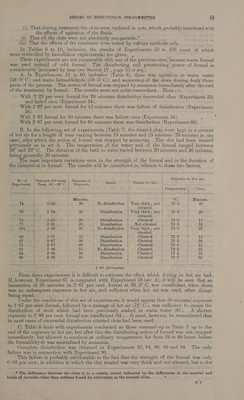
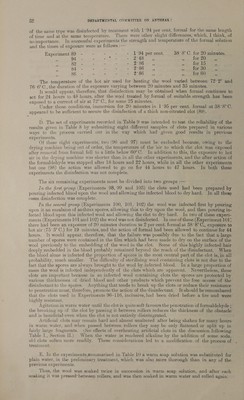
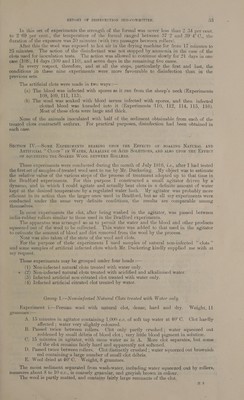
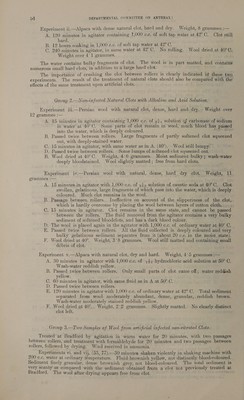
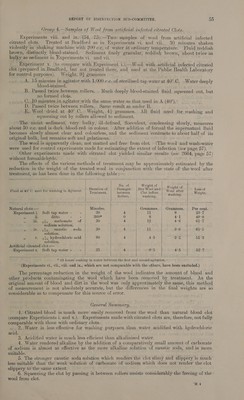
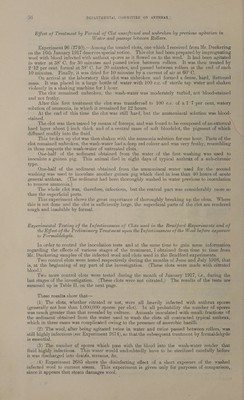
![Experiment ii.—Alpaca with dense natural clot, hard and dry. Weight, 8 grammes.:— A. 120 minutes in agitator containing 1,000 c.c. of soft tap water at 42°C. Clot still bard sr, B. 12 hours soaking in 1,000 c.c. of soft tap water at 42°C. C. 240 minutes in agitator, in same water at 42°C. No rolling. Wool dried at 40° @: Weight over 4°] grammes, The water contains bulky fragments of clot. The wool is in part matted, eb contains numerous small hard clots, in addition to a large hard clot. ~~ The importance of crushing the clot between rollers is clearly indicated in these two, experiments. The result of the treatment of natural clots should also be compared with the effects of the same treatment upon artificial clots. Group 2.—Non-infected Natwral Clots with Alkaline and Acid Solution, Experiment iii—Persian wool with natural clot, dense, hard and: dry. » Weight over 12 grammes :— A. 15 minutes in agitator containing 1,000 c.c. of 600 solution gf carbonate of sodium iit water“ at 40° 0. “Some parts of clot remain in wool, much blood has passed into the water, which is deeply coloured. B. Passed twice between rollers. Large fragments of partly softened clot squeezed out, with deeply-stained water. ©. 15 minutes in agitator, with same water as in A. (40°). Wool still lumpy. © D. Passed twice between rollers. Some lumps of softened clot squeezed out. I. Wool dried at 40°C. Weight, 4°6 grammes. Moist sediment bulky; wash-water deeply bloodstained. Wool slightly matted; free from hard clots. Experiment iv.—Persian wool with natural, dense, hard _ dry clot. Weight, Th grammes :— A. 15 minutes in.agitator with 1,000 c.c. of 345 solution of caustic soda at 40°C, Clot swollen, gelatinous, large fragments of which pass into the water, which is deeply coloured. Much clot remains in the wool. B. Passage between. rollers. Ineffective on account of the slipperiness of the clot, which is hardly overcome by placing the wool between layers of cotton cloth... C. 15 minutes in agitator. Clot remains in the same state, and cannot be passed between the rollers. The fluid removed from the agitator contains a very pay sediment of softened bloodclots, and has a dark blood colour. D. The wool is placed again in the agitator with 1,000 c.c, of ordinary water at 40° Ome E. Passed twice between rollers. All the fluid collected is deeply coloured and very bulky gelatinous sediment separates from it (about 20 c.c. in the moist. state). F. Wool dried at 40°. Weight, 3°8 grammes. Wool still matted and containing small débris of clot. | pee Experiment v.—Alpaca with natural clot, dry and hard. Weight, 4°5 grammes :— A. 30 minutes in agitator with 1,000 c.c. of »4> hydrochloric acid solution at 50° C. Wash-water reddish yellow. B. Passed twice between. rollers. Only small parts of clot came off; water reddish yellow. C. 60 minutes in agitator, with same fluid as in A at 50° C. D. Passed twice between rollers. KE. 120 minutes in agitator with 1,000 c.c. of ordinary water at 42° C. Total sediment separated from wool, moderately abundant, dense, granular, reddish brown. Wash-water moderately stained reddish yellow. F. Wool dried at 40°... Weight, 2°2 grammes. Slightly matted. No clearly distinct clot left. Group 3.—T'wo Samples of Wool from artificial infected non-eitrated Clots. Treated at Bradford by agitation in warm water for 20 minutes, with two. passages between rollers, and treatment with formaldehyde for 20° minutes and two passages between rollers, followed by drying. Wool received in ammonia. Experiments vi. and vil. (53, 77).—30 minutes shaken violently in shaking machine with 200 c.c. water at ordinary temperature. Fluid-brownish yellow, not’ distinctly blood-coloured. . Sediment finely granular, dense brownish grey, not blood-coloured. The total sediment is very scanty as compared with the sediment obtained from a clot not previously treated at Bradford. The wool after drying appears free fr om clot. fea](https://iiif.wellcomecollection.org/image/b32178049_0064.jp2/full/800%2C/0/default.jpg)