The general character of the dog: illustrated by a variety of original and interesting anecdotes of that beautiful and useful animal in prose and verse / By Joseph Taylor.
- Joseph Taylor
- Date:
- 1804
Licence: Public Domain Mark
Credit: The general character of the dog: illustrated by a variety of original and interesting anecdotes of that beautiful and useful animal in prose and verse / By Joseph Taylor. Source: Wellcome Collection.
201/212 page 193
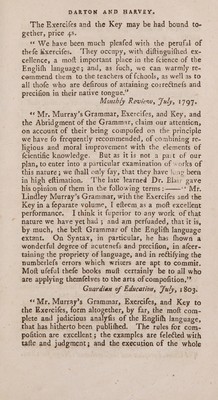
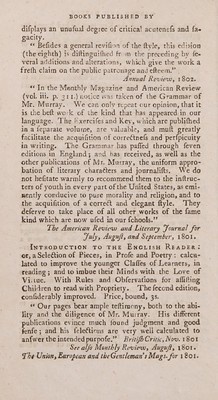
![IMPROVEMENTS In EpDucATION, as it refpects the Induftrious Claffes of the Community ; containing a fhort Account of its prefent State, Hints towards its Improvement, and a Detail of fome practical Experi- ments conducive to that End. By Jof. Lancafler. Second edition, with additions. Price 1s. 6d. fewed. «© The author is mafter of a {chool of three hundred boys, whom he educates in-a particular manner, the bafis of which is reward, not flagellation,—honour, not fear. His plan he has imparted freely to the pub- lic, and it is deferving of the higheft commendation. We truft thatall who are employed in the education of youth will find their time well beftowed in reading thefe few pages; and though the plan has hitherto been adopted in what is called an inferior feminary, its uti- lity extends to the higheft.” 3 Critical Review, March, 1803. A New System or SHORT-HAND, in which Le- gibility and Brevity are fecured upon the moft natural Principles, with refpect to both the Signification and Formation of the Characters, efpecially by the fingular Property of their floping al] one way, according to the habitual Motion of the Hand in common Writing. By Richard Roe. Price 4s. fewed. ‘© The very ingenious inventor of this new method - has ftudied well the nature of our language, and the va- rious characters employed for fhort-hand writing. The appearance of his writing is greatly in its favour; and the reafons for introducing fome regulations, which may _ at firft fight be conceived fuperfluous, are to us perfeftly fatisfaftory. His charaéters poffefs ‘that inclined dire€tion which is moft natural to the hand.” heir forms are remarkably fimple and diftin@. We recom- mend this work ftrongly to all who ftudy the art of ftenography ; for, whether they adopt or not the au- thor’s fcheme, they will find many ufeful hints by which their own may be improved.” Critical Review, April, 1804. {](https://iiif.wellcomecollection.org/image/b22031649_0201.jp2/full/800%2C/0/default.jpg)