Report from the Select Committee on the Vaccination Act (1867) : together with the proceedings of the Committee, minutes of evidence, appendix and index.
- Great Britain. Parliament. House of Commons. Select Committee on Vaccination Act (1867)
- Date:
- 1871
Licence: Public Domain Mark
Credit: Report from the Select Committee on the Vaccination Act (1867) : together with the proceedings of the Committee, minutes of evidence, appendix and index. Source: Wellcome Collection.
Provider: This material has been provided by Royal College of Physicians, London. The original may be consulted at Royal College of Physicians, London.
530/558 page 500
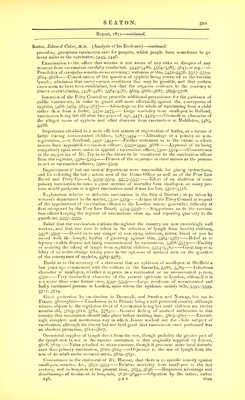
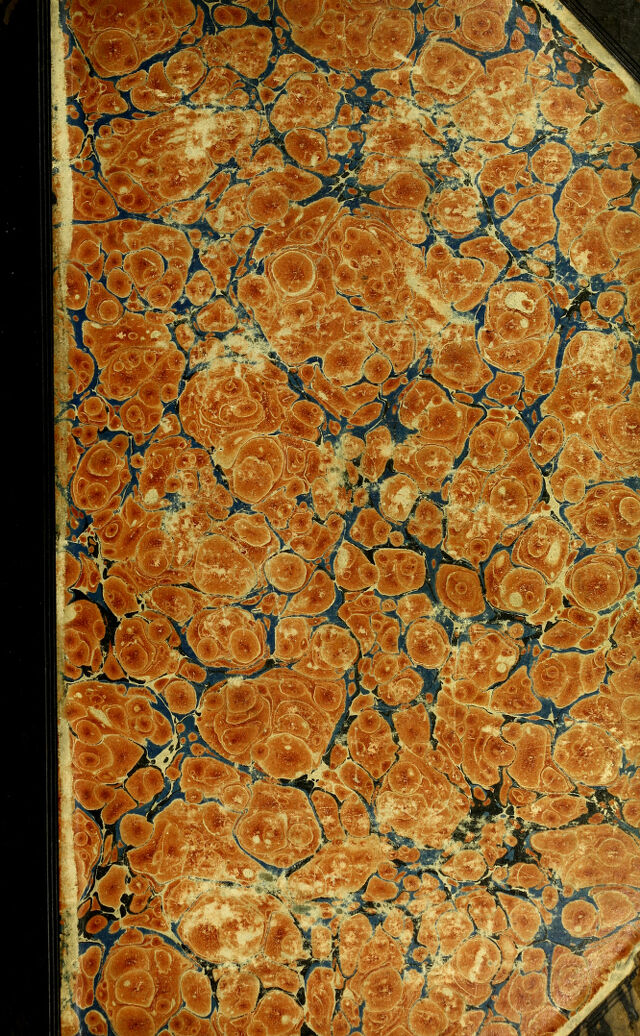
![Report, 1871—continued. Seaton, Edward Cator, M.D. (Analysis of his Evidence)—continued. Great increase in the number of public vaccinations upon the passing of the Act of 18,53; 535- Statement of the per-centage of public vaccinations under one year of age to births, in each of the last ten years; average of about 50 per cent., irrespectively of the vaccinations above one year of age, and of private vaccinations, 5352, 5353 Conclusion as to the entire inaccuracy of some statements as to about half the popula- tion being unvaccinated, 5352 -Important effect of the Act of 1853 in greatly decreasing the per-centage of mortality from small-pox, more especially at an early age, 5353- Inquiry made by the Privy Council into the working of the Act of 1853, when it was shown that in some districts vaccination wa-- much neglected, 5354. 5356 Instances, previously to 1867, of as many as 50 per cent, of the children in some elementary schools having been unvaccinated; explanation as regards a statement thereon hy Lord Robert Montagu in 1867; 5354-5356 Additional and important requirements of the Act of 1867, as compared with those in the Act of 1853, with a view to general vaccination, 5357-5360. Commencement of the operation of the Act of 1867, as regards action by the local authorities, in July 1868; 5361 Delay on the part of many unions in appointing a vaccination officer, this not being imperative, although it is now very generally done, both in the country and in London, 5361-5368. 5372 Great delay in the metropolis in getting the Act of 1867 into proper working, more especially through m>t at first appointing special officers, 5361-5372 Very little opposition made to the Act, apart from suggested opposition, 5368. 5373. 5380-5382. Mention of several towns in which the vaccination, under the Act of 1867, is now piactically complete, the margin of unvaccinated children being very small, 5372 Satisfactory working of the Act in Leeds, without any difficulty having been raised by the people, 5373, 5374 —Absence of prosecutions in applying the Act at Manchester, 5374 Facility, also, in enforcing the Act at Liverpool, ib. -Considerable difficulty at first in applying the Act in Sheffield ; this has been gradually disappearing, 5374-5378- Exception taken to the view of Sir Dominic Corrigan that the Irish Act would probably work very well in Ireland without penalties ; different view expressed by the Irish Poor Law Commissioners, 5378 Grounds for concluding that much danger would result from abandoning the compulsory principle of the Act of 1867, and that it is very expe- dient to retain penalties, 5379-5388. 5395, 5396 Different provisions of the Irish Act of 2863, and of the English Act of 1867, as regards penalties and registration, 5389-5394- Result of the inquiry made by the Privy Council, in 1860-64, that one in four of those vaccinated was badly protected, 5397 Steps taken to improve the vaccination, it being required, as regards public vaccination, that Mr. Marson’s standard shall be followed, 5398-5400 Several causes of the imperfect vaccination previously to 1867 ; 5399- [Second Examination.]—Large use of dry lymph and preserved lymph which ren- dered the vaccination bad in past years, 5401-5403—— Outline of the arrangements by which arm-to-aim vaccination in large towns may be continued from week to week through- outthe year; necessity of an average of ten vacciniferous children on each vaccination day, 5402, 5403 Very objectionable arrangements in Coventry, previously to the introduc- tion of arm-ta-arm vaccination, 5403, 5404. Satisfactory regulations adopted in towns generally in regard to vaccination stations under the powers and action of the Privy Council, since the Act of 1867 ; 5403-5405. 5422-5428 Improved arrangements being carried out in country districts in regard to at tendance at the vaccination stations, 5406. 5428 Diminution of vaccinators only in the towns,5407 Arrangement being gradually carried out in London, so as have stations within half a mile of each other in the denser districts, and less close together in the out- skirts,5408-54 11 Explanation as regards the inefficiency of the stations in St. Paueras, that the arrangements have never been submitted to nor approved by the Privy Council, 5410. 554°-5548. 57l6- Evidence showing the action of the medical department of the Privy Council in regard not only to the issue of instructions to the guardians, but to their enforcement; exceptional instances of the guardians having persisted in declining to carry out such regulations, 5412-5421. 5549-5554 Reasons for confining the vaccinators in towns to their distiicts, and for reducing the number of stations, 5422, 5423 Respects in which the lower classes have an advantage over the upper classes in the matter of vaccination, 5524-5427. Effect of an abolition of compulsion to disarrange the present systematic practice of vaccination, in relation to births, 5429, 5430 Grounds for the opinion that the age of six weeks is about the best time for vaccination, 5431-5443 Liability to fines and im- prisonment under the Scotch Act, 5444. 5447, 5448 Hardship of the Scotch Act as not providing](https://iiif.wellcomecollection.org/image/b24975424_0534.jp2/full/800%2C/0/default.jpg)