Oriental customs: or an illustration of the sacred Scriptures, by an explanatory application of the customs and manners of the Eastern nations, and especially the Jews. Therein alluded to, together with observations on many difficult and obscure texts, collected from the most celebrated travellers, and the most eminent critics / by Samuel Burder.
- Samuel Burder
- Date:
- 1802
Licence: Public Domain Mark
Credit: Oriental customs: or an illustration of the sacred Scriptures, by an explanatory application of the customs and manners of the Eastern nations, and especially the Jews. Therein alluded to, together with observations on many difficult and obscure texts, collected from the most celebrated travellers, and the most eminent critics / by Samuel Burder. Source: Wellcome Collection.
52/448 page 24
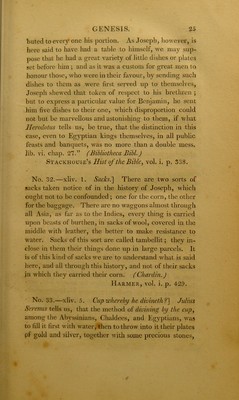
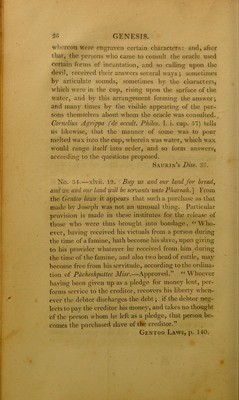
![stans is “ by the king’s head(Trav. vol. i. p. 313.) and among other instances of it we read in the Travels of the Ambassadors, p. 204. u there were but sixty horses for ninety four persons. The mehemander (or conductor) swore by the head of the king (which is the greatest oath amongst the Persians) that he could not possibly find any more.” And Thevenot says, (Trav. p. 97, part 2.) “ his subjects never look upon him but with fear and trembling; and they have such respect for him, and pay so blind an obedience to all his orders, that how unjust soever his commands might be, they perform them, though against the law both of God and nature. Nay, if they swear by the king's head, their oath is more authentic, and of greater credit, than if they swore by all that is most sacred in heaven and upon earth ” No. 30.—xliii. 29. God be gracious to thee, my son.] il This would have been called through all Europe, and in the living languages of this part of the world, the giving a person one’s benediction ; but it is a simple sa- lutation in Asia, and it is there used instead of those offers and assurances of service which it is the custom to make use of in the West, in first addressing or taking leave of an acquaintance.” (Chardin.) This account ex- plains the ground of the scripture’s so often calling the salutations and farewells of the East by the term blessing. Harmer, vol. ii. p. 40. No. 31.—xliii. 34. And he took and sent messes unto them from before him, but Benjamin's mess was five times as much as any of their si] The manner of eating amongst the ancients was not for all the company to eat out of one and the same dish, but for every one to have one or more dishes to himself. The whole of these dishes were set before the master of the feast, and he distri-](https://iiif.wellcomecollection.org/image/b22040900_0052.jp2/full/800%2C/0/default.jpg)