Oriental customs: or an illustration of the sacred Scriptures, by an explanatory application of the customs and manners of the Eastern nations, and especially the Jews. Therein alluded to, together with observations on many difficult and obscure texts, collected from the most celebrated travellers, and the most eminent critics / by Samuel Burder.
- Samuel Burder
- Date:
- 1802
Licence: Public Domain Mark
Credit: Oriental customs: or an illustration of the sacred Scriptures, by an explanatory application of the customs and manners of the Eastern nations, and especially the Jews. Therein alluded to, together with observations on many difficult and obscure texts, collected from the most celebrated travellers, and the most eminent critics / by Samuel Burder. Source: Wellcome Collection.
53/448 page 25
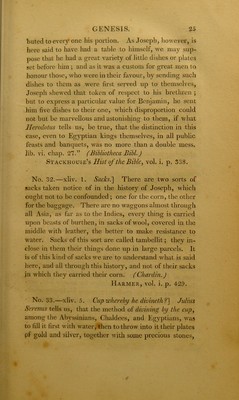
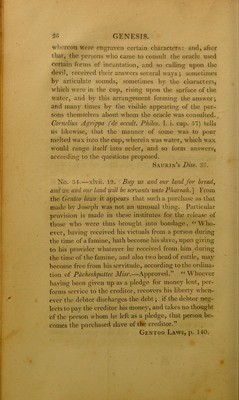
![buted to every one his portion. As Joseph, however, is here said to have had a table to himself, we may sup- pose that he had a great variety of little dishes or plates set before him ; and as it was a custom for great men to honour those, who were in their favour, by sending such dishes to them as were first served up to themselves, Joseph shewed that token of respect to his brethren ; but to express a particular value for Benjamin, he sent him five dishes to their one, which disproportion could not but be marvellous and astonishing to them, if what Herodotus tells us, be true, that the distinction in this case, even to Egyptian kings themselves, in all public feasts and banquets, was no more than a double mess, lib. vi. chap. 27.” (Bibliotheca Bibl.) Stackhouse’s Hist of the Bible, vol. i. p. 338. No. 32.—xliv. 1. Atfc&s.] There are two sorts of sacks taken notice of in the history of Joseph, which ought not to be confounded; one for the corn, the other for the baggage. There are no waggons almost through all Asia, as far as to the Indies, every thing is carried upon beasts of burthen, in sacks of wool, covered in the middle with leather, the better to make resistance to water. Sacks of this sort are called tambellit; they in- close in them their things done up in large parcels. It is of this kind of sacks we are to understand what is said here, and all through this history, and not of their sacks in which they carried their corn. (Chardin.) Harmer, vol. i. p. 429. No. 33.—xliv. 5. Cup whereby he divineth ?] Julius Serenus tells us, that the method of divining by the cup, among the Abyssinians, Chaldees, and Egyptians, was to fill it first with water, then to throw into it their plates pf gold and silver, together with some precious stones,](https://iiif.wellcomecollection.org/image/b22040900_0053.jp2/full/800%2C/0/default.jpg)