[Report 1930] / Medical Officer of Health, Rochester City and Port.
- Rochester (Kent, England). City and Port Authority.
- Date:
- 1930
Licence: Attribution-NonCommercial 4.0 International (CC BY-NC 4.0)
Credit: [Report 1930] / Medical Officer of Health, Rochester City and Port. Source: Wellcome Collection.
16/42 page 14
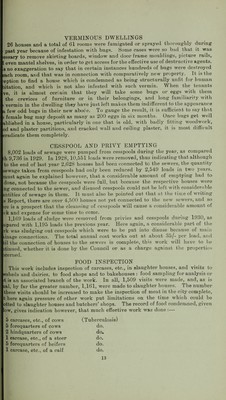
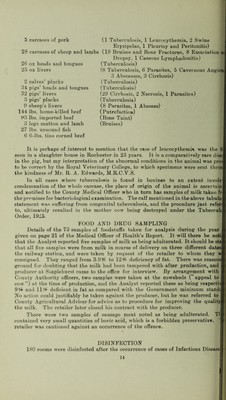
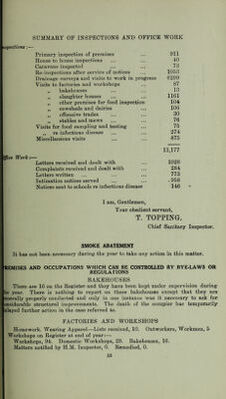
![5 2S 26 25 34 32 3 9 144 93 3 27 6 carcases of pork carcases of sheep and lambs ox heads and tongues ox livers calves’ plucks pigs’ heads and tongues pigs’ livers pigs’ plucks sheep’s livers lbs. home-killed beef lbs. imported beef legs mutton and lamb lbs. unsound fish 6-lbs. tins corned beef (1 Tuberculosis, 1 Leucocythemia, 2 Swine Erysipelas, 1 Pleurisy and Peritonitis) (19 Bruises and Bone Fractures, 8 Emaciation ai Dropsy, 1 Caseous Lymphadenitis) (Tuberculosis) (8 Tuberculosis, 6 Parasites, 5 Cavernous Angionc 3 Abscesses, 3 Cirrhosis) (Tuberculosis) (Tuberculosis) (29 Cirrhosis, 2 Necrosis, 1 Parasites) (Tuberculosis) (8 Parasites, 1 Abscess) (Putrefaction) (Bone Taint) (Bruises) It is perhaps of interest to mention that the case of leucocythemia was the seen in a slaughter house in Rochester in 23 years. It is a comparatively rare dise; in the pig, but my interpretation of the abnormal conditions in the animal was pro\ to be correct by the Royal Veterinary College, to which specimens were sent throu the kindness of Mr. R. A. Edwards, M.R.C.V.S. In all cases where tuberculosis is found in bovines to an extent involv condemnation of the whole carcase, the place of origin of the animal is ascertain and notified to the County Medical Officer who in turn has samples of milk taken fr the promises for bacteriological examination. The calf mentioned in the above tabula statement was suffering from congenital tuberculosis, and the procedure just refer: to, ultimately resulted in the mother cow being destroyed under the Tuberculc Order, 1925. FOOD AND DRUG SAMPLING Details of the 73 samples of foodstuffs taken for analysis during the year given on page 21 of the Medical Officer of Health's Report. It will there be notil that the Analyst reported five samples of milk as being adulterated. It should be sta that all five samples were from milk in course of delivery on three different dates! the railway station, and were taken by request of the retailer to whom they consigned. They ranged from 3-9% to 12% deficiency of fat. There was reason ground for doubting that the milk had been tampered with after production, and producer at Scaplehurst came to the office for interview. By arrangement with County Authority officers, two samples were taken at the cowsheds (‘ appeal to cow”) at the time of production, and the Analyst reported these as being respectiv 9% and 11% deficient in fat as compared with the Government minimum stand; No action could justifiably be taken against the producer, but he was referred to County Agricultural Adviser for advice as to procedure for improving the quality] the milk. The retailer later closed his contract with the producer. There were two samples of sausage meat noted as being adulterated. T1 contained very small quantities of boric acid, which is a forbidden preservative, retailer was cautioned against an occurrence of the offence. DISINFECTION 180 rooms were disinfected after the occurrence of cases of Infectious Diseasel](https://iiif.wellcomecollection.org/image/b30038807_0018.jp2/full/800%2C/0/default.jpg)