Villages of the Algonquian, Siouan, and Caddoan tribes west of the Mississippi / by David I. Bushnell, jr.
- David I. Bushnell
- Date:
- 1922
Licence: Public Domain Mark
Credit: Villages of the Algonquian, Siouan, and Caddoan tribes west of the Mississippi / by David I. Bushnell, jr. Source: Wellcome Collection.
21/292 (page 3)
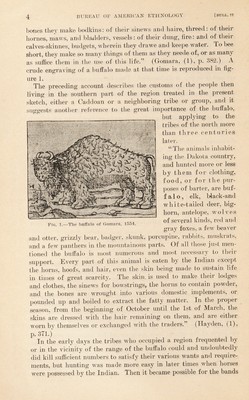
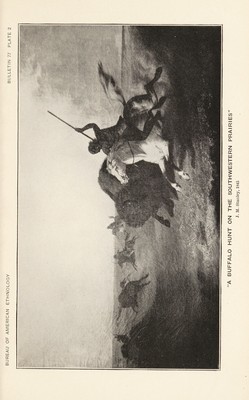
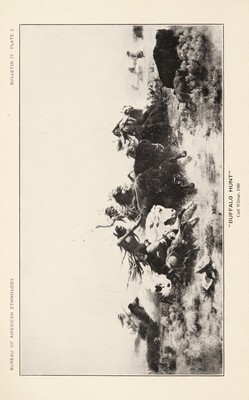
![the G^reat Osag’e, on the waters of the Little Osage, Saint Francis, and other streams, are a number of scattered bands of Indians, and two or three considerable villages. These bands were principally Indians, who were formerly outcasts from the tribes east of the Mis¬ sissippi. Numbers have since joined from the Delawares, Shawa- noes, M ayondott, and other tribes towards the lakes. Their warriors are said to be five or six hundred. They have sometimes made excur¬ sions and done mischief on the Ohio river, but the settlements on the Mississippi have suffered the most severely by their depredations.” (Cutler, (1), p. 120.) No attempt will be made in the present work to describe the habi¬ tations or settlements occupied by the scattered bands just mentioned. It is quite evident that during the past two or three centuries great changes have taken place in the locations) of the tribes which were discovered occupying the region west of the Mississippi by the first Europeans to penetrate the vast wilderness. Thus the general move¬ ment of many Sion an tribes has been westward, that of some Algon- quian groups southward from their earlier habitats, and the Caddoan appear to have gradually gone northward. It resulted in the converg¬ ing of the tribes in the direction of the great prairies occupied by the vast herds of buffalo which served to attract the Indian. Until the beginning of this tribal movement it would seem that a great region eastward from the base of the Kocky Mountains, the rolling prairie lands, was not the home of any tribes but was solely the range of the buffalo and other wild beasts, which existed in numbers now difficult to conceive. N THE BUFFALO. (Bison americanus.) With the jiractical extei’inination of the buffalo in recent years, and the ra]ud changes which have taken place in the general appear¬ ance of the country, it is difficult to picture it as it was two or more centuries ago. While the country continued to be the home of the native tribes game was abundant, and the buffalo, in prodigious numbers, roamed over the wide region from the Rocky Mountains to near the Atlantic. It is quite evident, and easily conceivable, that A\ heie\er the buffalo was to be found it wasi hunted by the people of the neighboring villages, principally to serve as food. But the differ¬ ent parts of the animal were made use of for many purposes, and, as related in an early Spanish narrative, one prepared nearly four centuries ago, when referring to “the oxen of Quivira . . . Their masters have no other riches nor substance: of them they eat, they drink, they apparel, they shooe themselves: and of their hides they make many things, as houses, shooes, apparell and ropes: of their](https://iiif.wellcomecollection.org/image/b29828685_0021.jp2/full/800%2C/0/default.jpg)