Text-book of nervous diseases : for the use of students and practitioners of medicine / by Charles L. Dana.
- Charles Loomis Dana
- Date:
- 1916
Licence: In copyright
Credit: Text-book of nervous diseases : for the use of students and practitioners of medicine / by Charles L. Dana. Source: Wellcome Collection.
638/662 (page 612)
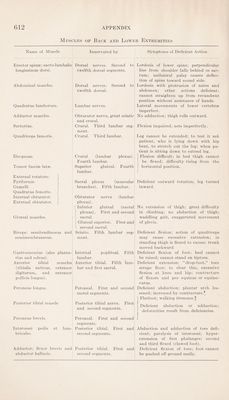
![Muscles of Back and Lower Extremities Name of Muscle Innervated by Symptoms of Deficient Action Erector spinse; sacro-lumbalis longissimus dorsi. Abdominal muscles. Quadratus lumborum. Adductor muscles. Sartorius. Quadriceps femoris. Ilio-psoas. Tensor fascise latse. External rotators: Pyriformis I Gemelli Quadratus femoris. ,J Internal obturator. External obturator. J Gluteal muscles. Biceps: semitendinosus and semimembransous. Gastrocnemius (also planta- rius and soleus). Anterior tibia! muscles (tibialis anticus, extensor digitorum, and extensor pollicis longus). Peroneus longus. Posterior tibial muscle Peroneus brevis. Interossei pedis et lum- bricales. Adductor; flexor brevis and abductor hallucis. Dorsal nerves. Second to twelfth dorsal segments. Dorsal nerves. Second to twelfth dorsal. Lumbar nerves. Obturator nerve, great sciatic and crural. Crural. Third lumbar seg¬ ment. Crural. Third lumbar. Crural (lumbar plexus). Fourth lumbar. Superior gluteal. Fourth lumbar. Lordosis of lower spine; perpendicular line from shoulder falls behind os sac¬ rum; unilateral palsy causes deflec¬ tion of spine toward sound side. Lordosis with protrusion of nates and abdomen; other actions deficient; cannot straighten up from recumbent position without assistance of hands. Lateral movements of lower vertebrae imperfect. No adduction; thigh rolls outward. Flexion impaired; acts imperfectly. Leg cannot be extended; to test it ask patient, who is lying down with hip bent, to stretch out the leg; when pa¬ tient is sitting down to extend leg. ] Flexion difficult; in bed thigh cannot ! be flexed; difficulty rising from the | horizontal position. J Sacral plexus (muscular branches). Fifth lumbar. Obturator nerve (lumbar plexus). f Inferior gluteal (sacral I plexus). First and second j sacral. | Gluteal superior. First and l second sacral. Sciatic. Fifth lumbar seg¬ ment. Internal popliteal. Fifth lumbar. Anterior tibial. Fifth lum¬ bar and first sacral. Peroneal. First and second sacral segments. Posterior tibial nerve. First and second segments. Peroneal. First and second segments. Posterior tibial. First and second segments. Posterior tibial. First and second segments. Deficient outward rotation; leg turned inward. No extension of thigh; great difficulty in climbing; no abduction of thigh; waddling gait, exaggerated movement of plevis. Deficient flexion; action of quadriceps may cause excessive extension; in standing thigh is flexed to excess; trunk moved backward. Deficient flexion of foot; heel cannot be raised; cannot stand on tiptoes. Deficient extension; “drop-foot,” toes scrape floor; to clear this, excessive flexion at knee and hip; contracture of flexors and pes equinus or equino- varus. Deficient abduction; plantar arch les¬ sened; increased by contracture.* Flatfoot; walking tiresome.^ Deficient abduction or adduction; deformities result from deficiencies. Abduction and adduction of toes defi¬ cient; paralysis of interossei; hyper¬ extension of first phalanges; second and third flexed (clawed foot). Deficient flexion of toes; foot cannot be pushed off ground easily.](https://iiif.wellcomecollection.org/image/b29820650_0638.jp2/full/800%2C/0/default.jpg)