The gums, with late discoveries on their structure, growth, connections, diseases, and sympathies / by George Waite.
- Waite, George Derby, 1804-1880
- Date:
- 1838
Licence: Public Domain Mark
Credit: The gums, with late discoveries on their structure, growth, connections, diseases, and sympathies / by George Waite. Source: Wellcome Collection.
Provider: This material has been provided by the National Library of Medicine (U.S.), through the Medical Heritage Library. The original may be consulted at the National Library of Medicine (U.S.)
60/82
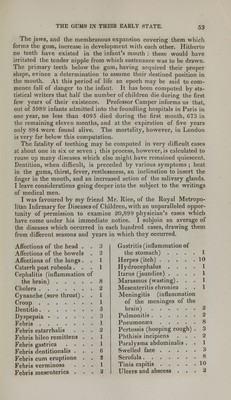
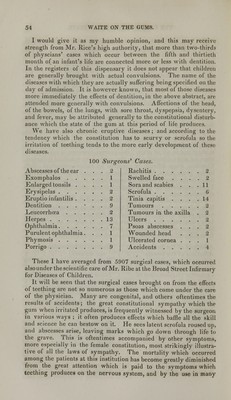
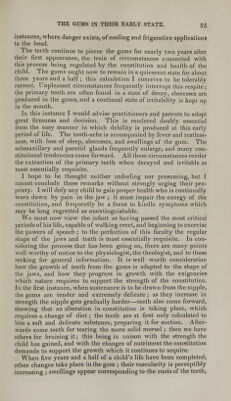
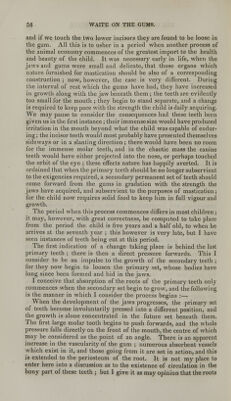
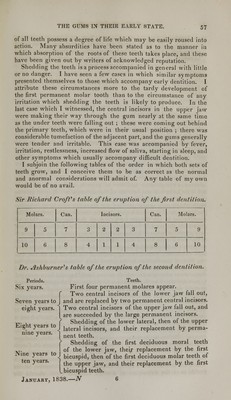
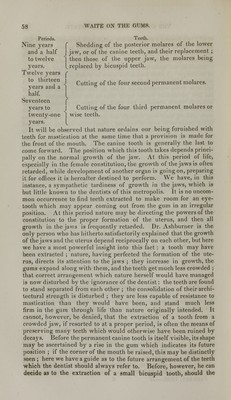
![Periods. Teeth. Nine years C Shedding of the posterior molares of the lower and a half J jaw, or of the canine teeth, and their replacement ; to twelve ] then those of the upper jaw, the molares being years. [.replaced by bicuspid teeth. Twelve years r to thirteen j Cutting of the four second permanent molares. years and a 1 b half. L Seventeen C years to j Cutting of the four third permanent molares or twenty-one 1 wise teeth. years. [_ It will be observed that nature ordains our being furnished with teeth for mastication at the same time that a provision is made for the front of the mouth. The canine tooth is generally the last to come forward. The position which this tooth takes depends princi- pally on the normal growth of the jaw. At this period of life, especially in the female constitution, the growth of the jaws is often retarded, while development of another organ is going on, preparing it for offices it is hereafter destined to perform. We have, in this instance, a sympathetic tardiness of growth in the jaws, which is but little known to the dentists of this metropolis. It is no uncom- mon occurrence to find teeth extracted to make room for an eye- tooth which may appear coming out from the gum in an irregular position. At this period nature may be directing the powers of the constitution to the proper formation of the uterus, and then all growth in the jaws is frequently retarded. Dr. Ashburner is the only person who has hitherto satisfactorily explained that the growth of the jaws and the uterus depend reciprocally on each other, but here we have a most powerful insight into this fact : a tooth may have been extracted ; nature, having perfected the formation of the ute- rus, directs its attention to the jaws ; they increase in growth, the gums expand along with them, and the teeth get much less crowded ; that correct arrangement which nature herself would have managed is now disturbed by the ignorance of the dentist: the teeth are found to stand separated from each other ; the consolidation of their archi- tectural strength is disturbed ; they are less capable of resistance to mastication than they would have been, and stand much less firm in the gum through life than nature originally intended. It cannot, however, be denied, that the extraction of a tooth from a crowded jaw, if resorted to at a proper period, is often the means of preserving many teeth which would otherwise have been ruined by decays. Before the permanent canine tooth is itself visible, its shape may be ascertained by a rise in the gum which indicates its future position ; if the corner of the mouth be raised, this may be distinctly seen ; here we have a guide as to the future arrangement of the teeth which the dentist should always refer to. Before, however, he can decide as to the extraction of a small bicuspid tooth, should the](https://iiif.wellcomecollection.org/image/b21161720_0060.jp2/full/800%2C/0/default.jpg)
 No text description is available for this image
 No text description is available for this image
 No text description is available for this image